 Add to Chrome
 Add to Firefox
 Add to Edge
RubricsTree: Scalable and Evolving Open-Ended Evaluation of Personal Health Agents across Health Memory and Medical Skills
Jun 16, 2026
The LLM-empowered personal health agents with user health (sensor) metrics have offered a promising pathway to alleviate global disparities in healthcare access. However, large-scale clinical deployment remains constrained by an open-ended evaluation bottleneck: physician annotation is reliable but costly and unscalable, while LLM-as-a-judge evaluators are scalable but subjective, inconsistent, and sometimes clinically misaligned. We introduce RubricsTree, a scalable evaluation framework with an expert-aligned hierarchical taxonomy of over 100 atomic, clinically-verifiable Boolean rubrics, evolving from the insights of 4,000 real user queries through an iterative human-in-the-loop curation protocol with an expertise panel led by an experienced physician. A context-aware adaptive router activates only the relevant auto-weighted rubric subset per query, providing the throughput needed for scalable evaluation with expert-aligned quality. Through a systematic meta-evaluation, we show that RubricsTree (i) substantially exceeds a strong large-scale evaluation baseline in expert alignment on challenging open-ended queries; (ii) reliably penalizes contextually degraded responses; and (iii) when used as structured instructions, text feedback, or training rewards for performance optimization, yields up to ~66% relative gains on HealthBench for Gemini, GPT, and Qwen model families. RubricsTree thus provides a scalable, auditable, and evolving evaluation infrastructure required for the continuous optimization of product-level personal healthcare AI.

Detecting Schizophrenia with 3D Structural Brain MRI Using Deep Learning
Jul 07, 2022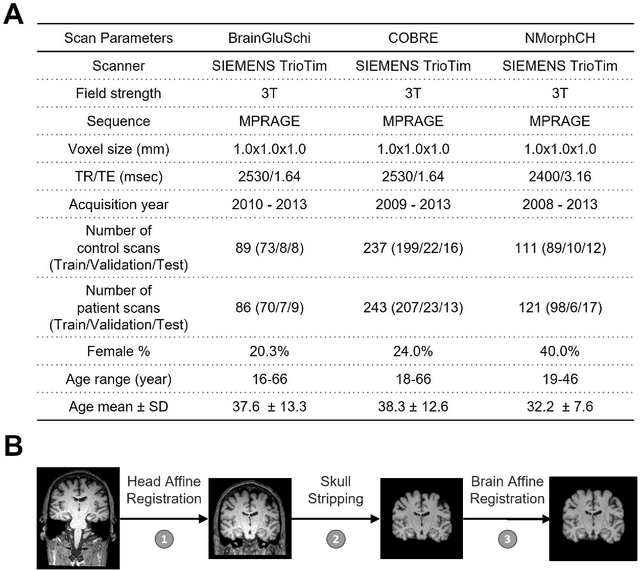
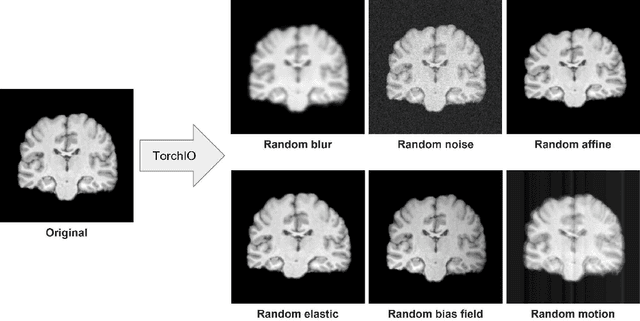
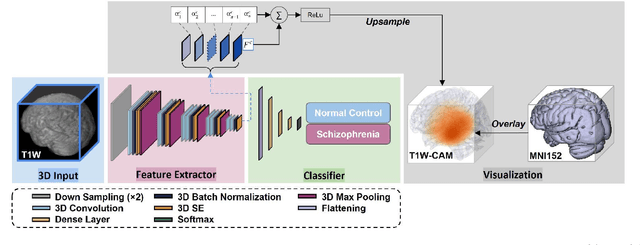
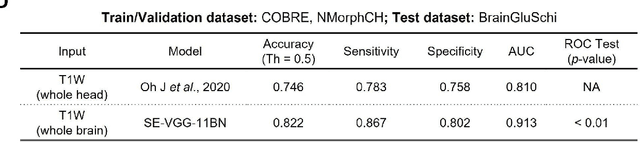
Schizophrenia is a chronic neuropsychiatric disorder that causes distinct structural alterations within the brain. We hypothesize that deep learning applied to a structural neuroimaging dataset could detect disease-related alteration and improve classification and diagnostic accuracy. We tested this hypothesis using a single, widely available, and conventional T1-weighted MRI scan, from which we extracted the 3D whole-brain structure using standard post-processing methods. A deep learning model was then developed, optimized, and evaluated on three open datasets with T1-weighted MRI scans of patients with schizophrenia. Our proposed model outperformed the benchmark model, which was also trained with structural MR images using a 3D CNN architecture. Our model is capable of almost perfectly (area under the ROC curve = 0.987) distinguishing schizophrenia patients from healthy controls on unseen structural MRI scans. Regional analysis localized subcortical regions and ventricles as the most predictive brain regions. Subcortical structures serve a pivotal role in cognitive, affective, and social functions in humans, and structural abnormalities of these regions have been associated with schizophrenia. Our finding corroborates that schizophrenia is associated with widespread alterations in subcortical brain structure and the subcortical structural information provides prominent features in diagnostic classification. Together, these results further demonstrate the potential of deep learning to improve schizophrenia diagnosis and identify its structural neuroimaging signatures from a single, standard T1-weighted brain MRI.