 Add to Chrome
 Add to Firefox
 Add to Edge
Building AI That Works: ESnet's Pragmatic Approach to AI-Driven Operational Excellence
Jul 24, 2026
The ORBIT (Operations Responses and Business Intelligence Toolkit) project was initiated to assess agentic AI for the upcoming ESnet 7 initiative and to address persistent operational pain points in the Network Operations Center (NOC) workflow. ESnet operators experience slow retrieval from siloed data sources, incidents described in lengthy and difficult-to-parse tickets, and context loss across shift handoffs. These challenges increase cognitive load and prolong incident resolution times. ORBIT therefore targets routine automation, cross-source synthesis, and actionable insights delivered directly within operators' existing tooling. ORBIT is an agentic AI system integrated into ServiceNow, ESnet's primary incident management platform. The design uses a modular, layered architecture comprising a centralized reasoning hub, tool access via MCPs for ESnet data sources, a semantic search layer, and an operator-facing chat interface. To manage the complexity and stochasticity of the AI toolchain, ORBIT follows industry best practices by structuring task logic as versioned, tested "skills" that guide the system in performing bounded responsibilities. This improves reliability and predictability compared to fully unconstrained agent behavior. Key results show that ORBIT successfully delivered all six initial tasks, and the architecture enabled rapid development of two additional tasks proposed by NOC engineers. We observed strong organic adoption of general-purpose infrastructure components, especially the chat interface and LiteLLM model gateway, including high request volumes from outside the project. Experiments with skills indicate that this approach can reduce task completion steps while eliminating observed error modes.

Effectiveness and predictability of in-network storage cache for scientific workflows
Jul 20, 2023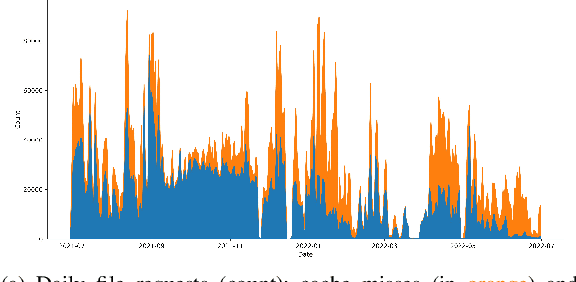

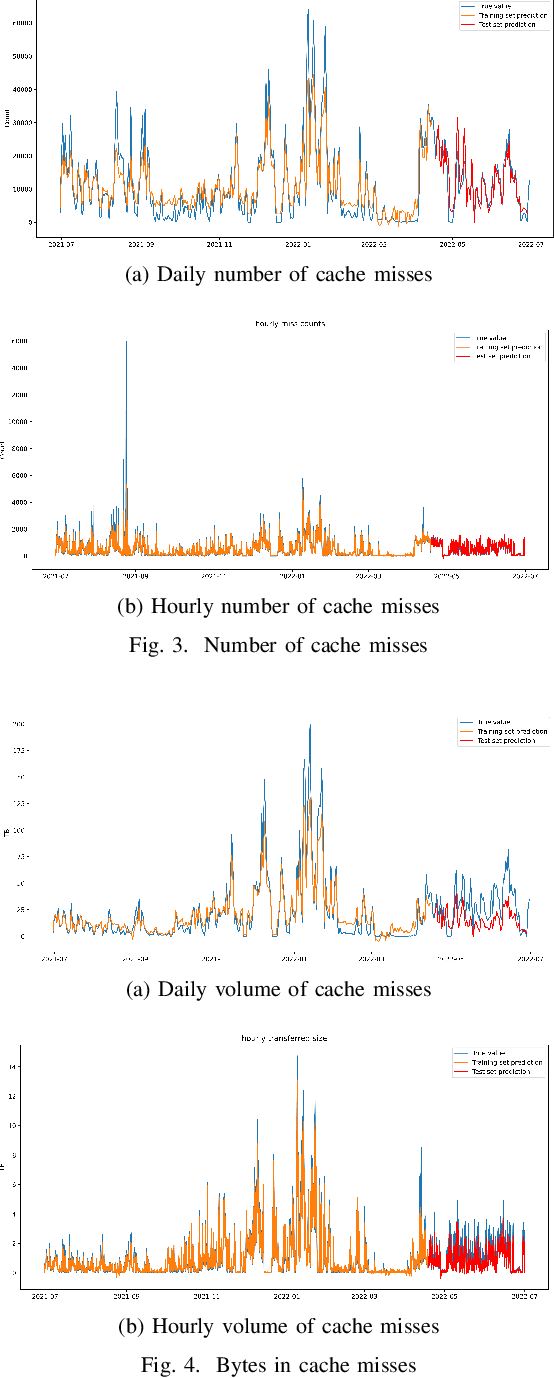
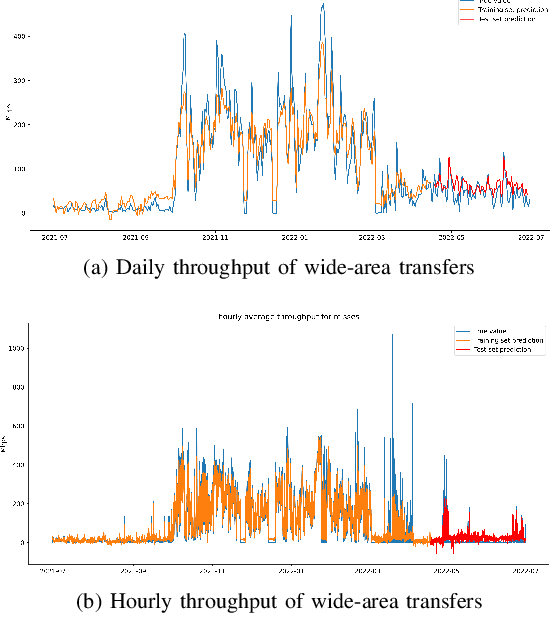
Large scientific collaborations often have multiple scientists accessing the same set of files while doing different analyses, which create repeated accesses to the large amounts of shared data located far away. These data accesses have long latency due to distance and occupy the limited bandwidth available over the wide-area network. To reduce the wide-area network traffic and the data access latency, regional data storage caches have been installed as a new networking service. To study the effectiveness of such a cache system in scientific applications, we examine the Southern California Petabyte Scale Cache for a high-energy physics experiment. By examining about 3TB of operational logs, we show that this cache removed 67.6% of file requests from the wide-area network and reduced the traffic volume on wide-area network by 12.3TB (or 35.4%) an average day. The reduction in the traffic volume (35.4%) is less than the reduction in file counts (67.6%) because the larger files are less likely to be reused. Due to this difference in data access patterns, the cache system has implemented a policy to avoid evicting smaller files when processing larger files. We also build a machine learning model to study the predictability of the cache behavior. Tests show that this model is able to accurately predict the cache accesses, cache misses, and network throughput, making the model useful for future studies on resource provisioning and planning.
Access Trends of In-network Cache for Scientific Data
May 11, 2022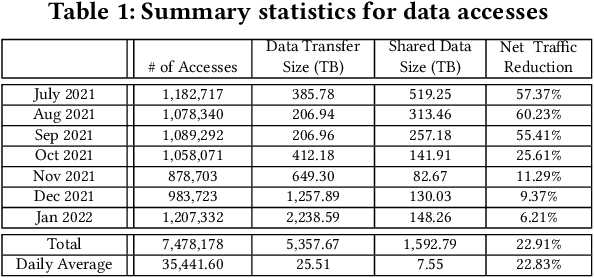
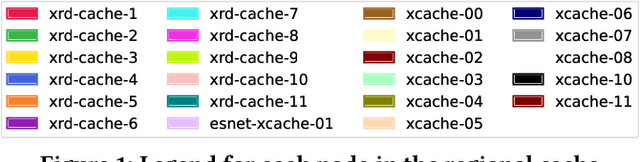
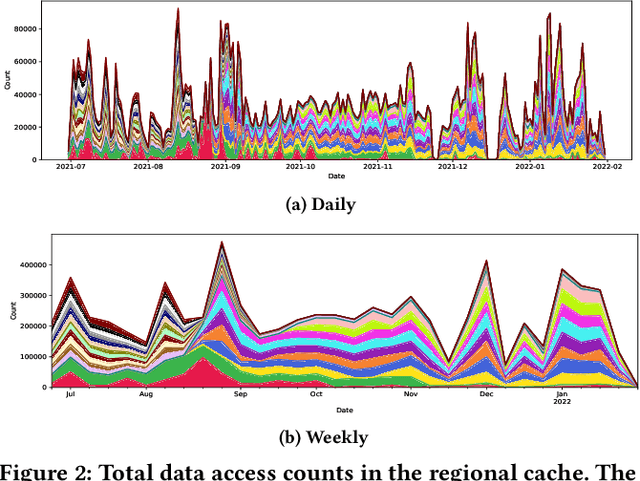
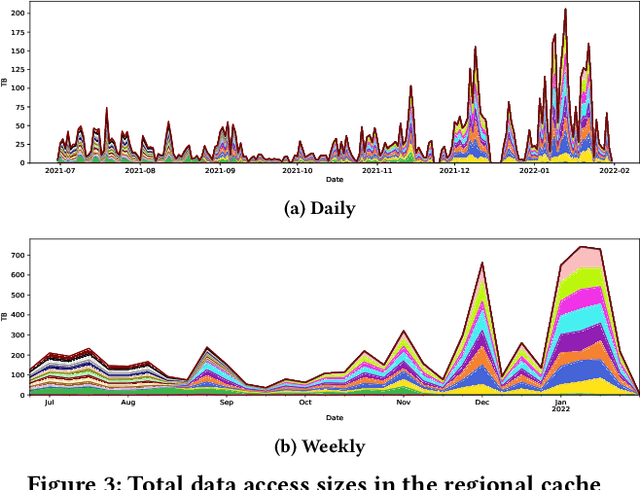
Scientific collaborations are increasingly relying on large volumes of data for their work and many of them employ tiered systems to replicate the data to their worldwide user communities. Each user in the community often selects a different subset of data for their analysis tasks; however, members of a research group often are working on related research topics that require similar data objects. Thus, there is a significant amount of data sharing possible. In this work, we study the access traces of a federated storage cache known as the Southern California Petabyte Scale Cache. By studying the access patterns and potential for network traffic reduction by this caching system, we aim to explore the predictability of the cache uses and the potential for a more general in-network data caching. Our study shows that this distributed storage cache is able to reduce the network traffic volume by a factor of 2.35 during a part of the study period. We further show that machine learning models could predict cache utilization with an accuracy of 0.88. This demonstrates that such cache usage is predictable, which could be useful for managing complex networking resources such as in-network caching.