 Add to Chrome
 Add to Firefox
 Add to Edge
Multi-Agent Comedy Club: Investigating Community Discussion Effects on LLM Humor Generation
Feb 17, 2026
Prior work has explored multi-turn interaction and feedback for LLM writing, but evaluations still largely center on prompts and localized feedback, leaving persistent public reception in online communities underexamined. We test whether broadcast community discussion improves stand-up comedy writing in a controlled multi-agent sandbox: in the discussion condition, critic and audience threads are recorded, filtered, stored as social memory, and later retrieved to condition subsequent generations, whereas the baseline omits discussion. Across 50 rounds (250 paired monologues) judged by five expert annotators using A/B preference and a 15-item rubric, discussion wins 75.6% of instances and improves Craft/Clarity (Δ = 0.440) and Social Response (Δ = 0.422), with occasional increases in aggressive humor.

Secret Use of Large Language Models
Sep 28, 2024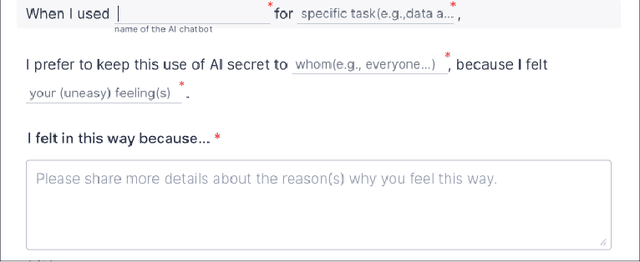
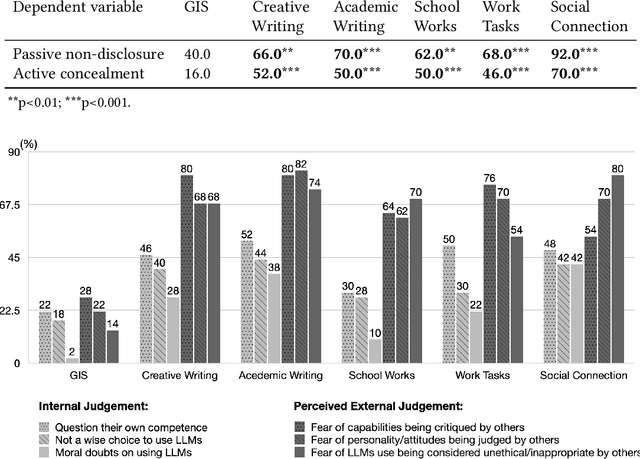
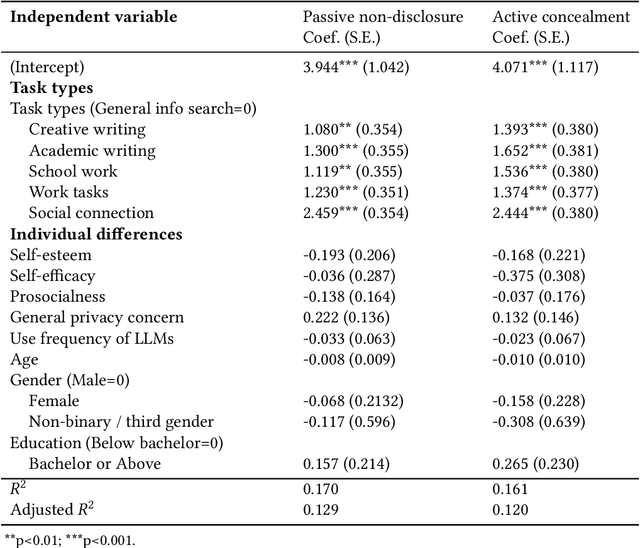
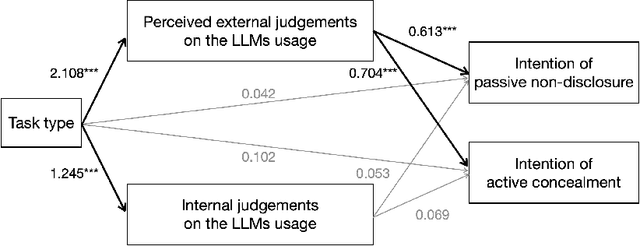
The advancements of Large Language Models (LLMs) have decentralized the responsibility for the transparency of AI usage. Specifically, LLM users are now encouraged or required to disclose the use of LLM-generated content for varied types of real-world tasks. However, an emerging phenomenon, users' secret use of LLM, raises challenges in ensuring end users adhere to the transparency requirement. Our study used mixed-methods with an exploratory survey (125 real-world secret use cases reported) and a controlled experiment among 300 users to investigate the contexts and causes behind the secret use of LLMs. We found that such secretive behavior is often triggered by certain tasks, transcending demographic and personality differences among users. Task types were found to affect users' intentions to use secretive behavior, primarily through influencing perceived external judgment regarding LLM usage. Our results yield important insights for future work on designing interventions to encourage more transparent disclosure of the use of LLMs or other AI technologies.