 Add to Chrome
 Add to Firefox
 Add to Edge
Path Planning in Physically Viable World Models
Jul 01, 2026
Robots deployed in unstructured outdoor environments often plan from scene reconstructions collected before deployment because operators cannot remap large or remote sites before every mission. As a result, robots must make long-horizon planning decisions using stale maps that assume the terrain remains unchanged, even though physical changes to the environment may render previously feasible routes unsafe or unreachable at execution time. We present a physically viable world model for evaluating what-if queries for robot navigation under future terrain change. The system augments reconstructed 3D Gaussian splat scenes with physics-based simulation to generate physically modified versions of the same environment without recollecting sensor data or rebuilding the map. We then implement a terrain-aware planner that accounts for physical events, obstacles, and deformations that are simulated by the world model. This allows robots and human operators to evaluate whether planned routes remain feasible before committing to a planned route, particularly in constrained environments where retreat or recovery may become impossible once conditions change. We evaluate the system on a real outdoor field site in Central Texas using simulated flooding across multiple severity levels. We measure route and mission feasibility as terrain conditions deteriorate under physically simulated interventions. Our results show that physically viable world models expose long-horizon route failures and rerouting behavior that are not apparent when planning only on the original reconstructed environment, allowing robots to evaluate how future terrain changes may affect route feasibility before deployment.

Physically Viable World Models: A Case for Query-Conditioned Embodied AI
May 28, 2026World models for embodied AI must be physically viable: constructed to answer intervention queries by representing the physical structure governing action outcomes, rather than merely predicting future observations. Existing observation-predictive world models can produce visually plausible but physically wrong rollouts. This failure is structural; distinct physical systems can look identical yet diverge under intervention. We expose this problem with controlled benchmarks that fix the visible scene while varying latent physics. We show that such models may recommend infeasible actions, mispredict interaction outcomes, or certify unsafe behavior. We argue that embodied AI requires world models that identify the simplest physical abstraction sufficient to answer an intervention query. Such a model comprises modular components, including environment representation, latent state and parameter estimation, action specification, interventional dynamics, and query-level response. An autonomous orchestrator should identify the relevant abstraction and compose compatible learned and structured components per query. When closed-form physics is unavailable, uncertain, or costly, the transition model may be analytic, simulated, learned, or hybrid, but it must preserve the structure that determines interventional outcomes. This decomposition makes the model interpretable, its components verifiable, and its outputs auditable against the query. It also provides a design principle for new world models and a feasibility test for existing ones: the right abstraction is not the most detailed model of the world, but the simplest model that preserves the distinctions relevant to the query. We demonstrate this approach on queries that existing systems fail to answer correctly, and outline how an orchestrator can dynamically assemble and adapt physically viable models for planning, control, and verification.
Domain-informed explainable boosting machines for trustworthy lateral spread predictions
Mar 17, 2026Explainable Boosting Machines (EBMs) provide transparent predictions through additive shape functions, enabling direct inspection of feature contributions. However, EBMs can learn non-physical relationships that reduce their reliability in natural hazard applications. This study presents a domain-informed framework to improve the physical consistency of EBMs for lateral spreading prediction. Our approach modifies learned shape functions based on domain knowledge. These modifications correct non-physical behavior while maintaining data-driven patterns. We apply the method to the 2011 Christchurch earthquake dataset and correct non-physical trends observed in the original EBM. The resulting model produces more physically consistent global and local explanations, with an acceptable tradeoff in accuracy (4--5\%).
Investigating the effect of CPT in lateral spreading prediction using Explainable AI
Mar 17, 2025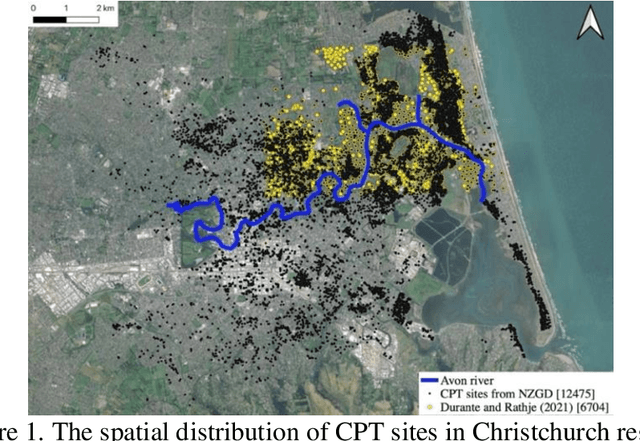
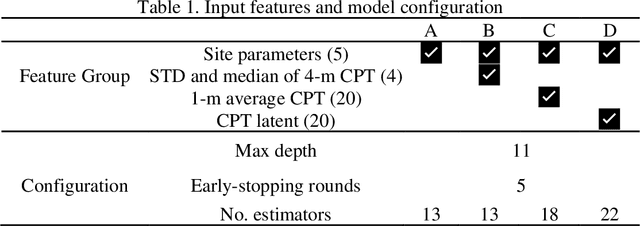
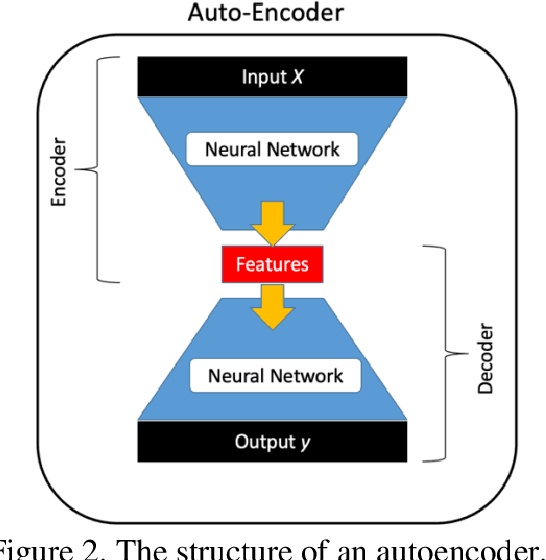
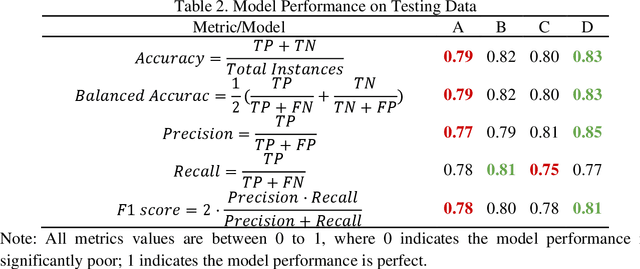
This study proposes an autoencoder approach to extract latent features from cone penetration test profiles to evaluate the potential of incorporating CPT data in an AI model. We employ autoencoders to compress 200 CPT profiles of soil behavior type index (Ic) and normalized cone resistance (qc1Ncs) into ten latent features while preserving critical information. We then utilize the extracted latent features with site parameters to train XGBoost models for predicting lateral spreading occurrences in the 2011 Christchurch earthquake. Models using the latent CPT features outperformed models with conventional CPT metrics or no CPT data, achieving over 83% accuracy. Explainable AI revealed the most crucial latent feature corresponding to soil behavior between 1-3 meter depths, highlighting this depth range's criticality for liquefaction evaluation. The autoencoder approach provides an automated technique for condensing CPT profiles into informative latent features for machine-learning liquefaction models.
Explainable AI models for predicting liquefaction-induced lateral spreading
Apr 24, 2024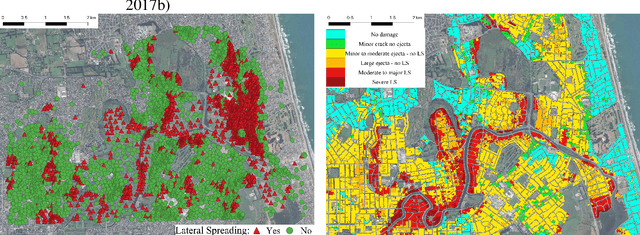
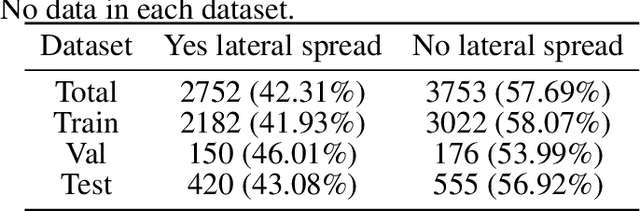
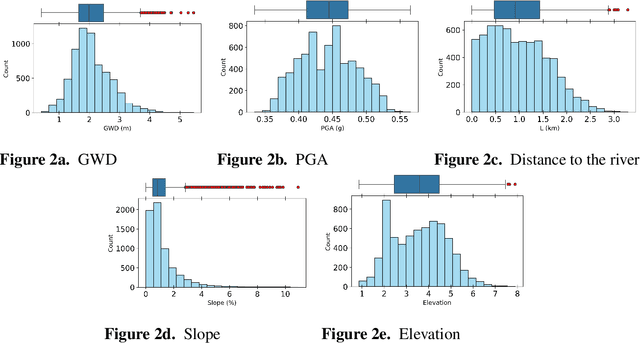
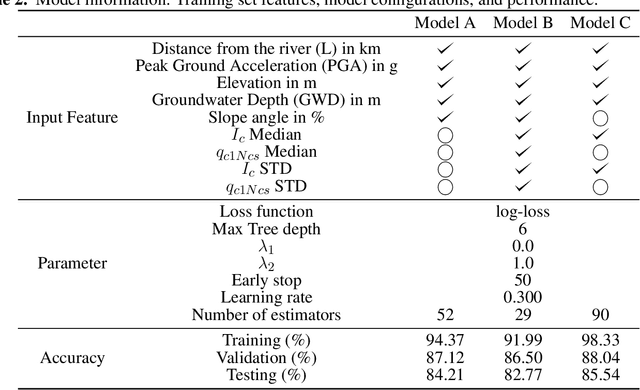
Earthquake-induced liquefaction can cause substantial lateral spreading, posing threats to infrastructure. Machine learning (ML) can improve lateral spreading prediction models by capturing complex soil characteristics and site conditions. However, the "black box" nature of ML models can hinder their adoption in critical decision-making. This study addresses this limitation by using SHapley Additive exPlanations (SHAP) to interpret an eXtreme Gradient Boosting (XGB) model for lateral spreading prediction, trained on data from the 2011 Christchurch Earthquake. SHAP analysis reveals the factors driving the model's predictions, enhancing transparency and allowing for comparison with established engineering knowledge. The results demonstrate that the XGB model successfully identifies the importance of soil characteristics derived from Cone Penetration Test (CPT) data in predicting lateral spreading, validating its alignment with domain understanding. This work highlights the value of explainable machine learning for reliable and informed decision-making in geotechnical engineering and hazard assessment.