 Add to Chrome
 Add to Firefox
 Add to Edge
Detecting Transportation Mode Using Dense Smartphone GPS Trajectories and Transformer Models
Feb 27, 2026
Transportation mode detection is an important topic within GeoAI and transportation research. In this study, we introduce SpeedTransformer, a novel Transformer-based model that relies solely on speed inputs to infer transportation modes from dense smartphone GPS trajectories. In benchmark experiments, SpeedTransformer outperformed traditional deep learning models, such as the Long Short-Term Memory (LSTM) network. Moreover, the model demonstrated strong flexibility in transfer learning, achieving high accuracy across geographical regions after fine-tuning with small datasets. Finally, we deployed the model in a real-world experiment, where it consistently outperformed baseline models under complex built environments and high data uncertainty. These findings suggest that Transformer architectures, when combined with dense GPS trajectories, hold substantial potential for advancing transportation mode detection and broader mobility-related research.

Wi-Fi and Bluetooth Contact Tracing Without User Intervention
Mar 31, 2022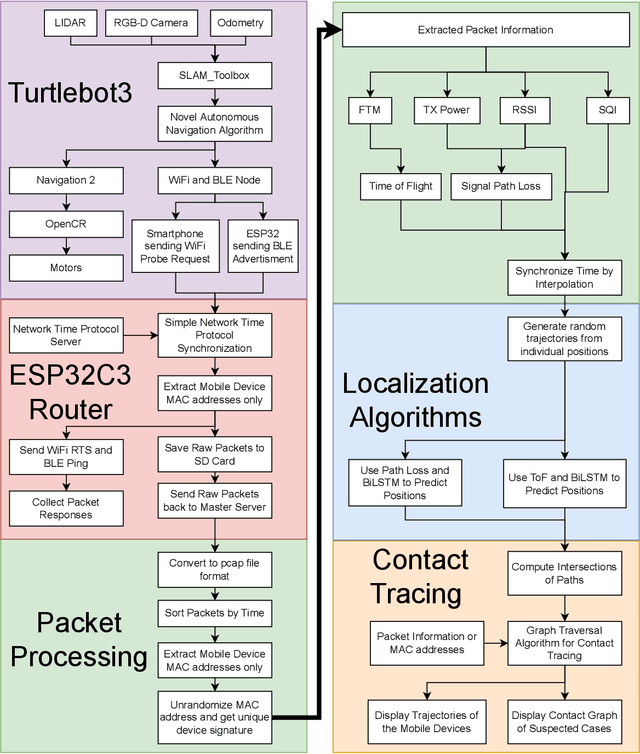
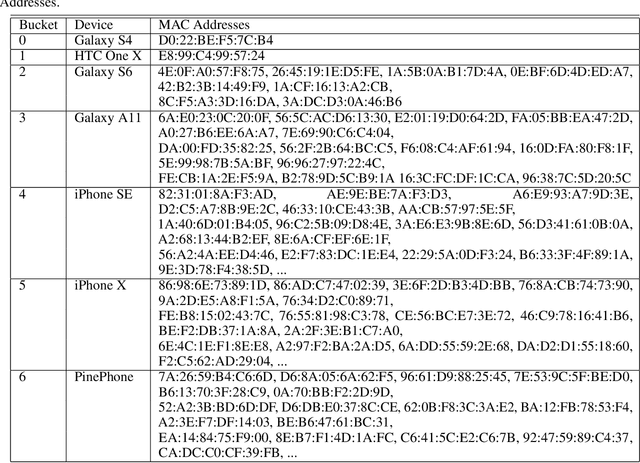
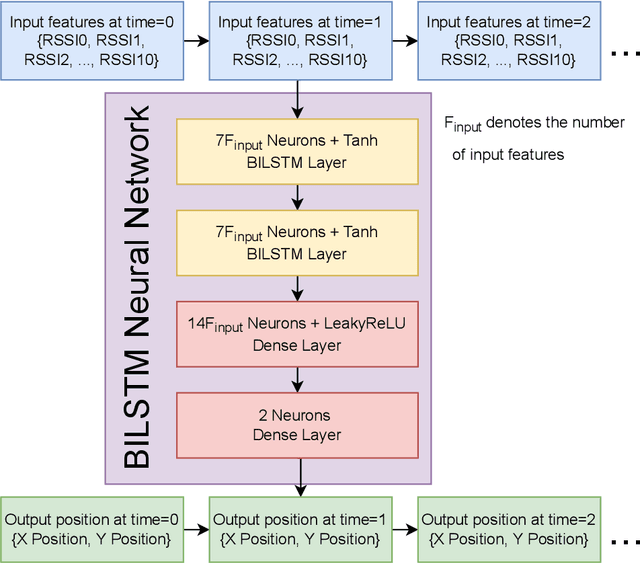
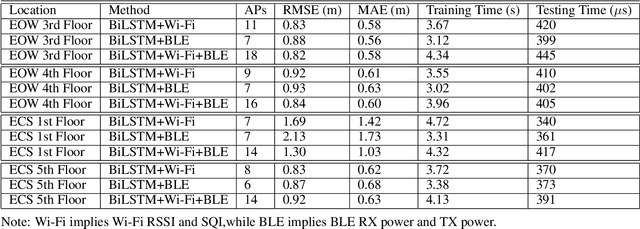
A custom Wi-Fi and Bluetooth indoor contact tracing system is created to find detailed paths of infected individuals without any user intervention. The system tracks smartphones, but it does not require smartphone applications, connecting to the routers, or any other extraneous devices on the users. A custom Turtlebot3 is used for site surveying, where it simulates mobile device movement and packet transmission. Transmit power, receive power, and round trip time are collected by a custom ESP32C3 router. MAC randomization is defeated to identify unique smartphones. Subsequently, the wireless parameters above are converted to signal path loss and time of flight. Bidirectional long short term memory takes the wireless parameters and predicts the detailed paths of the users within 1 m. Public health authorities can use the contact tracing website to find the detailed paths of the suspected cases using the smartphone models and initial positions of confirm cases. The system can also track indirect contact transmissions originating from surfaces and droplets due to having absolute positions of users.