 Add to Chrome
 Add to Firefox
 Add to Edge
SCOPE: Entanglement Frontier Escape for Source-Free Class Unlearning
Aug 03, 2026
Source-free class unlearning erases whole classes using only the forget data, judged at the representation level, where features can leak a class the head no longer predicts. Existing feature-space erasers answer with one fixed projection, yet forget and retain classes share a representation, so deleting one disturbs the other where they overlap. We prove this tension is a frontier. Every fixed projection that deletes pays a retain cost of at least the retain-readout energy along the forget-discriminant subspace, and erasing that subspace alone attains the floor. The leading source-free erasers all instantiate the form it binds, so the frontier limits the whole class. Conditioning the erasure on the input escapes it. Spectral Conditional Projective Erasure (SCOPE) does so with a single gate, suppressing the forget subspace chiefly on inputs its frozen head's weight scores read as a forget class. It is closed form, needs no retain data or gradient training, and costs orders of magnitude less than retraining. Across five object, face, and speaker benchmarks spanning two modalities and both convolutional and transformer backbones, the frontier predicts the measured retain cost. SCOPE leads the source-free erasers on every benchmark and forget-set size, and at the hardest setting it tops every unlearner, trained methods included.

On the Depth Scalability of Logic Gate Networks
Jul 19, 2026Logic Gate Networks (LGNs) implement computation through compositions of Boolean operations, yet unlike classical Boolean circuits, existing LGNs do not reliably benefit from increased depth. We identify two distinct causes: optimization collapse in deep relaxed LGNs and a topology-induced limitation that persists even when skip-biased initialization and straight-through estimation stabilize training. Thus, trainability alone is insufficient; deeper layers must also receive information that supports useful computation. We introduce Input-Anchored Logic Gate Networks (IALGNs), in which each gate combines an evolving hidden feature with a direct input anchor. This topology preserves a computational spine while conditioning every layer on the original input. We show that a depth-D path can depend on up to D+1 input bits and establish a strict path-wise depth hierarchy. Random-k anchor relaxation further improves anchor selection without relaxing the spine. Across MNIST, CIFAR-10, and CIFAR-100, IALGNs achieve consistent fixed-width depth--accuracy improvements beyond 100 layers, whereas alternative LGN topologies saturate or degrade. Layer-wise probes, topology ablations, and effective-depth analysis show that input anchoring produces progressively more informative representations and preserves longer computational paths. These results demonstrate that scalable depth in LGNs requires both stable optimization and an information-access pattern that supports input-conditioned refinement.
Retain-Neutral Surrogates for Min-Max Unlearning
May 07, 2026Machine unlearning seeks to remove the influence of designated training data while preserving performance on the remaining data. Approximate unlearning can be viewed as a local editing problem; in min-max unlearning, the key local object is the surrogate point at which the retain objective is evaluated. When forget and retain gradients are strongly aligned, an unconstrained forget-maximizing perturbation can move to a surrogate point that increases retain loss. We propose Retain-Orthogonal Surrogate Unlearning (ROSU), which constrains the inner surrogate construction by maximizing first-order forget gain subject to zero first-order retain change under a fixed perturbation budget. This yields a closed-form retain-orthogonal perturbation, a lightweight transported outer update, and amplification along the retain-neutral direction. Our analysis establishes (i) a curvature-controlled second-order bound on retain damage, (ii) a positive-alignment regime in which ROSU strictly reduces surrogate retain loss relative to standard min-max perturbations, and (iii) near-equivalence when the two gradients are nearly orthogonal. Across vision and language benchmarks (CIFAR-10/100, Tiny-ImageNet, TOFU, WMDP), the empirical pattern follows this geometry: ROSU gives its clearest gains in high-coupling regimes while remaining competitive elsewhere.
Geographical Node Clustering and Grouping to Guarantee Data IIDness in Federated Learning
Oct 21, 2024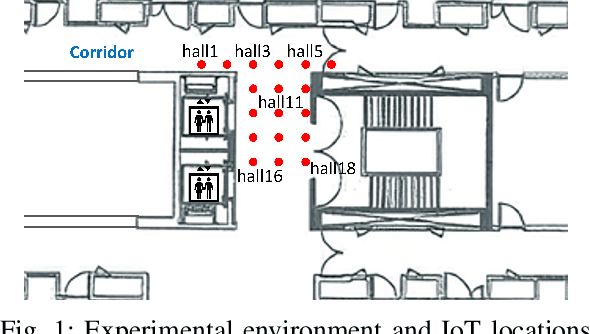
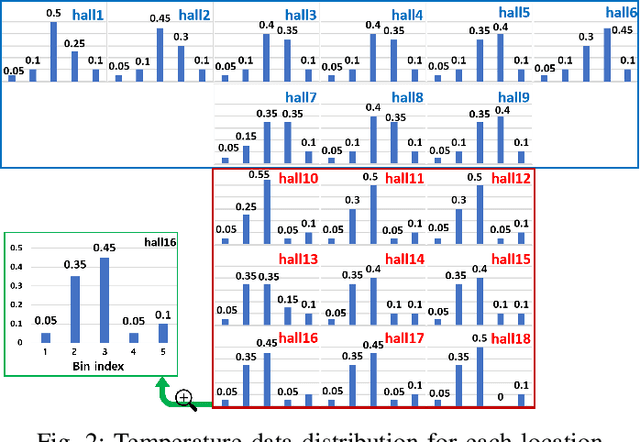
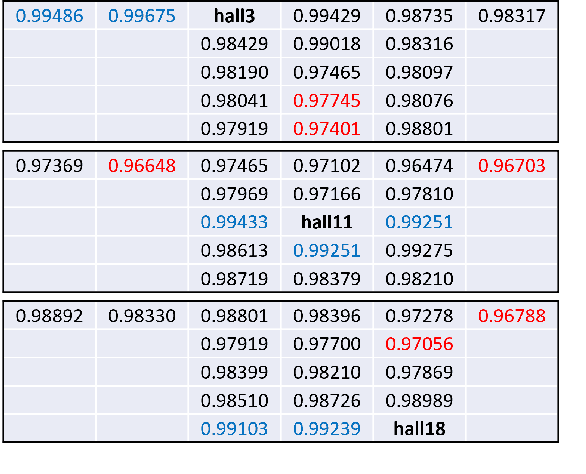
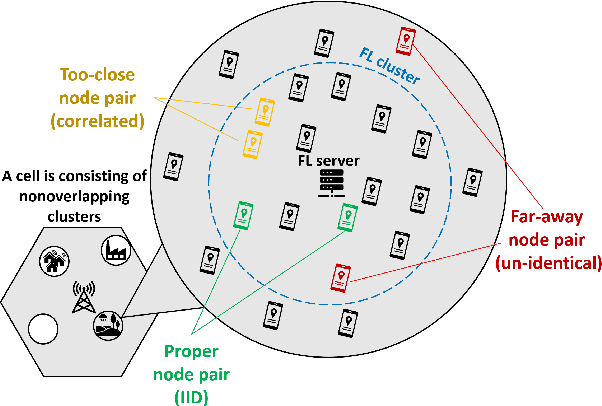
Federated learning (FL) is a decentralized AI mechanism suitable for a large number of devices like in smart IoT. A major challenge of FL is the non-IID dataset problem, originating from the heterogeneous data collected by FL participants, leading to performance deterioration of the trained global model. There have been various attempts to rectify non-IID dataset, mostly focusing on manipulating the collected data. This paper, however, proposes a novel approach to ensure data IIDness by properly clustering and grouping mobile IoT nodes exploiting their geographical characteristics, so that each FL group can achieve IID dataset. We first provide an experimental evidence for the independence and identicalness features of IoT data according to the inter-device distance, and then propose Dynamic Clustering and Partial-Steady Grouping algorithms that partition FL participants to achieve near-IIDness in their dataset while considering device mobility. Our mechanism significantly outperforms benchmark grouping algorithms at least by 110 times in terms of the joint cost between the number of dropout devices and the evenness in per-group device count, with a mild increase in the number of groups only by up to 0.93 groups.
Toward Scalable and Efficient Visual Data Transmission in 6G Networks
Sep 24, 2024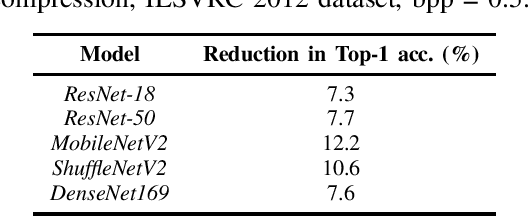
6G network technology will emerge in a landscape where visual data transmissions dominate global mobile traffic and are expected to grow continuously, driven by the increasing demand for AI-based computer vision applications. This will make already challenging task of visual data transmission even more difficult. In this work, we review effective techniques for visual data transmission, such as content compression and adaptive video streaming, highlighting their advantages and limitations. Further, considering the scalability and cost issues of cloud-based and on-device AI services, we explore distributed in-network computing architecture like fog-computing as a direction of 6G networks, and investigate the necessary technical properties for the timely delivery of visual data.
CycleGANAS: Differentiable Neural Architecture Search for CycleGAN
Nov 13, 2023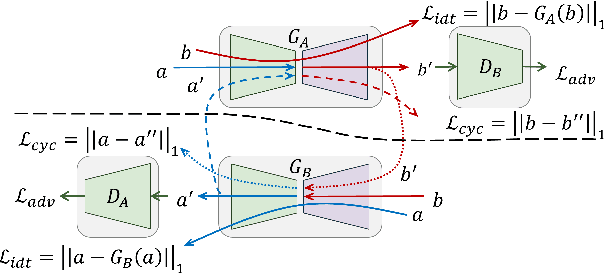
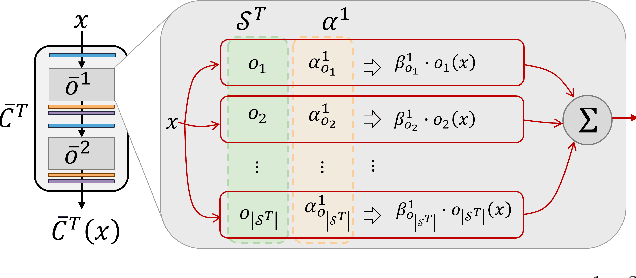
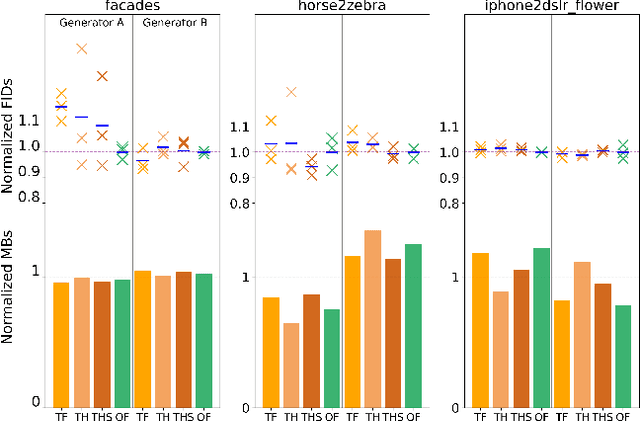
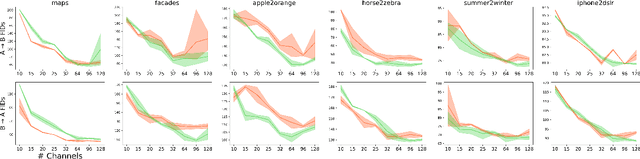
We develop a Neural Architecture Search (NAS) framework for CycleGAN that carries out unpaired image-to-image translation task. Extending previous NAS techniques for Generative Adversarial Networks (GANs) to CycleGAN is not straightforward due to the task difference and greater search space. We design architectures that consist of a stack of simple ResNet-based cells and develop a search method that effectively explore the large search space. We show that our framework, called CycleGANAS, not only effectively discovers high-performance architectures that either match or surpass the performance of the original CycleGAN, but also successfully address the data imbalance by individual architecture search for each translation direction. To our best knowledge, it is the first NAS result for CycleGAN and shed light on NAS for more complex structures.