 Add to Chrome
 Add to Firefox
 Add to Edge
Early and Prediagnostic Detection of Pancreatic Cancer from Computed Tomography
Jan 29, 2026
Pancreatic ductal adenocarcinoma (PDAC), one of the deadliest solid malignancies, is often detected at a late and inoperable stage. Retrospective reviews of prediagnostic CT scans, when conducted by expert radiologists aware that the patient later developed PDAC, frequently reveal lesions that were previously overlooked. To help detecting these lesions earlier, we developed an automated system named ePAI (early Pancreatic cancer detection with Artificial Intelligence). It was trained on data from 1,598 patients from a single medical center. In the internal test involving 1,009 patients, ePAI achieved an area under the receiver operating characteristic curve (AUC) of 0.939-0.999, a sensitivity of 95.3%, and a specificity of 98.7% for detecting small PDAC less than 2 cm in diameter, precisely localizing PDAC as small as 2 mm. In an external test involving 7,158 patients across 6 centers, ePAI achieved an AUC of 0.918-0.945, a sensitivity of 91.5%, and a specificity of 88.0%, precisely localizing PDAC as small as 5 mm. Importantly, ePAI detected PDACs on prediagnostic CT scans obtained 3 to 36 months before clinical diagnosis that had originally been overlooked by radiologists. It successfully detected and localized PDACs in 75 of 159 patients, with a median lead time of 347 days before clinical diagnosis. Our multi-reader study showed that ePAI significantly outperformed 30 board-certified radiologists by 50.3% (P < 0.05) in sensitivity while maintaining a comparable specificity of 95.4% in detecting PDACs early and prediagnostic. These findings suggest its potential of ePAI as an assistive tool to improve early detection of pancreatic cancer.

Bladder segmentation based on deep learning approaches: current limitations and lessons
Jan 16, 2021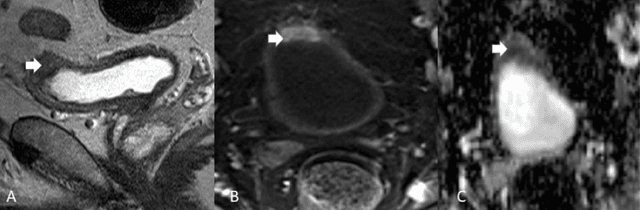
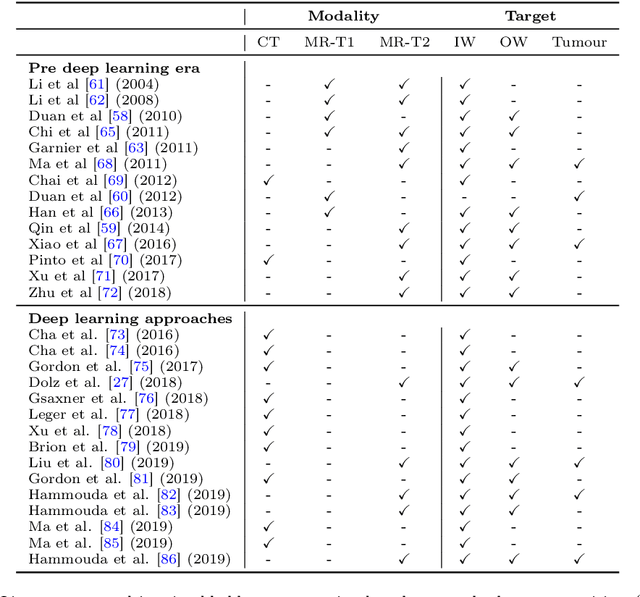
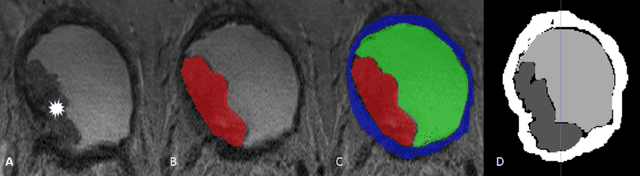
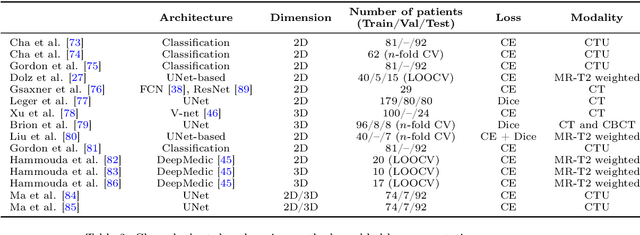
Precise determination and assessment of bladder cancer (BC) extent of muscle invasion involvement guides proper risk stratification and personalized therapy selection. In this context, segmentation of both bladder walls and cancer are of pivotal importance, as it provides invaluable information to stage the primary tumour. Hence, multi region segmentation on patients presenting with symptoms of bladder tumours using deep learning heralds a new level of staging accuracy and prediction of the biologic behaviour of the tumour. Nevertheless, despite the success of these models in other medical problems, progress in multi region bladder segmentation is still at a nascent stage, with just a handful of works tackling a multi region scenario. Furthermore, most existing approaches systematically follow prior literature in other clinical problems, without casting a doubt on the validity of these methods on bladder segmentation, which may present different challenges. Inspired by this, we provide an in-depth look at bladder cancer segmentation using deep learning models. The critical determinants for accurate differentiation of muscle invasive disease, current status of deep learning based bladder segmentation, lessons and limitations of prior work are highlighted.