 Add to Chrome
 Add to Firefox
 Add to Edge
Trajectory Inference of Human Aging from Cross-Sectional DNA Methylation Data
Jul 04, 2026
DNA methylation (DNAm) serves as one of the most robust molecular biomarkers of biological aging. While conventional epigenetic clocks accurately predict chronological age from high-dimensional CpG profiles, they treat aging as a static regression task, meaning they can only output a single score rather than simulating how an entire profile continuously changes over time. To reconstruct these continuous dynamics, we frame lifelong human epigenetic aging as a trajectory inference problem across discrete age snapshots derived from widely available cross-sectional data. We introduce a two-stage computational pipeline: first, an age-regularized Variational Autoencoder (VAE) maps high-dimensional CpG profiles onto a chronologically ordered latent manifold while preserving a generative decoder bridge back to the original methylation space. Second, we model the continuous movement across this latent space via Regularized Unbalanced Optimal Transport (RUOT) that unifies deterministic drift, random diffusion, and non-conservative mass changes. By resolving this RUOT formulation using the DeepRUOT framework, our model fluidly accommodates population-level density shifts like survivorship bias and cellular attrition without requiring rigid biological priors. Evaluated on a large-scale, 80-year pan-tissue dataset, our model demonstrates robust distribution interpolation and uncovers a prominent late-life surge in the learned growth field that mathematically captures the variance expansion driven by stochastic epigenetic drift. Finally, by decoding continuous latent paths back to individual CpG sites, we reconstruct and empirically verify distinct biological aging archetypes, offering a rigorous, generative paradigm for simulating human molecular aging.

Symplectic Neural Networks for learning Generalized Hamiltonians
Jun 25, 2026Hamiltonian Neural Networks (HNNs) integrate physical priors into neural models by learning a system's Hamiltonian, improving generalization and sample efficiency. Identifying the system Hamiltonian from noisy observations of state variables is a challenging task. For simulations to faithfully reflect the long-term behavior of Hamiltonian systems, especially energy conservation, it is essential to use symplectic integrators, which preserve the system's geometric structure. This fidelity comes at a cost: implicit symplectic integrators are more computationally intensive and make backpropagation through the ODE solver non-trivial. However, by leveraging the fact that symplectic discretizations of the adjoint system yield the same sensitivities associated by backpropagation, we obtain an efficient method of training the Neural Network parameters. In our work, we explore this alternate method of HNN training under noisy observation of trajectories with our HNN model based on an implicit symplectic integrator. Computationally, a predictor-corrector based ODE solver and fixed point iteration help to mitigate the computational cost of the implicit timestepping, resulting in more efficient generation of gradient updates. We showcase the numerical advantage, in experiments, in system identification and energy preservation on a range of non-separable, chaotic systems and the efficient computation and memory complexity of our method. We also observe that the post-processing of the learned Hamiltonian using backward error analysis yields a modified Hamiltonian that is a more accurate approximation of the true Hamiltonian without the need to use more accurate discretizations of the flow map.
AI scientists produce results without reasoning scientifically
Apr 20, 2026Large language model (LLM)-based systems are increasingly deployed to conduct scientific research autonomously, yet whether their reasoning adheres to the epistemic norms that make scientific inquiry self-correcting is poorly understood. Here, we evaluate LLM-based scientific agents across eight domains, spanning workflow execution to hypothesis-driven inquiry, through more than 25,000 agent runs and two complementary lenses: (i) a systematic performance analysis that decomposes the contributions of the base model and the agent scaffold, and (ii) a behavioral analysis of the epistemological structure of agent reasoning. We observe that the base model is the primary determinant of both performance and behavior, accounting for 41.4% of explained variance versus 1.5% for the scaffold. Across all configurations, evidence is ignored in 68% of traces, refutation-driven belief revision occurs in 26%, and convergent multi-test evidence is rare. The same reasoning pattern appears whether the agent executes a computational workflow or conducts hypothesis-driven inquiry. They persist even when agents receive near-complete successful reasoning trajectories as context, and the resulting unreliability compounds across repeated trials in epistemically demanding domains. Thus, current LLM-based agents execute scientific workflows but do not exhibit the epistemic patterns that characterize scientific reasoning. Outcome-based evaluation cannot detect these failures, and scaffold engineering alone cannot repair them. Until reasoning itself becomes a training target, the scientific knowledge produced by such agents cannot be justified by the process that generated it.
Learning Generalized Hamiltonians using fully Symplectic Mappings
Sep 17, 2024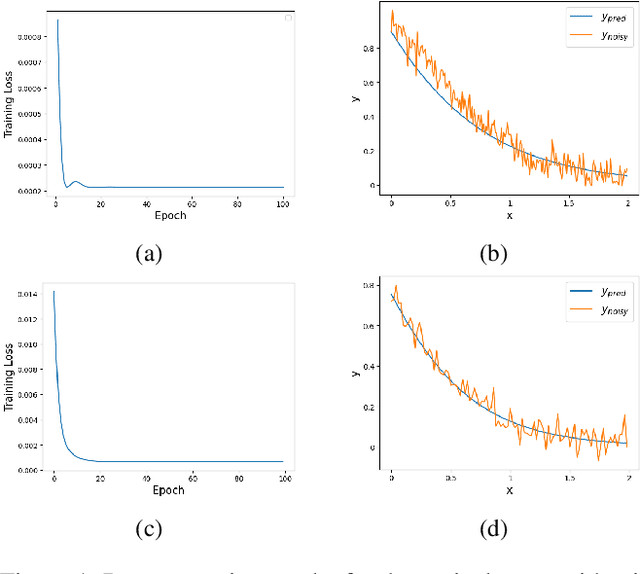
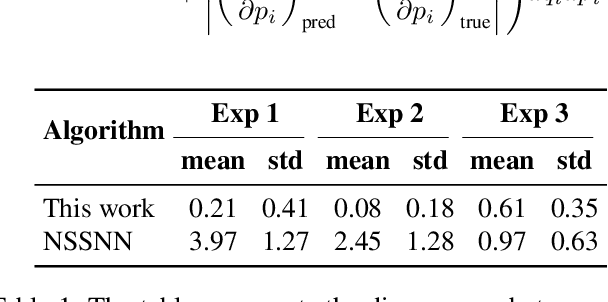
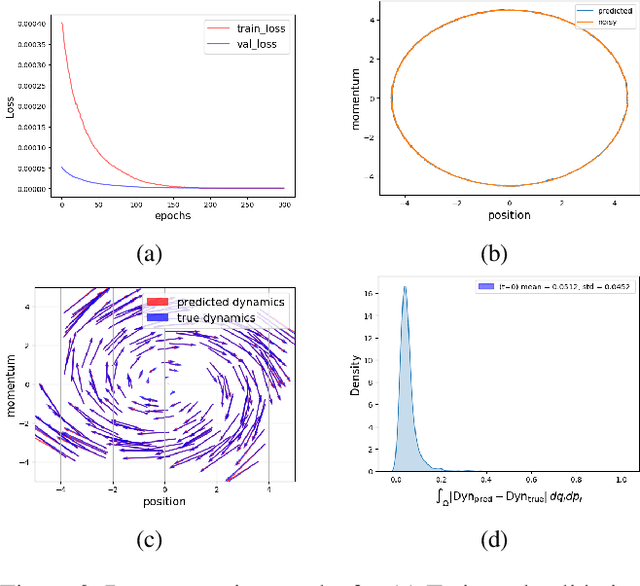

Many important physical systems can be described as the evolution of a Hamiltonian system, which has the important property of being conservative, that is, energy is conserved throughout the evolution. Physics Informed Neural Networks and in particular Hamiltonian Neural Networks have emerged as a mechanism to incorporate structural inductive bias into the NN model. By ensuring physical invariances are conserved, the models exhibit significantly better sample complexity and out-of-distribution accuracy than standard NNs. Learning the Hamiltonian as a function of its canonical variables, typically position and velocity, from sample observations of the system thus becomes a critical task in system identification and long-term prediction of system behavior. However, to truly preserve the long-run physical conservation properties of Hamiltonian systems, one must use symplectic integrators for a forward pass of the system's simulation. While symplectic schemes have been used in the literature, they are thus far limited to situations when they reduce to explicit algorithms, which include the case of separable Hamiltonians or augmented non-separable Hamiltonians. We extend it to generalized non-separable Hamiltonians, and noting the self-adjoint property of symplectic integrators, we bypass computationally intensive backpropagation through an ODE solver. We show that the method is robust to noise and provides a good approximation of the system Hamiltonian when the state variables are sampled from a noisy observation. In the numerical results, we show the performance of the method concerning Hamiltonian reconstruction and conservation, indicating its particular advantage for non-separable systems.
Counter Turing Test CT^2: AI-Generated Text Detection is Not as Easy as You May Think -- Introducing AI Detectability Index
Oct 24, 2023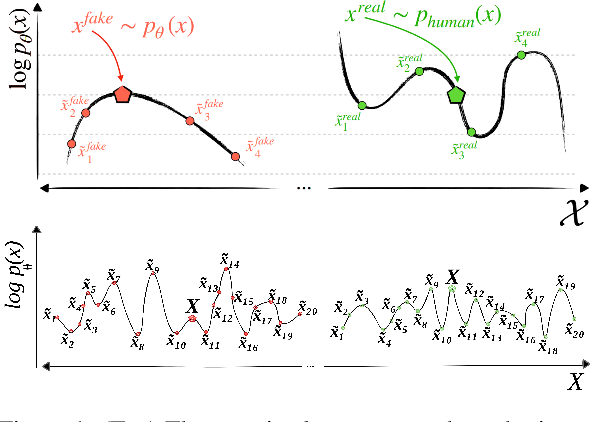
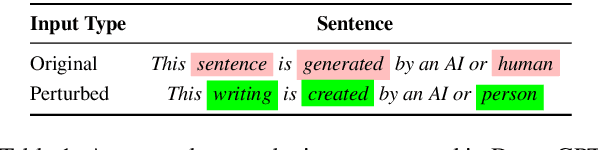
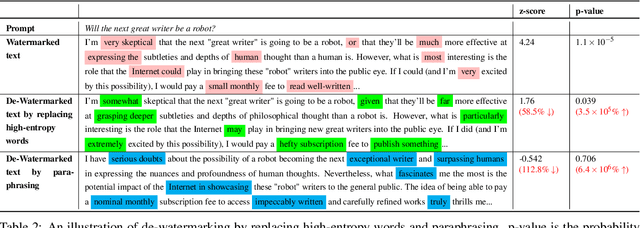

With the rise of prolific ChatGPT, the risk and consequences of AI-generated text has increased alarmingly. To address the inevitable question of ownership attribution for AI-generated artifacts, the US Copyright Office released a statement stating that 'If a work's traditional elements of authorship were produced by a machine, the work lacks human authorship and the Office will not register it'. Furthermore, both the US and the EU governments have recently drafted their initial proposals regarding the regulatory framework for AI. Given this cynosural spotlight on generative AI, AI-generated text detection (AGTD) has emerged as a topic that has already received immediate attention in research, with some initial methods having been proposed, soon followed by emergence of techniques to bypass detection. This paper introduces the Counter Turing Test (CT^2), a benchmark consisting of techniques aiming to offer a comprehensive evaluation of the robustness of existing AGTD techniques. Our empirical findings unequivocally highlight the fragility of the proposed AGTD methods under scrutiny. Amidst the extensive deliberations on policy-making for regulating AI development, it is of utmost importance to assess the detectability of content generated by LLMs. Thus, to establish a quantifiable spectrum facilitating the evaluation and ranking of LLMs according to their detectability levels, we propose the AI Detectability Index (ADI). We conduct a thorough examination of 15 contemporary LLMs, empirically demonstrating that larger LLMs tend to have a higher ADI, indicating they are less detectable compared to smaller LLMs. We firmly believe that ADI holds significant value as a tool for the wider NLP community, with the potential to serve as a rubric in AI-related policy-making.
ANALOGICAL -- A New Benchmark for Analogy of Long Text for Large Language Models
May 14, 2023
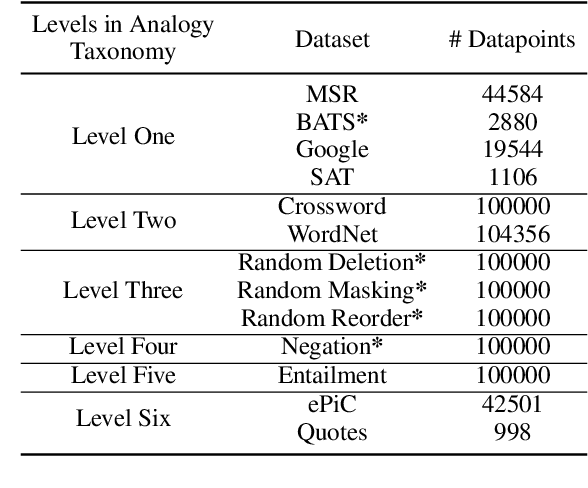

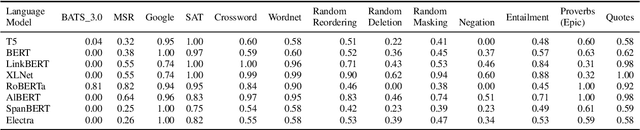
Over the past decade, analogies, in the form of word-level analogies, have played a significant role as an intrinsic measure of evaluating the quality of word embedding methods such as word2vec. Modern large language models (LLMs), however, are primarily evaluated on extrinsic measures based on benchmarks such as GLUE and SuperGLUE, and there are only a few investigations on whether LLMs can draw analogies between long texts. In this paper, we present ANALOGICAL, a new benchmark to intrinsically evaluate LLMs across a taxonomy of analogies of long text with six levels of complexity -- (i) word, (ii) word vs. sentence, (iii) syntactic, (iv) negation, (v) entailment, and (vi) metaphor. Using thirteen datasets and three different distance measures, we evaluate the abilities of eight LLMs in identifying analogical pairs in the semantic vector space. Our evaluation finds that it is increasingly challenging for LLMs to identify analogies when going up the analogy taxonomy.