 Add to Chrome
 Add to Firefox
 Add to Edge
AI scientists produce results without reasoning scientifically
Apr 20, 2026
Large language model (LLM)-based systems are increasingly deployed to conduct scientific research autonomously, yet whether their reasoning adheres to the epistemic norms that make scientific inquiry self-correcting is poorly understood. Here, we evaluate LLM-based scientific agents across eight domains, spanning workflow execution to hypothesis-driven inquiry, through more than 25,000 agent runs and two complementary lenses: (i) a systematic performance analysis that decomposes the contributions of the base model and the agent scaffold, and (ii) a behavioral analysis of the epistemological structure of agent reasoning. We observe that the base model is the primary determinant of both performance and behavior, accounting for 41.4% of explained variance versus 1.5% for the scaffold. Across all configurations, evidence is ignored in 68% of traces, refutation-driven belief revision occurs in 26%, and convergent multi-test evidence is rare. The same reasoning pattern appears whether the agent executes a computational workflow or conducts hypothesis-driven inquiry. They persist even when agents receive near-complete successful reasoning trajectories as context, and the resulting unreliability compounds across repeated trials in epistemically demanding domains. Thus, current LLM-based agents execute scientific workflows but do not exhibit the epistemic patterns that characterize scientific reasoning. Outcome-based evaluation cannot detect these failures, and scaffold engineering alone cannot repair them. Until reasoning itself becomes a training target, the scientific knowledge produced by such agents cannot be justified by the process that generated it.

General purpose models for the chemical sciences
Jul 10, 2025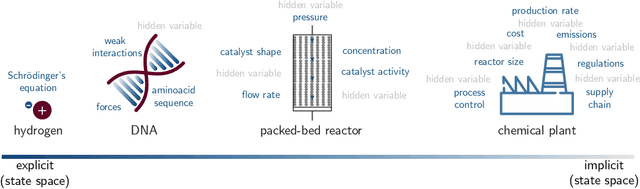
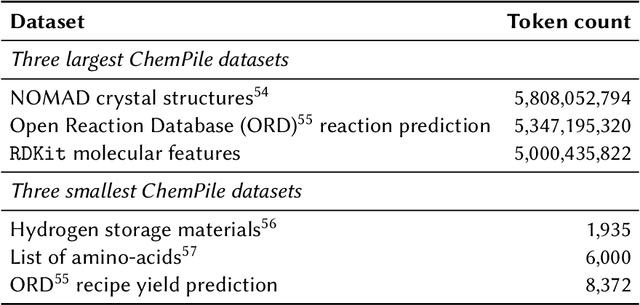
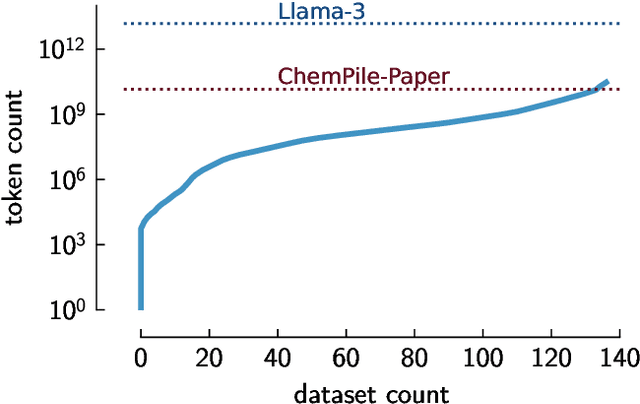
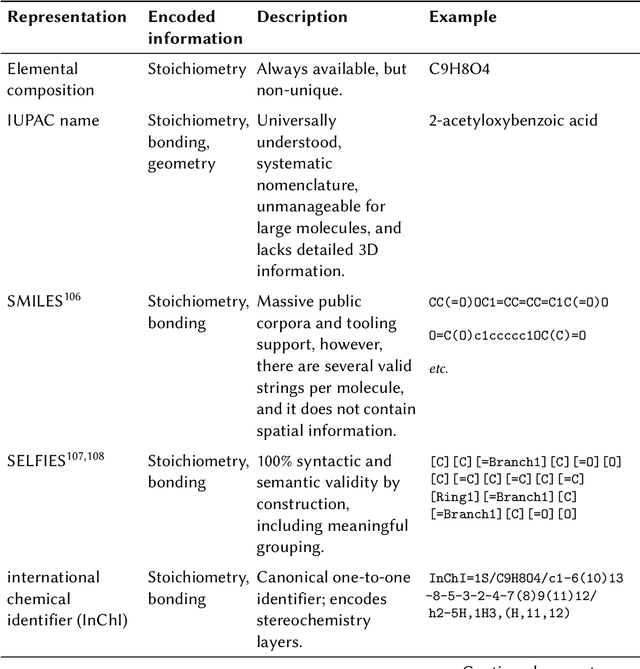
Data-driven techniques have a large potential to transform and accelerate the chemical sciences. However, chemical sciences also pose the unique challenge of very diverse, small, fuzzy datasets that are difficult to leverage in conventional machine learning approaches completely. A new class of models, general-purpose models (GPMs) such as large language models, have shown the ability to solve tasks they have not been directly trained on, and to flexibly operate with low amounts of data in different formats. In this review, we discuss fundamental building principles of GPMs and review recent applications of those models in the chemical sciences across the entire scientific process. While many of these applications are still in the prototype phase, we expect that the increasing interest in GPMs will make many of them mature in the coming years.