 Add to Chrome
 Add to Firefox
 Add to Edge
Personality Shapes Gender Bias in Persona-Conditioned LLM Narratives Across English and Hindi: An Empirical Investigation
Apr 26, 2026
Large Language Models (LLMs) are increasingly deployed in persona-driven applications such as education, customer service, and social platforms, where models are prompted to adopt specific personas when interacting with users. While persona conditioning can improve user experience and engagement, it also raises concerns about how personality cues may interact with gender biases and stereotypes. In this work, we present a controlled study of persona-conditioned story generation in English and Hindi, where each story portrays a working professional in India producing context-specific artifacts (e.g., lesson plans, reports, letters) under systematically varied persona gender, occupational role, and personality traits from the HEXACO and Dark Triad frameworks. Across 23,400 generated stories from six state-of-the-art LLMs, we find that personality traits are significantly associated with both the magnitude and direction of gender bias. In particular, Dark Triad personality traits are consistently associated with higher gender-stereotypical representations compared to socially desirable HEXACO traits, though these associations vary across models and languages. Our findings demonstrate that gender bias in LLMs is not static but context-dependent. This suggests that persona-conditioned systems used in real-world applications may introduce uneven representational harms, reinforcing gender stereotypes in generated educational, professional, or social content.

Counter Turing Test CT^2: AI-Generated Text Detection is Not as Easy as You May Think -- Introducing AI Detectability Index
Oct 24, 2023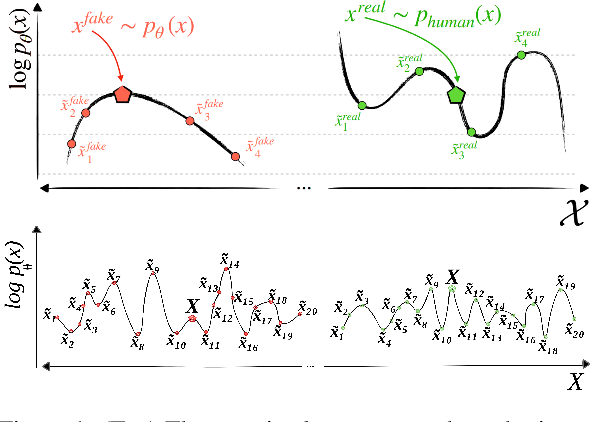
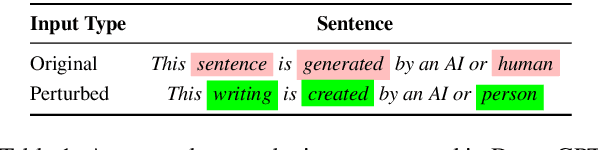
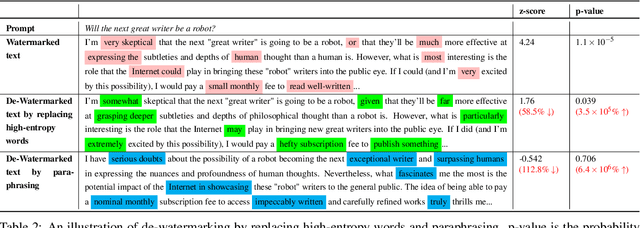

With the rise of prolific ChatGPT, the risk and consequences of AI-generated text has increased alarmingly. To address the inevitable question of ownership attribution for AI-generated artifacts, the US Copyright Office released a statement stating that 'If a work's traditional elements of authorship were produced by a machine, the work lacks human authorship and the Office will not register it'. Furthermore, both the US and the EU governments have recently drafted their initial proposals regarding the regulatory framework for AI. Given this cynosural spotlight on generative AI, AI-generated text detection (AGTD) has emerged as a topic that has already received immediate attention in research, with some initial methods having been proposed, soon followed by emergence of techniques to bypass detection. This paper introduces the Counter Turing Test (CT^2), a benchmark consisting of techniques aiming to offer a comprehensive evaluation of the robustness of existing AGTD techniques. Our empirical findings unequivocally highlight the fragility of the proposed AGTD methods under scrutiny. Amidst the extensive deliberations on policy-making for regulating AI development, it is of utmost importance to assess the detectability of content generated by LLMs. Thus, to establish a quantifiable spectrum facilitating the evaluation and ranking of LLMs according to their detectability levels, we propose the AI Detectability Index (ADI). We conduct a thorough examination of 15 contemporary LLMs, empirically demonstrating that larger LLMs tend to have a higher ADI, indicating they are less detectable compared to smaller LLMs. We firmly believe that ADI holds significant value as a tool for the wider NLP community, with the potential to serve as a rubric in AI-related policy-making.