 Add to Chrome
 Add to Firefox
 Add to Edge
CAAL: Contextual Bandits based Online Hand-Craft Active Learning Strategy Selection
Jun 06, 2026
The challenge with active learning algorithms is the uncertainty of the statistical distribution of unlabeled data, making it difficult to choose the best hand-crafted strategy. To address this, we introduced Contextual Adaptive Active Learning (CAAL). In CAAL, each "arm" represents a hand-crafted strategy. Unlike existing frameworks that select strategies based only on feedback from labeled data, we dynamically choose strategies for labeling batches of data using reward prediction with external context information. This general framework allows for customization with domain knowledge to design more effective rewards and context candidates. In addition, we experimentally show that CAAL outperforms the existing baseline adaptive strategy on public datasets using our reward and context design. Our results are consistent regardless of batch size in each iteration.

TabDeco: A Comprehensive Contrastive Framework for Decoupled Representations in Tabular Data
Nov 17, 2024

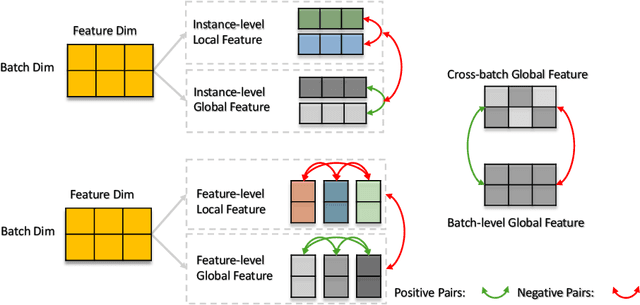

Representation learning is a fundamental aspect of modern artificial intelligence, driving substantial improvements across diverse applications. While selfsupervised contrastive learning has led to significant advancements in fields like computer vision and natural language processing, its adaptation to tabular data presents unique challenges. Traditional approaches often prioritize optimizing model architecture and loss functions but may overlook the crucial task of constructing meaningful positive and negative sample pairs from various perspectives like feature interactions, instance-level patterns and batch-specific contexts. To address these challenges, we introduce TabDeco, a novel method that leverages attention-based encoding strategies across both rows and columns and employs contrastive learning framework to effectively disentangle feature representations at multiple levels, including features, instances and data batches. With the innovative feature decoupling hierarchies, TabDeco consistently surpasses existing deep learning methods and leading gradient boosting algorithms, including XG-Boost, CatBoost, and LightGBM, across various benchmark tasks, underscoring its effectiveness in advancing tabular data representation learning.