 Add to Chrome
 Add to Firefox
 Add to Edge
Biophysics Informed Pathological Regularisation for Brain Tumour Segmentation
Mar 18, 2024


Recent advancements in deep learning have significantly improved brain tumour segmentation techniques; however, the results still lack confidence and robustness as they solely consider image data without biophysical priors or pathological information. Integrating biophysics-informed regularisation is one effective way to change this situation, as it provides an prior regularisation for automated end-to-end learning. In this paper, we propose a novel approach that designs brain tumour growth Partial Differential Equation (PDE) models as a regularisation with deep learning, operational with any network model. Our method introduces tumour growth PDE models directly into the segmentation process, improving accuracy and robustness, especially in data-scarce scenarios. This system estimates tumour cell density using a periodic activation function. By effectively integrating this estimation with biophysical models, we achieve a better capture of tumour characteristics. This approach not only aligns the segmentation closer to actual biological behaviour but also strengthens the model's performance under limited data conditions. We demonstrate the effectiveness of our framework through extensive experiments on the BraTS 2023 dataset, showcasing significant improvements in both precision and reliability of tumour segmentation.

MambaMIR: An Arbitrary-Masked Mamba for Joint Medical Image Reconstruction and Uncertainty Estimation
Feb 28, 2024
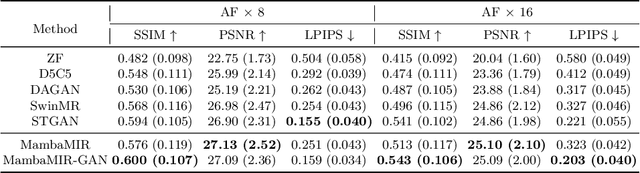
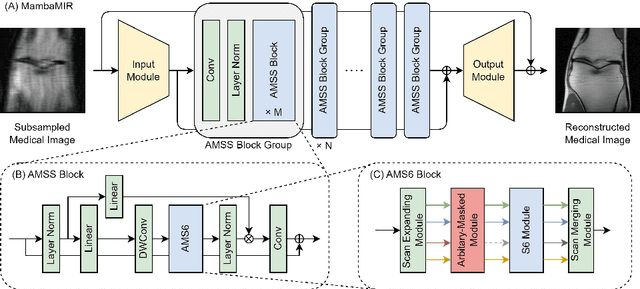
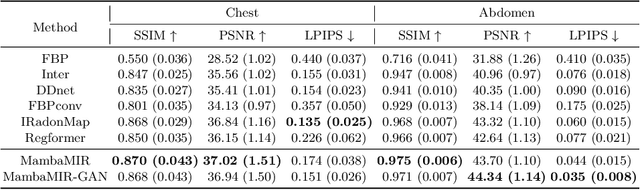
The recent Mamba model has shown remarkable adaptability for visual representation learning, including in medical imaging tasks. This study introduces MambaMIR, a Mamba-based model for medical image reconstruction, as well as its Generative Adversarial Network-based variant, MambaMIR-GAN. Our proposed MambaMIR inherits several advantages, such as linear complexity, global receptive fields, and dynamic weights, from the original Mamba model. The innovated arbitrary-mask mechanism effectively adapt Mamba to our image reconstruction task, providing randomness for subsequent Monte Carlo-based uncertainty estimation. Experiments conducted on various medical image reconstruction tasks, including fast MRI and SVCT, which cover anatomical regions such as the knee, chest, and abdomen, have demonstrated that MambaMIR and MambaMIR-GAN achieve comparable or superior reconstruction results relative to state-of-the-art methods. Additionally, the estimated uncertainty maps offer further insights into the reliability of the reconstruction quality. The code is publicly available at https://github.com/ayanglab/MambaMIR.
HAMLET: Graph Transformer Neural Operator for Partial Differential Equations
Feb 05, 2024We present a novel graph transformer framework, HAMLET, designed to address the challenges in solving partial differential equations (PDEs) using neural networks. The framework uses graph transformers with modular input encoders to directly incorporate differential equation information into the solution process. This modularity enhances parameter correspondence control, making HAMLET adaptable to PDEs of arbitrary geometries and varied input formats. Notably, HAMLET scales effectively with increasing data complexity and noise, showcasing its robustness. HAMLET is not just tailored to a single type of physical simulation, but can be applied across various domains. Moreover, it boosts model resilience and performance, especially in scenarios with limited data. We demonstrate, through extensive experiments, that our framework is capable of outperforming current techniques for PDEs.
Weakly Convex Regularisers for Inverse Problems: Convergence of Critical Points and Primal-Dual Optimisation
Feb 01, 2024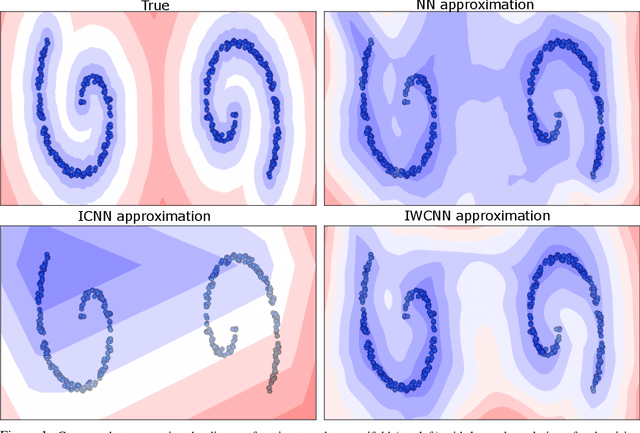
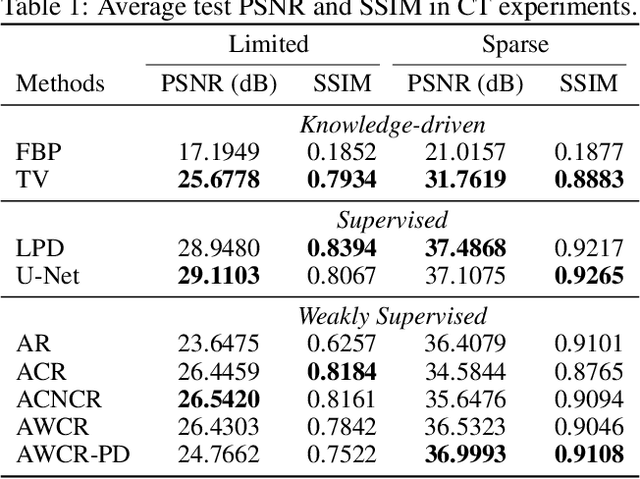
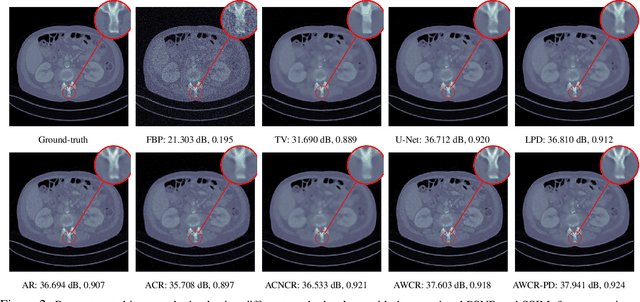
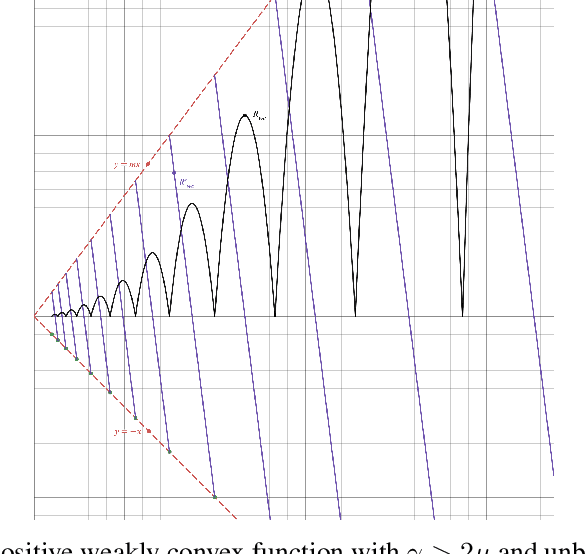
Variational regularisation is the primary method for solving inverse problems, and recently there has been considerable work leveraging deeply learned regularisation for enhanced performance. However, few results exist addressing the convergence of such regularisation, particularly within the context of critical points as opposed to global minima. In this paper, we present a generalised formulation of convergent regularisation in terms of critical points, and show that this is achieved by a class of weakly convex regularisers. We prove convergence of the primal-dual hybrid gradient method for the associated variational problem, and, given a Kurdyka-Lojasiewicz condition, an $\mathcal{O}(\log{k}/k)$ ergodic convergence rate. Finally, applying this theory to learned regularisation, we prove universal approximation for input weakly convex neural networks (IWCNN), and show empirically that IWCNNs can lead to improved performance of learned adversarial regularisers for computed tomography (CT) reconstruction.
On The Temporal Domain of Differential Equation Inspired Graph Neural Networks
Jan 20, 2024Graph Neural Networks (GNNs) have demonstrated remarkable success in modeling complex relationships in graph-structured data. A recent innovation in this field is the family of Differential Equation-Inspired Graph Neural Networks (DE-GNNs), which leverage principles from continuous dynamical systems to model information flow on graphs with built-in properties such as feature smoothing or preservation. However, existing DE-GNNs rely on first or second-order temporal dependencies. In this paper, we propose a neural extension to those pre-defined temporal dependencies. We show that our model, called TDE-GNN, can capture a wide range of temporal dynamics that go beyond typical first or second-order methods, and provide use cases where existing temporal models are challenged. We demonstrate the benefit of learning the temporal dependencies using our method rather than using pre-defined temporal dynamics on several graph benchmarks.
The curious case of the test set AUROC
Dec 19, 2023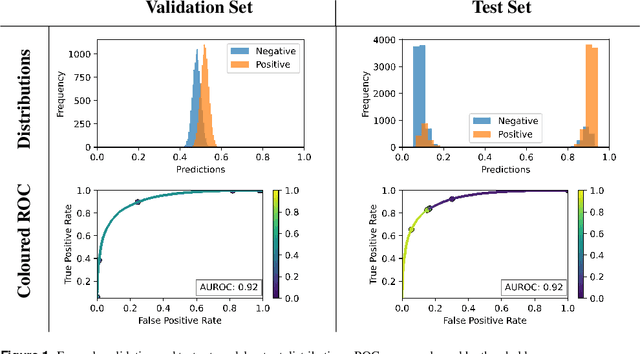
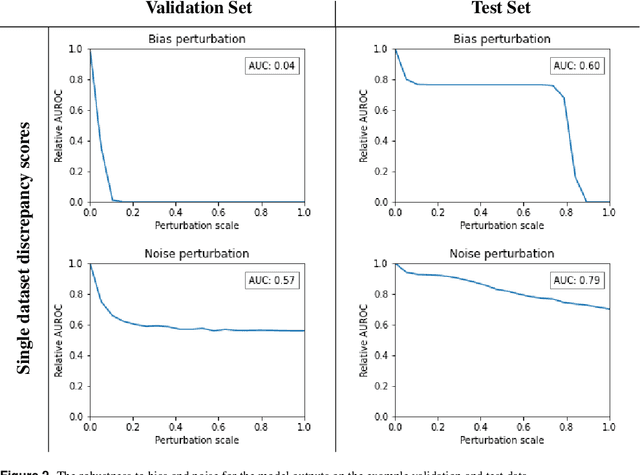
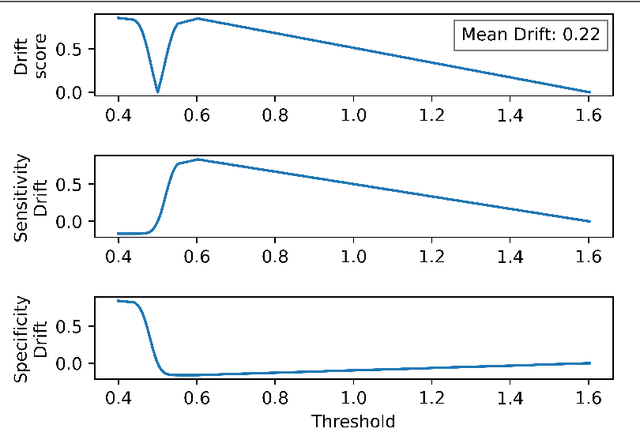
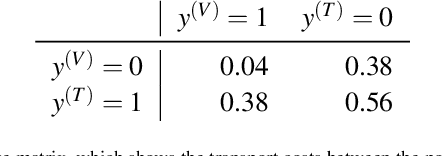
Whilst the size and complexity of ML models have rapidly and significantly increased over the past decade, the methods for assessing their performance have not kept pace. In particular, among the many potential performance metrics, the ML community stubbornly continues to use (a) the area under the receiver operating characteristic curve (AUROC) for a validation and test cohort (distinct from training data) or (b) the sensitivity and specificity for the test data at an optimal threshold determined from the validation ROC. However, we argue that considering scores derived from the test ROC curve alone gives only a narrow insight into how a model performs and its ability to generalise.
TrafficMOT: A Challenging Dataset for Multi-Object Tracking in Complex Traffic Scenarios
Nov 30, 2023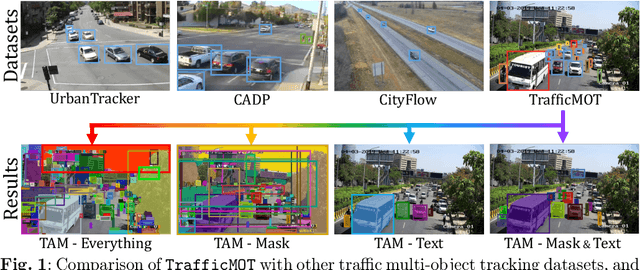
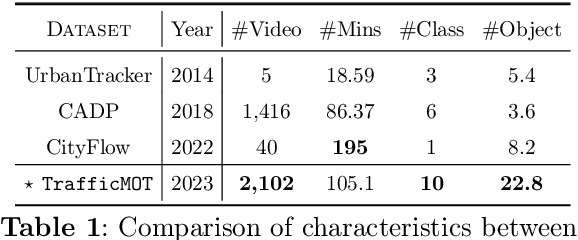
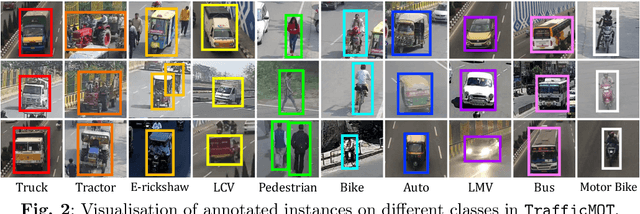

Multi-object tracking in traffic videos is a crucial research area, offering immense potential for enhancing traffic monitoring accuracy and promoting road safety measures through the utilisation of advanced machine learning algorithms. However, existing datasets for multi-object tracking in traffic videos often feature limited instances or focus on single classes, which cannot well simulate the challenges encountered in complex traffic scenarios. To address this gap, we introduce TrafficMOT, an extensive dataset designed to encompass diverse traffic situations with complex scenarios. To validate the complexity and challenges presented by TrafficMOT, we conducted comprehensive empirical studies using three different settings: fully-supervised, semi-supervised, and a recent powerful zero-shot foundation model Tracking Anything Model (TAM). The experimental results highlight the inherent complexity of this dataset, emphasising its value in driving advancements in the field of traffic monitoring and multi-object tracking.
Closing the ODE-SDE gap in score-based diffusion models through the Fokker-Planck equation
Nov 27, 2023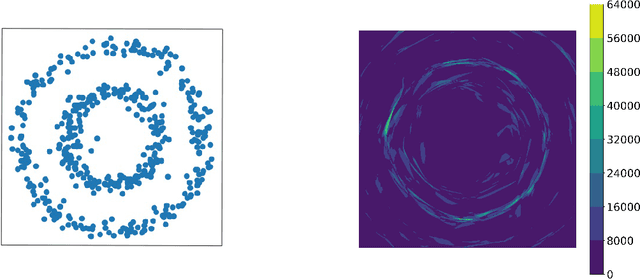
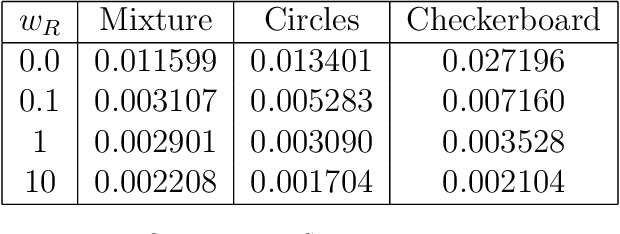


Score-based diffusion models have emerged as one of the most promising frameworks for deep generative modelling, due to their state-of-the art performance in many generation tasks while relying on mathematical foundations such as stochastic differential equations (SDEs) and ordinary differential equations (ODEs). Empirically, it has been reported that ODE based samples are inferior to SDE based samples. In this paper we rigorously describe the range of dynamics and approximations that arise when training score-based diffusion models, including the true SDE dynamics, the neural approximations, the various approximate particle dynamics that result, as well as their associated Fokker--Planck equations and the neural network approximations of these Fokker--Planck equations. We systematically analyse the difference between the ODE and SDE dynamics of score-based diffusion models, and link it to an associated Fokker--Planck equation. We derive a theoretical upper bound on the Wasserstein 2-distance between the ODE- and SDE-induced distributions in terms of a Fokker--Planck residual. We also show numerically that conventional score-based diffusion models can exhibit significant differences between ODE- and SDE-induced distributions which we demonstrate using explicit comparisons. Moreover, we show numerically that reducing the Fokker--Planck residual by adding it as an additional regularisation term leads to closing the gap between ODE- and SDE-induced distributions. Our experiments suggest that this regularisation can improve the distribution generated by the ODE, however that this can come at the cost of degraded SDE sample quality.
Single-Shot Plug-and-Play Methods for Inverse Problems
Nov 22, 2023

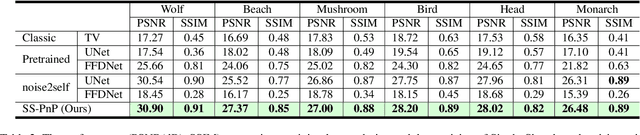
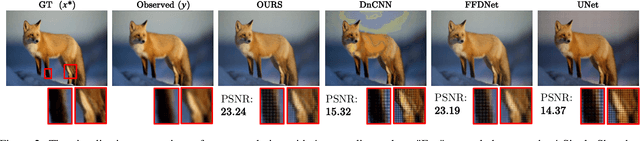
The utilisation of Plug-and-Play (PnP) priors in inverse problems has become increasingly prominent in recent years. This preference is based on the mathematical equivalence between the general proximal operator and the regularised denoiser, facilitating the adaptation of various off-the-shelf denoiser priors to a wide range of inverse problems. However, existing PnP models predominantly rely on pre-trained denoisers using large datasets. In this work, we introduce Single-Shot PnP methods (SS-PnP), shifting the focus to solving inverse problems with minimal data. First, we integrate Single-Shot proximal denoisers into iterative methods, enabling training with single instances. Second, we propose implicit neural priors based on a novel function that preserves relevant frequencies to capture fine details while avoiding the issue of vanishing gradients. We demonstrate, through extensive numerical and visual experiments, that our method leads to better approximations.
TRIDENT: The Nonlinear Trilogy for Implicit Neural Representations
Nov 21, 2023



Implicit neural representations (INRs) have garnered significant interest recently for their ability to model complex, high-dimensional data without explicit parameterisation. In this work, we introduce TRIDENT, a novel function for implicit neural representations characterised by a trilogy of nonlinearities. Firstly, it is designed to represent high-order features through order compactness. Secondly, TRIDENT efficiently captures frequency information, a feature called frequency compactness. Thirdly, it has the capability to represent signals or images such that most of its energy is concentrated in a limited spatial region, denoting spatial compactness. We demonstrated through extensive experiments on various inverse problems that our proposed function outperforms existing implicit neural representation functions.