 Add to Chrome
 Add to Firefox
 Add to Edge
HiPO: Hierarchical Preference Optimization for Adaptive Reasoning in LLMs
Apr 22, 2026
Direct Preference Optimization (DPO) is an effective framework for aligning large language models with human preferences, but it struggles with complex reasoning tasks. DPO optimizes for the likelihood of generating preferred over dispreferred responses in their entirety and lacks the granularity to provide feedback on subsections of many-step solutions typical of reasoning tasks. Existing methods excel at either stable preference learning (e.g., DPO variants like KTO and RSO) or structured reasoning (e.g., ReMA's multi-agent RL framework, Tree of Thoughts), but fail to merge these complementary strengths. We propose HiPO (Hierarchical Preference Optimization), an extension of DPO that separates responses into reasoning segments (query clarification and context, reasoning steps, and answer) and computes loss as a weighted sum of the DPO loss for each segment. Our approach enables segment-specific training while maintaining DPO's computational efficiency and training stability. We demonstrate that for multiple 7B LLMs fine-tuned using HiPO and DPO on the Math Stack Exchange preference dataset, the models trained with HiPO outperform the others on a variety of common math benchmarks and achieve greater organization, logical flow, and consistency as measured by GPT-4.1.

Exploring the Stratified Space Structure of an RL Game with the Volume Growth Transform
Jul 29, 2025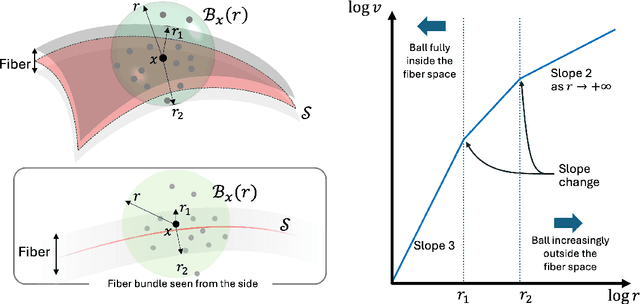
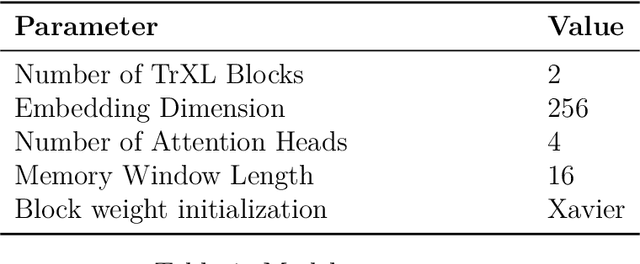
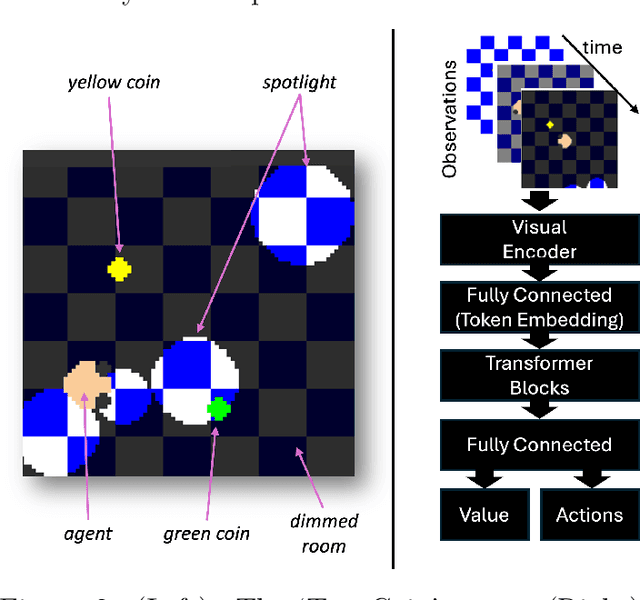
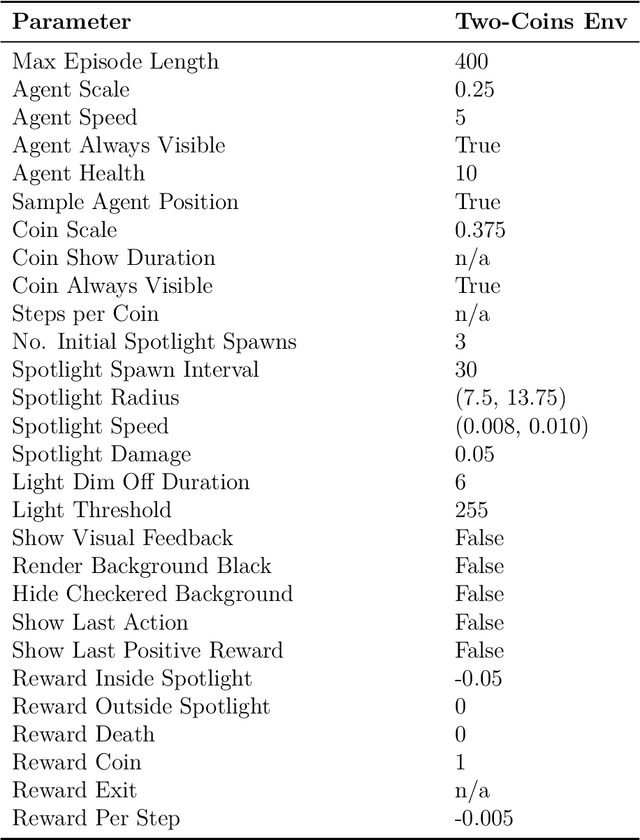
In this work, we explore the structure of the embedding space of a transformer model trained for playing a particular reinforcement learning (RL) game. Specifically, we investigate how a transformer-based Proximal Policy Optimization (PPO) model embeds visual inputs in a simple environment where an agent must collect "coins" while avoiding dynamic obstacles consisting of "spotlights." By adapting Robinson et al.'s study of the volume growth transform for LLMs to the RL setting, we find that the token embedding space for our visual coin collecting game is also not a manifold, and is better modeled as a stratified space, where local dimension can vary from point to point. We further strengthen Robinson's method by proving that fairly general volume growth curves can be realized by stratified spaces. Finally, we carry out an analysis that suggests that as an RL agent acts, its latent representation alternates between periods of low local dimension, while following a fixed sub-strategy, and bursts of high local dimension, where the agent achieves a sub-goal (e.g., collecting an object) or where the environmental complexity increases (e.g., more obstacles appear). Consequently, our work suggests that the distribution of dimensions in a stratified latent space may provide a new geometric indicator of complexity for RL games.