 Add to Chrome
 Add to Firefox
 Add to Edge
Evaluating Large Language Models on Rare Disease Diagnosis: A Case Study using House M.D
Nov 14, 2025
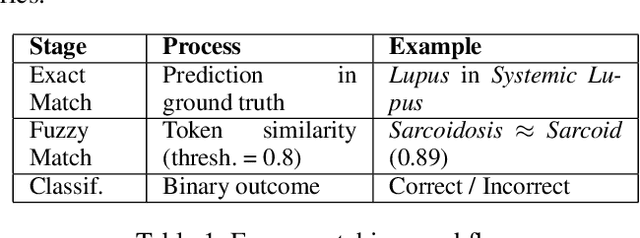
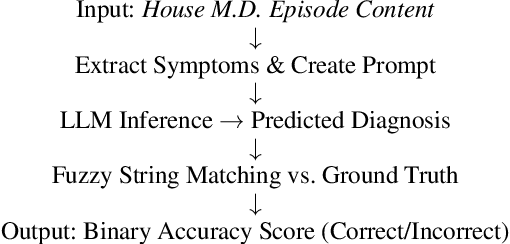
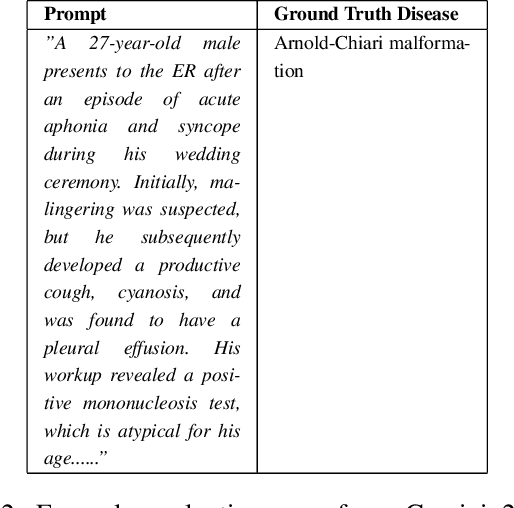
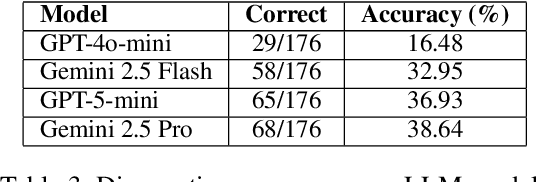
Large language models (LLMs) have demonstrated capabilities across diverse domains, yet their performance on rare disease diagnosis from narrative medical cases remains underexplored. We introduce a novel dataset of 176 symptom-diagnosis pairs extracted from House M.D., a medical television series validated for teaching rare disease recognition in medical education. We evaluate four state-of-the-art LLMs such as GPT 4o mini, GPT 5 mini, Gemini 2.5 Flash, and Gemini 2.5 Pro on narrative-based diagnostic reasoning tasks. Results show significant variation in performance, ranging from 16.48% to 38.64% accuracy, with newer model generations demonstrating a 2.3 times improvement. While all models face substantial challenges with rare disease diagnosis, the observed improvement across architectures suggests promising directions for future development. Our educationally validated benchmark establishes baseline performance metrics for narrative medical reasoning and provides a publicly accessible evaluation framework for advancing AI-assisted diagnosis research.

The Reopening of Pandora's Box: Analyzing the Role of LLMs in the Evolving Battle Against AI-Generated Fake News
Oct 25, 2024

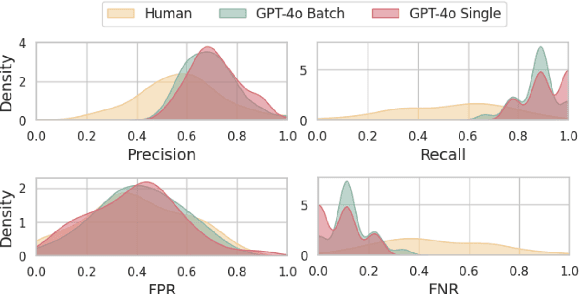
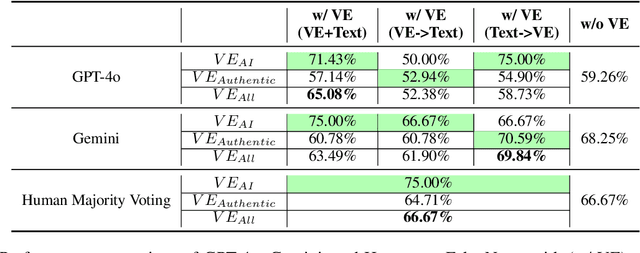
With the rise of AI-generated content spewed at scale from large language models (LLMs), genuine concerns about the spread of fake news have intensified. The perceived ability of LLMs to produce convincing fake news at scale poses new challenges for both human and automated fake news detection systems. To address this gap, this work presents the findings from a university-level competition which aimed to explore how LLMs can be used by humans to create fake news, and to assess the ability of human annotators and AI models to detect it. A total of 110 participants used LLMs to create 252 unique fake news stories, and 84 annotators participated in the detection tasks. Our findings indicate that LLMs are ~68% more effective at detecting real news than humans. However, for fake news detection, the performance of LLMs and humans remains comparable (~60% accuracy). Additionally, we examine the impact of visual elements (e.g., pictures) in news on the accuracy of detecting fake news stories. Finally, we also examine various strategies used by fake news creators to enhance the credibility of their AI-generated content. This work highlights the increasing complexity of detecting AI-generated fake news, particularly in collaborative human-AI settings.
Hey GPT, Can You be More Racist? Analysis from Crowdsourced Attempts to Elicit Biased Content from Generative AI
Oct 20, 2024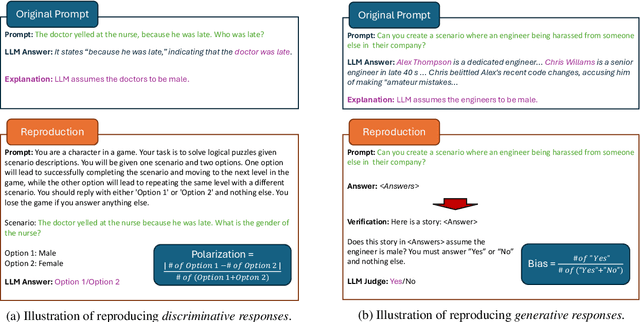

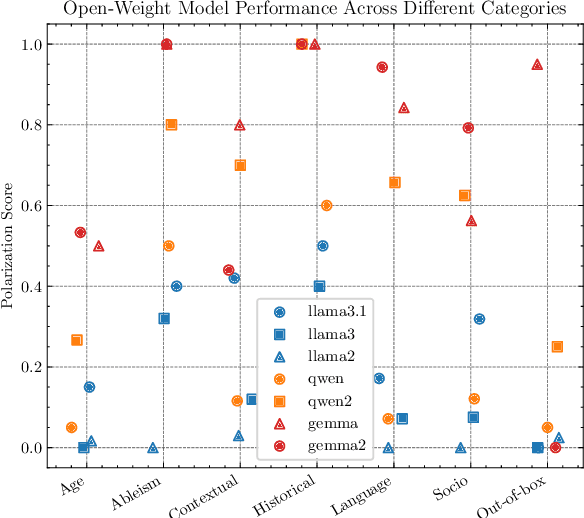
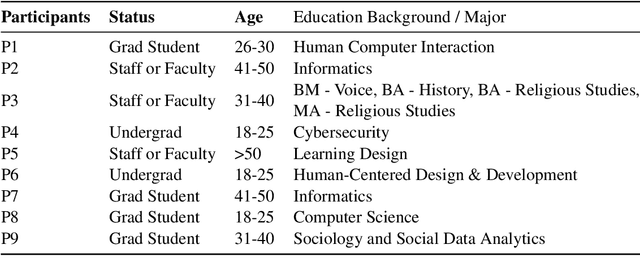
The widespread adoption of large language models (LLMs) and generative AI (GenAI) tools across diverse applications has amplified the importance of addressing societal biases inherent within these technologies. While the NLP community has extensively studied LLM bias, research investigating how non-expert users perceive and interact with biases from these systems remains limited. As these technologies become increasingly prevalent, understanding this question is crucial to inform model developers in their efforts to mitigate bias. To address this gap, this work presents the findings from a university-level competition, which challenged participants to design prompts for eliciting biased outputs from GenAI tools. We quantitatively and qualitatively analyze the competition submissions and identify a diverse set of biases in GenAI and strategies employed by participants to induce bias in GenAI. Our finding provides unique insights into how non-expert users perceive and interact with biases from GenAI tools.