 Add to Chrome
 Add to Firefox
 Add to Edge
FlowBlock: Wavefront-Parallel Decoding for Self-Correcting Diffusion Language Models
Jul 20, 2026
Block-wise diffusion large language models (dLLMs) decode sequentially at the block level, enabling effective KV-cache reuse across blocks but making inter-block decoding strictly serial. Prior work has attempted to unlock inter-block parallelism through post-training methods, but achieves only modest speedups and often degrades accuracy. We observe that self-correcting dLLMs offer a training-free alternative: token-to-token (T2T) editing can repair tokens drafted with a slightly stale upstream context, so a downstream block requires only an informative draft rather than a finalized predecessor. This turns block finality from a hard dependency into a scheduling resource. We propose \textbf{\flowblock{}}, a training-free parallel decoding framework built on two mechanisms. (i) \emph{Gated Wavefront Decoding} admits blocks into a bounded wavefront only when a readiness gate is satisfied, jointly refines active blocks via T2T editing, and commits blocks in order under a windowed block-causal mask that preserves exact frozen-prefix KV caches reuse. (ii) \emph{Heterogeneous Wavefront Packing} assigns each request an independent wavefront while packing asynchronous windows into dense, shape-stable batched forwards. Across different benchmarks, \flowblock{} improves tokens per second (TPS) over LLaDA-2.1 and LLaDA-2.0, two serial block-wise dLLMs, by up to 2.95$\times$ and 4.01$\times$, while reducing latency by up to 53.6\% and 77.1\%, respectively. It also improves average accuracy by 1.3 points. Compared with D2F, a training-based inter-block-parallel baseline, \flowblock{} achieves higher accuracy and up to 16$\times$ higher batched serving throughput.

Confidence-Calibrated Small-Large Language Model Collaboration for Cost-Efficient Reasoning
Mar 04, 2026Large language models (LLMs) demonstrate superior reasoning capabilities compared to small language models (SLMs), but incur substantially higher costs. We propose COllaborative REAsoner (COREA), a system that cascades an SLM with an LLM to achieve a balance between accuracy and cost in complex reasoning tasks. COREA first attempts to answer questions using the SLM, which outputs both an answer and a verbalized confidence score. Questions with confidence below a predefined threshold are deferred to the LLM for more accurate resolution. We introduce a reinforcement learning-based training algorithm that aligns the SLM's confidence through an additional confidence calibration reward. Extensive experiments demonstrate that our method jointly improves the SLM's reasoning ability and confidence calibration across diverse datasets and model backbones. Compared to using the LLM alone, COREA reduces cost by 21.5% and 16.8% on out-of-domain math and non-math datasets, respectively, with only an absolute pass@1 drop within 2%.
FusionANNS: An Efficient CPU/GPU Cooperative Processing Architecture for Billion-scale Approximate Nearest Neighbor Search
Sep 25, 2024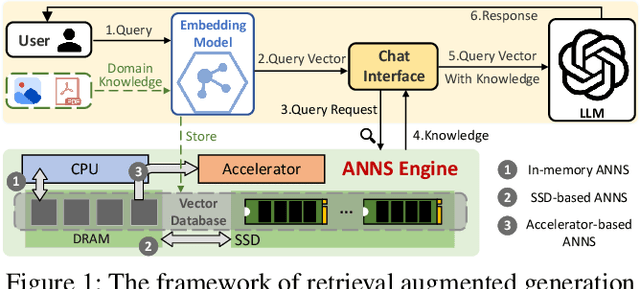
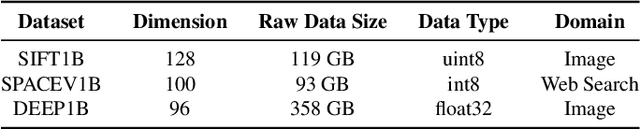
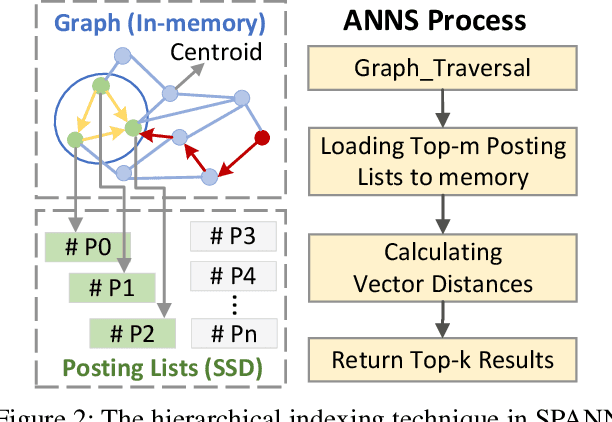
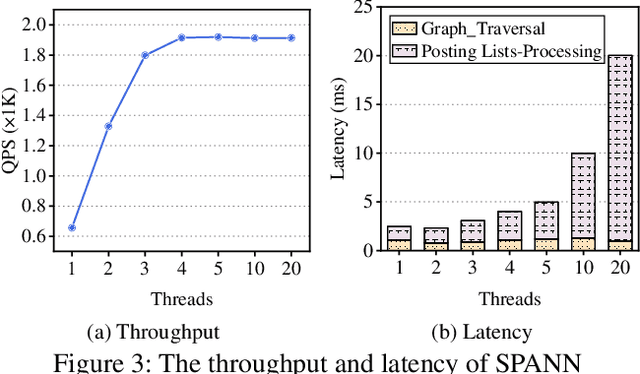
Approximate nearest neighbor search (ANNS) has emerged as a crucial component of database and AI infrastructure. Ever-increasing vector datasets pose significant challenges in terms of performance, cost, and accuracy for ANNS services. None of modern ANNS systems can address these issues simultaneously. We present FusionANNS, a high-throughput, low-latency, cost-efficient, and high-accuracy ANNS system for billion-scale datasets using SSDs and only one entry-level GPU. The key idea of FusionANNS lies in CPU/GPU collaborative filtering and re-ranking mechanisms, which significantly reduce I/O operations across CPUs, GPU, and SSDs to break through the I/O performance bottleneck. Specifically, we propose three novel designs: (1) multi-tiered indexing to avoid data swapping between CPUs and GPU, (2) heuristic re-ranking to eliminate unnecessary I/Os and computations while guaranteeing high accuracy, and (3) redundant-aware I/O deduplication to further improve I/O efficiency. We implement FusionANNS and compare it with the state-of-the-art SSD-based ANNS system--SPANN and GPU-accelerated in-memory ANNS system--RUMMY. Experimental results show that FusionANNS achieves 1) 9.4-13.1X higher query per second (QPS) and 5.7-8.8X higher cost efficiency compared with SPANN; 2) and 2-4.9X higher QPS and 2.3-6.8X higher cost efficiency compared with RUMMY, while guaranteeing low latency and high accuracy.