 Add to Chrome
 Add to Firefox
 Add to Edge
Representing expertise accelerates learning from pedagogical interaction data
Apr 14, 2026
Work in cognitive science and artificial intelligence has suggested that exposing learning agents to traces of interaction between multiple individuals can improve performance in a variety of settings, yet it remains unknown which features of interactions contribute to this improvement. We examined the factors that support the effectiveness of interaction data, using a controlled paradigm that allowed us to precisely operationalize key distinctions between interaction and an expert acting alone. We generated synthetic datasets of simple interactions between an expert and a novice in a spatial navigation task, and then trained transformer models on those datasets, evaluating performance after exposure to different datasets. Our experiments showed that models trained on pedagogical interactions were more robust across a variety of scenarios compared to models trained only on expert demonstrations, and that having the ability to represent epistemically distinct agents led to expert-like behavior even when expert behavior was rarely observed.

Bias amplification in experimental social networks is reduced by resampling
Aug 15, 2022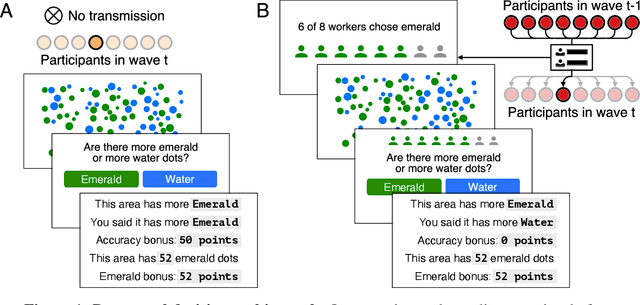
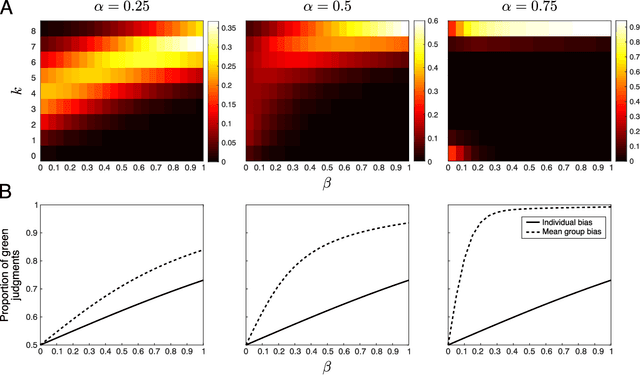
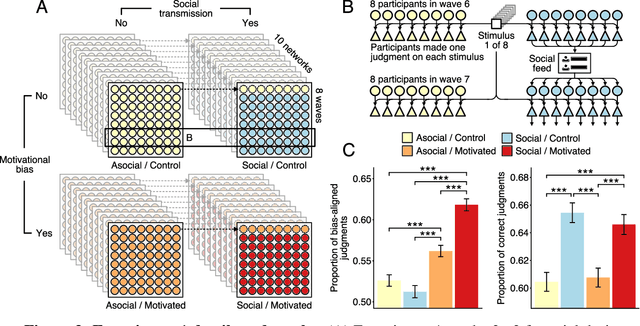
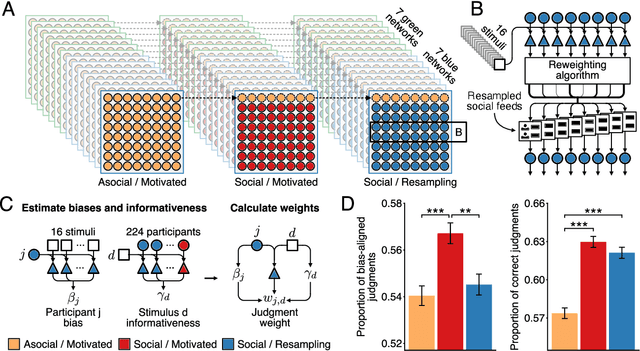
Large-scale social networks are thought to contribute to polarization by amplifying people's biases. However, the complexity of these technologies makes it difficult to identify the mechanisms responsible and to evaluate mitigation strategies. Here we show under controlled laboratory conditions that information transmission through social networks amplifies motivational biases on a simple perceptual decision-making task. Participants in a large behavioral experiment showed increased rates of biased decision-making when part of a social network relative to asocial participants, across 40 independently evolving populations. Drawing on techniques from machine learning and Bayesian statistics, we identify a simple adjustment to content-selection algorithms that is predicted to mitigate bias amplification. This algorithm generates a sample of perspectives from within an individual's network that is more representative of the population as a whole. In a second large experiment, this strategy reduced bias amplification while maintaining the benefits of information sharing.