 Add to Chrome
 Add to Firefox
 Add to Edge
Automatic Discovery of Disease Subgroups by Contrasting with Healthy Controls
May 20, 2026
In biomedical Subgroup Discovery, practitioners are interested in discovering interpretable and homogeneous subgroups within a group of patients. In this paper, assuming that healthy subjects (i.e., controls) share common but irrelevant factors of variation with the patients, we motivate and develop a Contrastive Subgroup Discovery method, entitled Deep UCSL. By contrasting patients with controls, Deep UCSL identifies subgroups driven solely by pathological factors, ignoring common variability shared with healthy subjects. Our framework employs a deep feature extractor to learn a discriminative representation space. Mathematically, we derive a novel loss based on the conditional joint likelihood of latent clusters and patient/control labels, optimized via an Expectation-Maximization strategy alternating between subgroup inference and feature encoder updates. A regularization term further encourages representations to capture disease-specific variability while ignoring variability shared with controls. Compared to previous related works, our approach quantitatively improves the quality of the estimated subgroups, as demonstrated on a MNIST example and four distinct real medical imaging datasets. Code and datasets are available at: https://github.com/rlouiset/deep_ucsl.

A Unified Geometric Framework for Weighted Contrastive Learning
May 13, 2026Contrastive learning (CL) aims to preserve relational structure between samples by learning representations that reflect a similarity graph. Yet, the geometry of the resulting embeddings remains poorly understood. Here we show that weighted InfoNCE objectives can be interpreted as Distance Geometry Problems, where the weighting scheme specifies the target geometry to be realized by the representation. This viewpoint yields exact characterizations of the optimal embeddings for several supervised and weakly supervised objectives. In supervised classification, both SupCon and Soft SupCon (a dense relaxation of it where pairs from distinct classes have small non-zero similarity) collapse samples within each class to a single prototype. However, while balanced SupCon recovers the classical regular simplex geometry, class imbalance breaks this symmetry: SupCon induces non-uniform inter-class similarities depending on class sizes, whereas Soft SupCon preserves a regular simplex geometry regardless of class imbalance. In continuous-label settings, our framework reveals a different failure mode: y-Aware CL generally cannot attain its entropic optimum unless the labels lie on a hypersphere, exposing a mismatch between Euclidean label weights and spherical latent similarity. By contrast, geometrically consistent choices such as Euclidean-Euclidean weighting or X-CLR admit unique optimal embeddings. Our results show that the choice of weighting scheme determines whether contrastive learning is geometrically realizable, degenerate, or inconsistent, providing a principled framework for designing contrastive objectives.
How and why does deep ensemble coupled with transfer learning increase performance in bipolar disorder and schizophrenia classification?
Apr 02, 2026Transfer learning (TL) and deep ensemble learning (DE) have recently been shown to outperform simple machine learning in classifying psychiatric disorders. However, there is still a lack of understanding as to why that is. This paper aims to understand how and why DE and TL reduce the variability of single-subject classification models in bipolar disorder (BD) and schizophrenia (SCZ). To this end, we investigated the training stability of TL and DE models. For the two classification tasks under consideration, we compared the results of multiple trainings with the same backbone but with different initializations. In this way, we take into account the epistemic uncertainty associated with the uncertainty in the estimation of the model parameters. It has been shown that the performance of classifiers can be significantly improved by using TL with DE. Based on these results, we investigate i) how many models are needed to benefit from the performance improvement of DE when classifying BD and SCZ from healthy controls, and ii) how TL induces better generalization, with and without DE. In the first case, we show that DE reaches a plateau when 10 models are included in the ensemble. In the second case, we find that using a pre-trained model constrains TL models with the same pre-training to stay in the same basin of the loss function. This is not the case for DL models with randomly initialized weights.
Robust brain age estimation from structural MRI with contrastive learning
Jul 02, 2025Estimating brain age from structural MRI has emerged as a powerful tool for characterizing normative and pathological aging. In this work, we explore contrastive learning as a scalable and robust alternative to supervised approaches for brain age estimation. We introduce a novel contrastive loss function, $\mathcal{L}^{exp}$, and evaluate it across multiple public neuroimaging datasets comprising over 20,000 scans. Our experiments reveal four key findings. First, scaling pre-training on diverse, multi-site data consistently improves generalization performance, cutting external mean absolute error (MAE) nearly in half. Second, $\mathcal{L}^{exp}$ is robust to site-related confounds, maintaining low scanner-predictability as training size increases. Third, contrastive models reliably capture accelerated aging in patients with cognitive impairment and Alzheimer's disease, as shown through brain age gap analysis, ROC curves, and longitudinal trends. Lastly, unlike supervised baselines, $\mathcal{L}^{exp}$ maintains a strong correlation between brain age accuracy and downstream diagnostic performance, supporting its potential as a foundation model for neuroimaging. These results position contrastive learning as a promising direction for building generalizable and clinically meaningful brain representations.
What to align in multimodal contrastive learning?
Sep 11, 2024Humans perceive the world through multisensory integration, blending the information of different modalities to adapt their behavior. Contrastive learning offers an appealing solution for multimodal self-supervised learning. Indeed, by considering each modality as a different view of the same entity, it learns to align features of different modalities in a shared representation space. However, this approach is intrinsically limited as it only learns shared or redundant information between modalities, while multimodal interactions can arise in other ways. In this work, we introduce CoMM, a Contrastive MultiModal learning strategy that enables the communication between modalities in a single multimodal space. Instead of imposing cross- or intra- modality constraints, we propose to align multimodal representations by maximizing the mutual information between augmented versions of these multimodal features. Our theoretical analysis shows that shared, synergistic and unique terms of information naturally emerge from this formulation, allowing us to estimate multimodal interactions beyond redundancy. We test CoMM both in a controlled and in a series of real-world settings: in the former, we demonstrate that CoMM effectively captures redundant, unique and synergistic information between modalities. In the latter, CoMM learns complex multimodal interactions and achieves state-of-the-art results on the six multimodal benchmarks.
Anatomical Foundation Models for Brain MRIs
Aug 07, 2024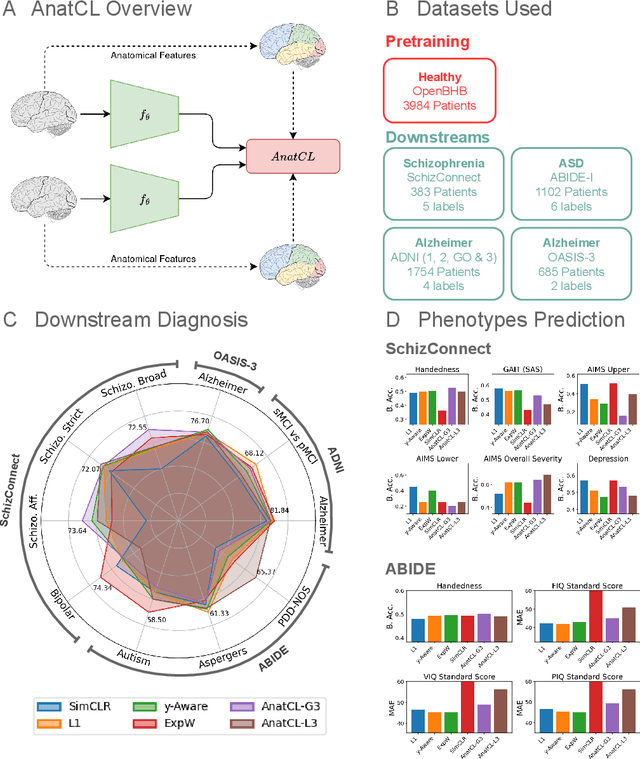
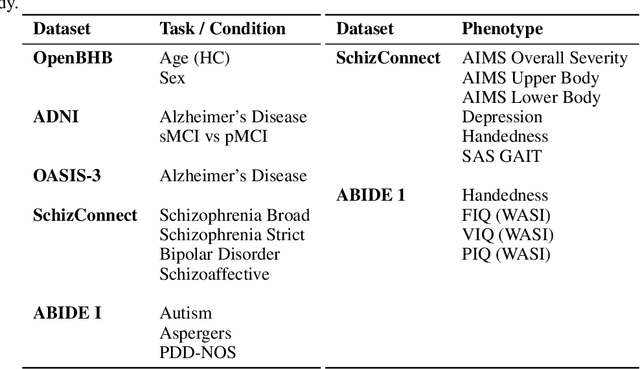
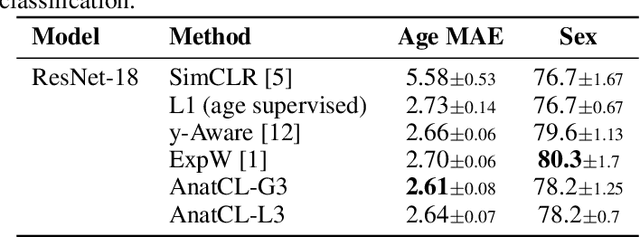
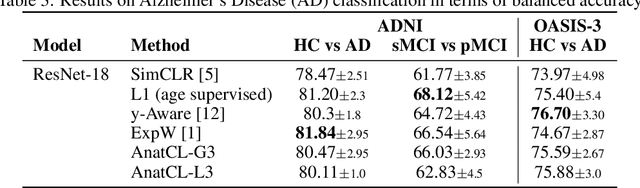
Deep Learning (DL) in neuroimaging has become increasingly relevant for detecting neurological conditions and neurodegenerative disorders. One of the most predominant biomarkers in neuroimaging is represented by brain age, which has been shown to be a good indicator for different conditions, such as Alzheimer's Disease. Using brain age for pretraining DL models in transfer learning settings has also recently shown promising results, especially when dealing with data scarcity of different conditions. On the other hand, anatomical information of brain MRIs (e.g. cortical thickness) can provide important information for learning good representations that can be transferred to many downstream tasks. In this work, we propose AnatCL, an anatomical foundation model for brain MRIs that i.) leverages anatomical information with a weakly contrastive learning approach and ii.) achieves state-of-the-art performances in many different downstream tasks. To validate our approach we consider 12 different downstream tasks for diagnosis classification, and prediction of 10 different clinical assessment scores.
SepVAE: a contrastive VAE to separate pathological patterns from healthy ones
Jul 12, 2023Contrastive Analysis VAE (CA-VAEs) is a family of Variational auto-encoders (VAEs) that aims at separating the common factors of variation between a background dataset (BG) (i.e., healthy subjects) and a target dataset (TG) (i.e., patients) from the ones that only exist in the target dataset. To do so, these methods separate the latent space into a set of salient features (i.e., proper to the target dataset) and a set of common features (i.e., exist in both datasets). Currently, all models fail to prevent the sharing of information between latent spaces effectively and to capture all salient factors of variation. To this end, we introduce two crucial regularization losses: a disentangling term between common and salient representations and a classification term between background and target samples in the salient space. We show a better performance than previous CA-VAEs methods on three medical applications and a natural images dataset (CelebA). Code and datasets are available on GitHub https://github.com/neurospin-projects/2023_rlouiset_sepvae.
Contrastive learning for regression in multi-site brain age prediction
Nov 14, 2022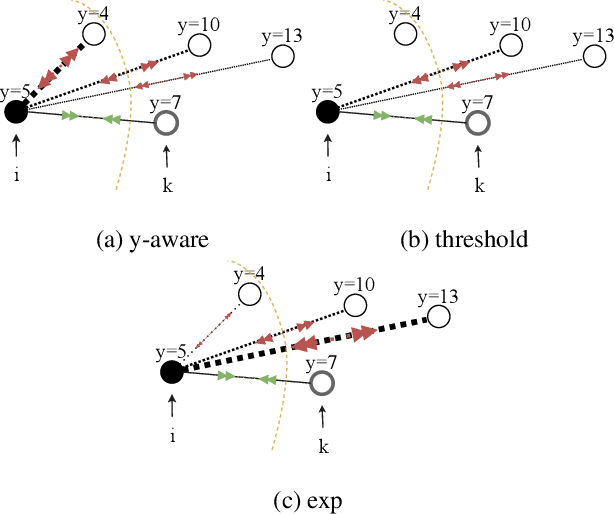
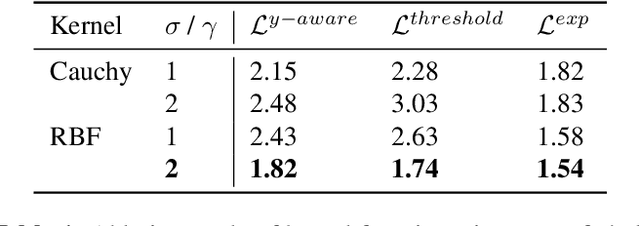
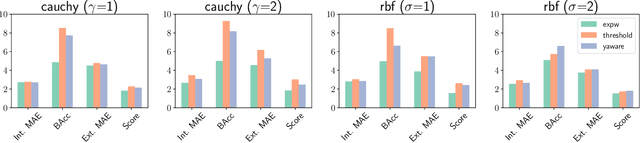

Building accurate Deep Learning (DL) models for brain age prediction is a very relevant topic in neuroimaging, as it could help better understand neurodegenerative disorders and find new biomarkers. To estimate accurate and generalizable models, large datasets have been collected, which are often multi-site and multi-scanner. This large heterogeneity negatively affects the generalization performance of DL models since they are prone to overfit site-related noise. Recently, contrastive learning approaches have been shown to be more robust against noise in data or labels. For this reason, we propose a novel contrastive learning regression loss for robust brain age prediction using MRI scans. Our method achieves state-of-the-art performance on the OpenBHB challenge, yielding the best generalization capability and robustness to site-related noise.
Unbiased Supervised Contrastive Learning
Nov 10, 2022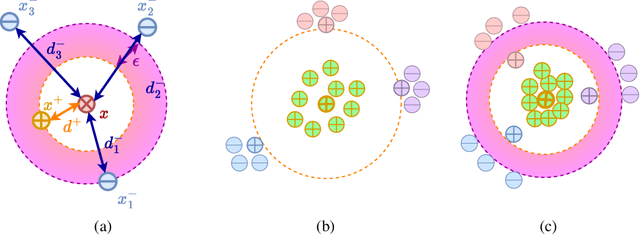

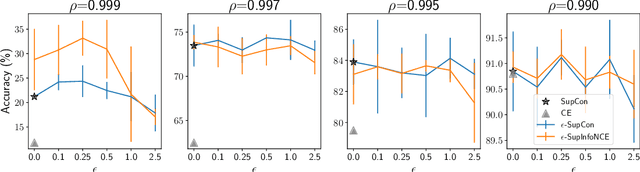
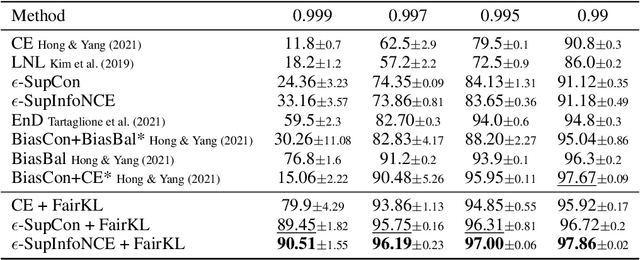
Many datasets are biased, namely they contain easy-to-learn features that are highly correlated with the target class only in the dataset but not in the true underlying distribution of the data. For this reason, learning unbiased models from biased data has become a very relevant research topic in the last years. In this work, we tackle the problem of learning representations that are robust to biases. We first present a margin-based theoretical framework that allows us to clarify why recent contrastive losses (InfoNCE, SupCon, etc.) can fail when dealing with biased data. Based on that, we derive a novel formulation of the supervised contrastive loss (epsilon-SupInfoNCE), providing more accurate control of the minimal distance between positive and negative samples. Furthermore, thanks to our theoretical framework, we also propose FairKL, a new debiasing regularization loss, that works well even with extremely biased data. We validate the proposed losses on standard vision datasets including CIFAR10, CIFAR100, and ImageNet, and we assess the debiasing capability of FairKL with epsilon-SupInfoNCE, reaching state-of-the-art performance on a number of biased datasets, including real instances of biases in the wild.
Rethinking Positive Sampling for Contrastive Learning with Kernel
Jun 03, 2022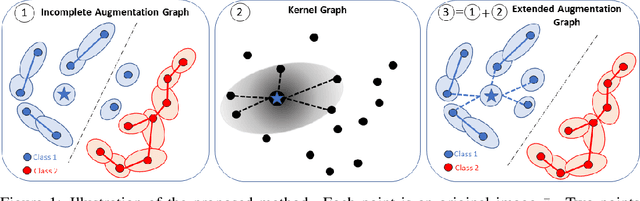
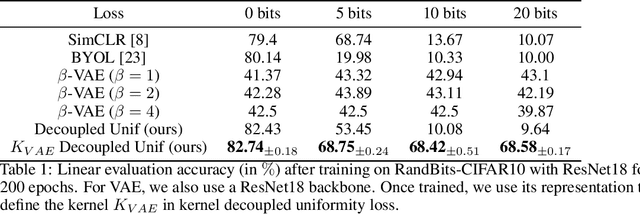
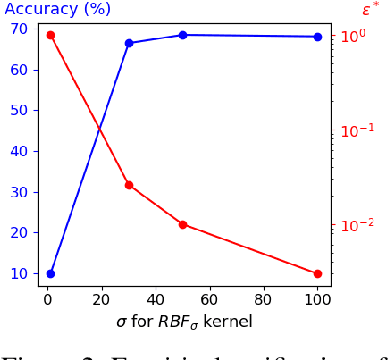
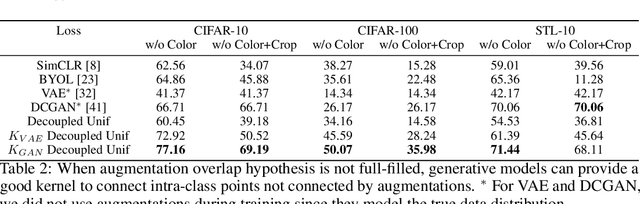
Data augmentation is a crucial component in unsupervised contrastive learning (CL). It determines how positive samples are defined and, ultimately, the quality of the representation. While efficient augmentations have been found for standard vision datasets, such as ImageNet, it is still an open problem in other applications, such as medical imaging, or in datasets with easy-to-learn but irrelevant imaging features. In this work, we propose a new way to define positive samples using kernel theory along with a novel loss called decoupled uniformity. We propose to integrate prior information, learnt from generative models or given as auxiliary attributes, into contrastive learning, to make it less dependent on data augmentation. We draw a connection between contrastive learning and the conditional mean embedding theory to derive tight bounds on the downstream classification loss. In an unsupervised setting, we empirically demonstrate that CL benefits from generative models, such as VAE and GAN, to less rely on data augmentations. We validate our framework on vision datasets including CIFAR10, CIFAR100, STL10 and ImageNet100 and a brain MRI dataset. In the weakly supervised setting, we demonstrate that our formulation provides state-of-the-art results.