 Add to Chrome
 Add to Firefox
 Add to Edge
Exploring Efficient Waveform Diffusion Models for Foley Sound Generation
Jul 31, 2026
Recent advances in diffusion models have enabled high-fidelity Foley sound generation directly in the waveform space. Existing waveform diffusion models primarily rely on time-domain architectures, such as CNN-based U-Nets and DiffWave-style models, or frequency-domain Transformers modeling temporal dependencies. However, these systems are typically built with large model capacities and substantial computational costs, leaving compact and efficient waveform diffusion architectures largely underexplored. In this work, we introduce a Dual-Path (DP) architecture for waveform diffusion that performs dimension-wise self-attention along both subband and frame axes in the time-frequency domain. This DP design enables fine-grained temporal-spectral modeling while maintaining high efficiency. Based on the proposed DP backbone, we develop two variants: DP-DiT and DP-U-Net. Experiments on the DCASE and FSD-Kaggle2018 datasets demonstrate their superior performance. Notably, the 3M parameter variant achieves performance comparable to models with more than 50M parameters. Audio samples are available at https://samplesdemo.github.io/DP-Foley/.

S2A2: Audio-Visual Imitation Learning for Manipulation Tasks Using Acoustic Spatial Information
Jul 28, 2026Acoustic information provides rich cues about object location, material properties, and changes caused by contact or motion. This paper introduces a new set of acoustic-aware manipulation tasks for imitation learning, in which robots must use auditory cues to determine manipulation targets. These tasks require sound source localization and identification for active exploration in robotic manipulation. Also, we propose a multimodal imitation learning framework, Spatial-Spectral Audio Action (S2A2), that integrates visual features with acoustic spatial and acoustic signal information for the acoustic-aware manipulation tasks. We implemented S2A2 models that integrates policies such as ACT, Diffusion Policy, VQ-BeT, and $π_0$, into our framework. Simulation experiments showed that the proposed method is the most effective for tasks requiring both position and timbre. Furthermore, real-robot experiments confirm the applicability of the proposed tasks and framework to real-world manipulation.
From Sign Language Generation to Humanoid Execution: Vision-Language Guided Retargeting with Collision Mitigation
Jul 20, 2026Recent sign language generation (SLG) systems increasingly output dense 3D body representations, which better preserve full-body kinematics and geometry for downstream embodiment on humanoid robots. However, these generated motions frequently exhibit self-intersections such as hand-hand and hand-torso penetration. While such artifacts may be tolerated in offline rendering, they become critical in humanoid execution as they lead to infeasible inverse-kinematics (IK) solutions, collisions, and unstable retargeted trajectories. We present a system-level framework that bridges SLG outputs to humanoid joint-space execution via two components. First, we introduce a volumetric SMPL-X collision-mitigation module that projects generated signing motions toward physically plausible configurations while minimally deviating from the original trajectory. Second, we propose a vision-language-guided retargeting algorithm built on an IK backbone: a VLM serves as a visual critic over rendered humanoid motion, identifies embodiment-specific failure modes, and triggers targeted task-space corrections. Our results highlight collision handling and perception-guided refinement as key missing components for reliable humanoid signing.
What Do Neural Networks Learn for TDOA Estimation? A Cross-Architecture Probing Study
Jun 20, 2026Neural networks outperform classical GCC-PHAT for Time-Difference-of-Arrival (TDOA) estimation in noise and reverberation, yet their internal strategy remains unexplored. To uncover it, we turn GCC-PHAT's mathematical steps into diagnostic targets, probing hidden layers of three architectures (MLP, CNN, Transformer) and complementing with gradient attribution and causal frequency masking. We find that cross-power computation consistently emerges across all architectures and conditions, while PHAT whitening, the defining step of GCC-PHAT, fails to emerge. Instead, networks learn a magnitude-aware frequency weighting that preserves per-frequency reliability information discarded by PHAT. This makes PHAT an information bottleneck: removing it from both classical and neural GCC pipelines improves performance under additive noise. On real-world reverberant data, PHAT remains the best classical weighting, but end-to-end networks achieve lower error by learning data-adaptive weighting.
Fast-SDE: Efficient Single-Microphone Sound Source Distance Estimation in Reverberant Environments
Jun 10, 2026Sound source distance estimation (SDE) is a critical capability in human-robot interaction. An inappropriate interaction distance not only reduces the reliability of speech acquisition and understanding, but also compromises the naturalness and comfort of the interaction. Most existing SDE methods rely on microphone arrays, however, multi-microphone systems typically require careful hardware synchronization, geometric calibration, and additional space and computational resources, which limits applicability to size-constrained and computability-limited embodied platforms. To alleviate these issues, we propose Fast-SDE, a lightweight single-microphone SDE framework that is suited for deployment on robot platforms with limited computational resources and strict size constraints. Specifically, Fast-SDE employs a subband-based backbone that decomposes the frequency axis into multiple subbands, rather than processing the entire spectrum with a wide full-band backbone. A shared subband encoder then maps each subband to a compact latent representation and learns the relationship between acoustic structure and time-frequency patterns. Finally, a lightweight regression head converts the fused subband representations into the estimated distance. Extensive simulation and real-world experiments demonstrate the merits of the proposed method. To benefit the broader research community, we have open-sourced our code at https://github.com/JiangWAV/FAST-SDE.
Ecologically-Constrained Task Arithmetic for Multi-Taxa Bioacoustic Classifiers Without Shared Data
May 05, 2026Training data for bioacoustics is scattered across taxa, regions, and institutions. Centralizing it all is often infeasible. We show that independently fine-tuned BEATs encoders can be composed into a unified 661-species classifier via task vector arithmetic without sharing data. We find that bioacoustic task vectors are near-orthogonal (cosine 0.01-0.09). Their separation aligns closely with spectral distribution distance, a gradient consistent with the acoustic niche hypothesis. This geometry makes simple averaging optimal while sign-conflict methods reduce accuracy by one to six percentage points. Composition also creates an asymmetric gap: species-rich groups lose accuracy relative to joint training while underrepresented taxa gain, a redistribution useful for equitable biodiversity monitoring. We verify linear mode connectivity across all taxonomic pairs, demonstrate zero-shot transfer to new regions, and identify domain negation as a boundary condition where composition fails. These results enable a collaborative paradigm for bioacoustics where institutions share only task vectors to assemble multi-taxa classifiers, preserving data privacy.
Unsupervised Single-Channel Audio Separation with Diffusion Source Priors
Dec 23, 2025Single-channel audio separation aims to separate individual sources from a single-channel mixture. Most existing methods rely on supervised learning with synthetically generated paired data. However, obtaining high-quality paired data in real-world scenarios is often difficult. This data scarcity can degrade model performance under unseen conditions and limit generalization ability. To this end, in this work, we approach this problem from an unsupervised perspective, framing it as a probabilistic inverse problem. Our method requires only diffusion priors trained on individual sources. Separation is then achieved by iteratively guiding an initial state toward the solution through reconstruction guidance. Importantly, we introduce an advanced inverse problem solver specifically designed for separation, which mitigates gradient conflicts caused by interference between the diffusion prior and reconstruction guidance during inverse denoising. This design ensures high-quality and balanced separation performance across individual sources. Additionally, we find that initializing the denoising process with an augmented mixture instead of pure Gaussian noise provides an informative starting point that significantly improves the final performance. To further enhance audio prior modeling, we design a novel time-frequency attention-based network architecture that demonstrates strong audio modeling capability. Collectively, these improvements lead to significant performance gains, as validated across speech-sound event, sound event, and speech separation tasks.
Single-Channel Target Speech Extraction Utilizing Distance and Room Clues
May 20, 2025

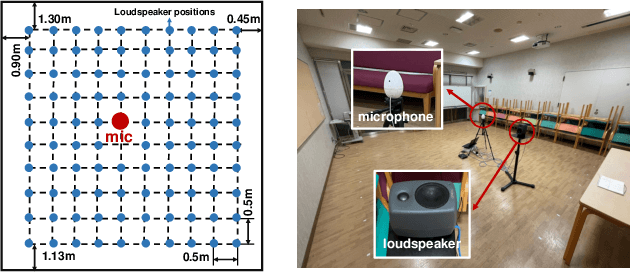
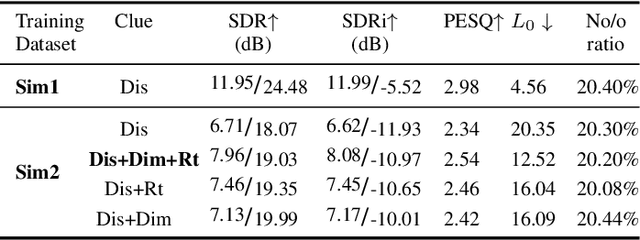
This paper aims to achieve single-channel target speech extraction (TSE) in enclosures utilizing distance clues and room information. Recent works have verified the feasibility of distance clues for the TSE task, which can imply the sound source's direct-to-reverberation ratio (DRR) and thus can be utilized for speech separation and TSE systems. However, such distance clue is significantly influenced by the room's acoustic characteristics, such as dimension and reverberation time, making it challenging for TSE systems that rely solely on distance clues to generalize across a variety of different rooms. To solve this, we suggest providing room environmental information (room dimensions and reverberation time) for distance-based TSE for better generalization capabilities. Especially, we propose a distance and environment-based TSE model in the time-frequency (TF) domain with learnable distance and room embedding. Results on both simulated and real collected datasets demonstrate its feasibility. Demonstration materials are available at https://runwushi.github.io/distance-room-demo-page/.
Distance Based Single-Channel Target Speech Extraction
Dec 28, 2024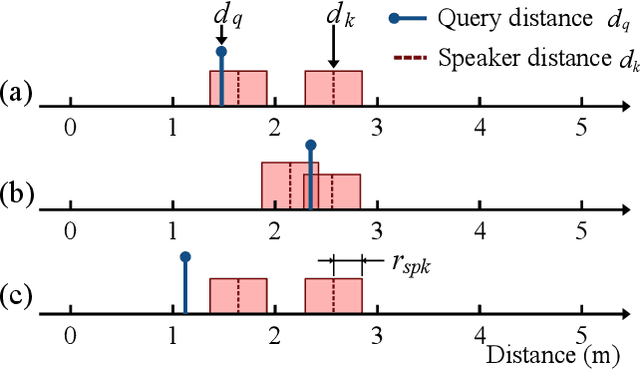
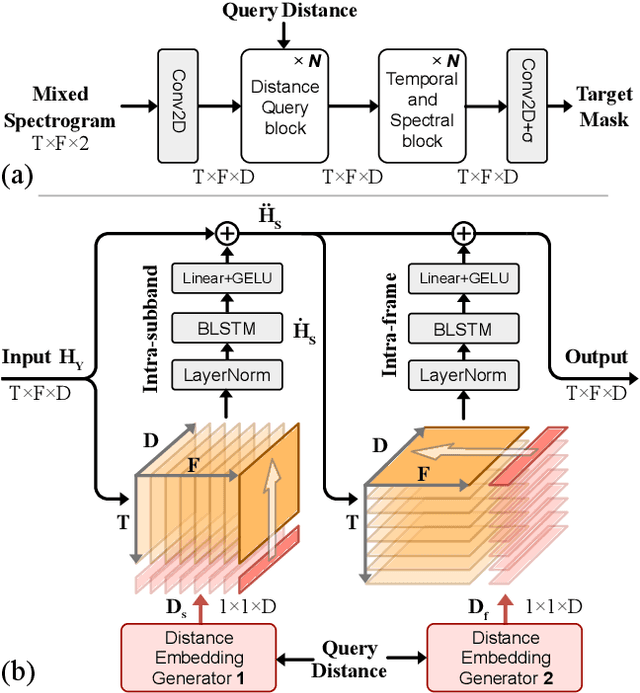
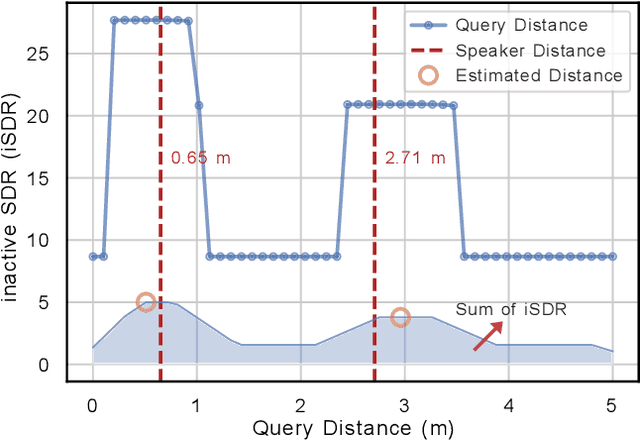
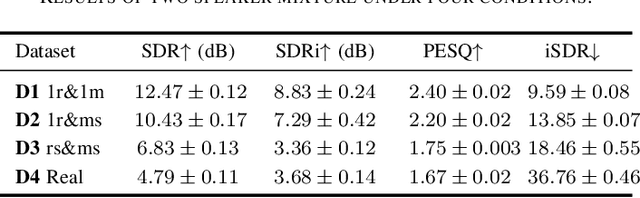
This paper aims to achieve single-channel target speech extraction (TSE) in enclosures by solely utilizing distance information. This is the first work that utilizes only distance cues without using speaker physiological information for single-channel TSE. Inspired by recent single-channel Distance-based separation and extraction methods, we introduce a novel model that efficiently fuses distance information with time-frequency (TF) bins for TSE. Experimental results in both single-room and multi-room scenarios demonstrate the feasibility and effectiveness of our approach. This method can also be employed to estimate the distances of different speakers in mixed speech. Online demos are available at https://runwushi.github.io/distance-demo-page.
UAV-Enhanced Combination to Application: Comprehensive Analysis and Benchmarking of a Human Detection Dataset for Disaster Scenarios
Aug 09, 2024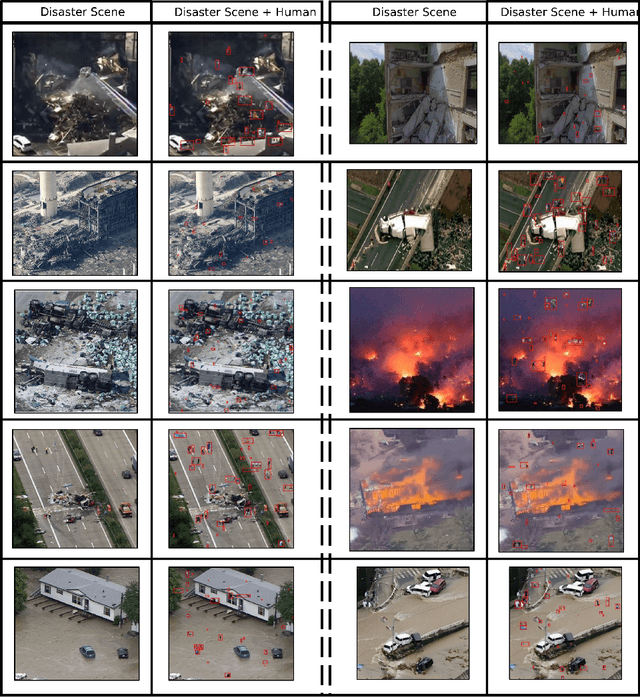
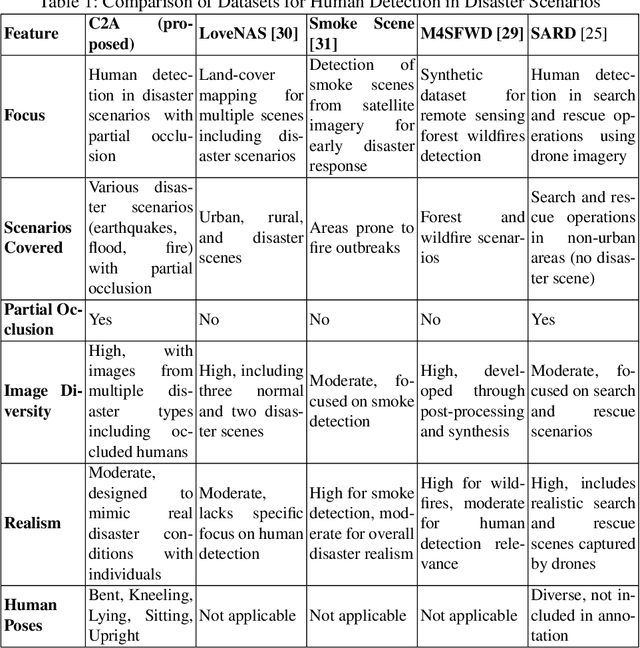
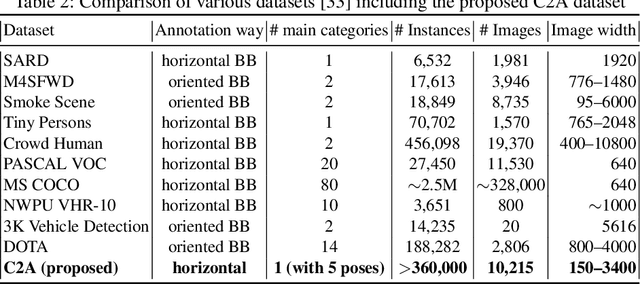
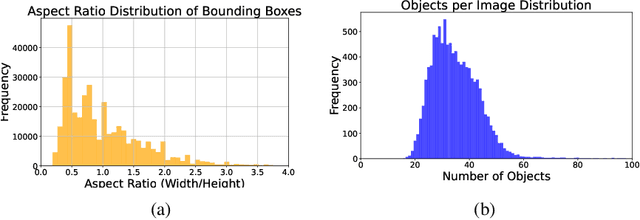
Unmanned aerial vehicles (UAVs) have revolutionized search and rescue (SAR) operations, but the lack of specialized human detection datasets for training machine learning models poses a significant challenge.To address this gap, this paper introduces the Combination to Application (C2A) dataset, synthesized by overlaying human poses onto UAV-captured disaster scenes. Through extensive experimentation with state-of-the-art detection models, we demonstrate that models fine-tuned on the C2A dataset exhibit substantial performance improvements compared to those pre-trained on generic aerial datasets. Furthermore, we highlight the importance of combining the C2A dataset with general human datasets to achieve optimal performance and generalization across various scenarios. This points out the crucial need for a tailored dataset to enhance the effectiveness of SAR operations. Our contributions also include developing dataset creation pipeline and integrating diverse human poses and disaster scenes information to assess the severity of disaster scenarios. Our findings advocate for future developments, to ensure that SAR operations benefit from the most realistic and effective AI-assisted interventions possible.