 Add to Chrome
 Add to Firefox
 Add to Edge
Therapist-Robot-Patient Physical Interaction is Worth a Thousand Words: Enabling Intuitive Therapist Guidance via Remote Haptic Control
Feb 25, 2026
Robotic systems can enhance the amount and repeatability of physically guided motor training. Yet their real-world adoption is limited, partly due to non-intuitive trainer/therapist-trainee/patient interactions. To address this gap, we present a haptic teleoperation system for trainers to remotely guide and monitor the movements of a trainee wearing an arm exoskeleton. The trainer can physically interact with the exoskeleton through a commercial handheld haptic device via virtual contact points at the exoskeleton's elbow and wrist, allowing intuitive guidance. Thirty-two participants tested the system in a trainer-trainee paradigm, comparing our haptic demonstration system with conventional visual demonstration in guiding trainees in executing arm poses. Quantitative analyses showed that haptic demonstration significantly reduced movement completion time and improved smoothness, while speech analysis using large language models for automated transcription and categorization of verbal commands revealed fewer verbal instructions. The haptic demonstration did not result in higher reported mental and physical effort by trainers compared to the visual demonstration, while trainers reported greater competence and trainees lower physical demand. These findings support the feasibility of our proposed interface for effective remote human-robot physical interaction. Future work should assess its usability and efficacy for clinical populations in restoring clinicians' sense of agency during robot-assisted therapy.

Personalized Gait Patterns During Exoskeleton-Aided Training May Have Minimal Effect on User Experience. Insights from a Pilot Study
Dec 19, 2025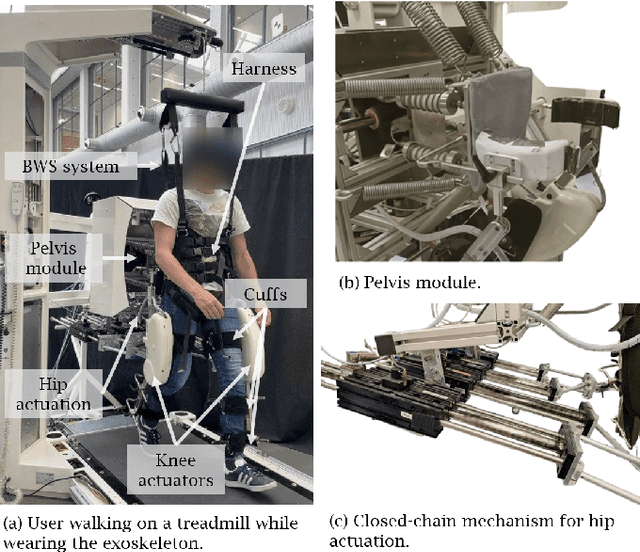
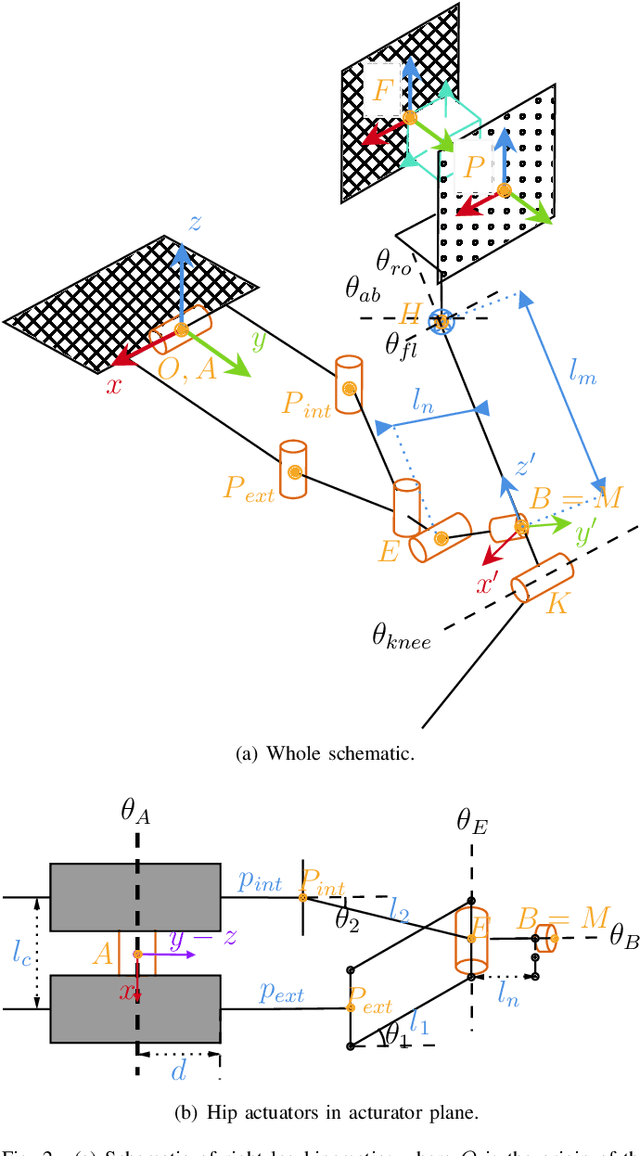
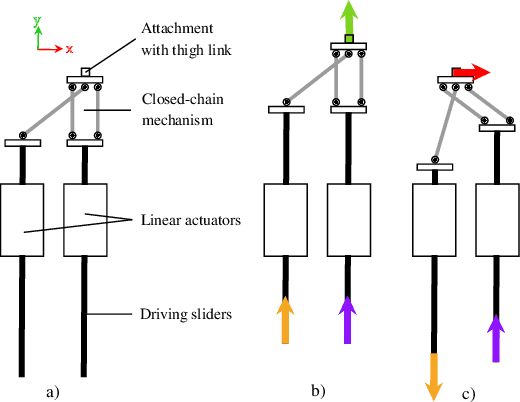
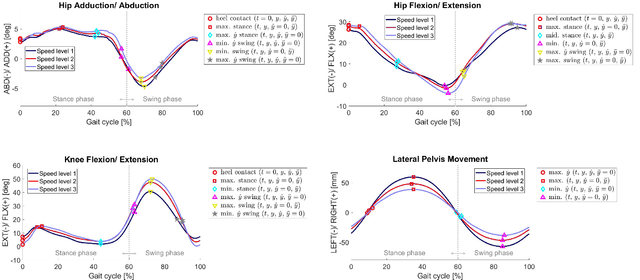
Robot-aided gait rehabilitation facilitates high-intensity and repeatable therapy. However, most exoskeletons rely on pre-recorded, non-personalized gait trajectories constrained to the sagittal plane, potentially limiting movement naturalness and user comfort. We present a data-driven gait personalization framework for an exoskeleton that supports multi-planar motion, including hip abduction/adduction and pelvic translation and rotation. Personalized trajectories to individual participants were generated using regression models trained on anthropometric, demographic, and walking speed data from a normative database. In a within-subject experiment involving ten unimpaired participants, these personalized trajectories were evaluated in regard to comfort, naturalness, and overall experience and compared against two standard patterns from the same database: one averaging all the trajectories, and one randomly selected. We did not find relevant differences across pattern conditions, despite all trajectories being executed with high accuracy thanks to a stiff position-derivative controller. We found, however, that pattern conditions in later trials were rated as more comfortable and natural than those in the first trial, suggesting that participants might have adapted to walking within the exoskeleton, regardless of the enforced gait pattern. Our findings highlight the importance of integrating subjective feedback when designing personalized gait controllers and accounting for user adaptation during experimentation.