 Add to Chrome
 Add to Firefox
 Add to Edge
HeadRouter: Dynamic Head-Weight Routing for Task-Adaptive Audio Token Pruning in Large Audio Language Models
Apr 26, 2026
Recent large audio language models (LALMs) demonstrate remarkable capabilities in processing extended multi-modal sequences, yet incur high inference costs. Token compression is an effective method that directly reduces redundant tokens in the sequence. Existing compression methods usually assume that all attention heads in LALMs contribute equally to various audio tasks and calculate token importance by averaging scores across all heads. However, our analysis demonstrates that attention heads exhibit distinct behaviors across diverse audio domains. We further reveal that only a sparse subset of attention heads actively responds to audio, with completely different performance when handling semantic and acoustic tasks. In light of this observation, we propose HeadRouter, a head-importance-aware token pruning method that perceives the varying importance of attention heads in different audio tasks to maximize the retention of crucial tokens. HeadRouter is training-free and can be applied to various LALMs. Extensive experiments on the AudioMarathon and MMAU-Pro benchmarks demonstrate that HeadRouter achieves state-of-the-art compression performance, exceeding the baseline model even when retaining 70% of the audio tokens and achieving 101.8% and 103.0% of the vanilla average on Qwen2.5-Omni-3B and Qwen2.5-Omni-7B, respectively.

LLM-based Personalized Portfolio Recommender: Integrating Large Language Models and Reinforcement Learning for Intelligent Investment Strategy Optimization
Dec 15, 2025In modern financial markets, investors increasingly seek personalized and adaptive portfolio strategies that reflect their individual risk preferences and respond to dynamic market conditions. Traditional rule-based or static optimization approaches often fail to capture the nonlinear interactions among investor behavior, market volatility, and evolving financial objectives. To address these limitations, this paper introduces the LLM-based Personalized Portfolio Recommender , an integrated framework that combines Large Language Models, reinforcement learning, and individualized risk preference modeling to support intelligent investment decision-making.
Weather Prediction Using CNN-LSTM for Time Series Analysis: A Case Study on Delhi Temperature Data
Sep 14, 2024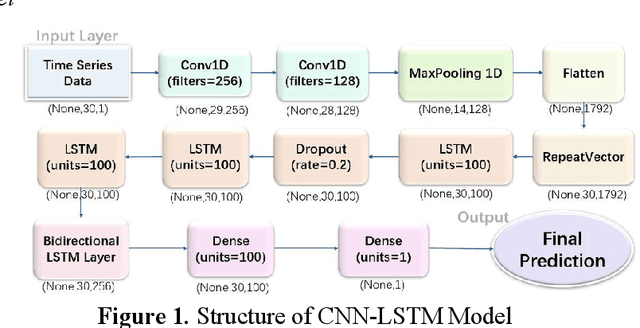
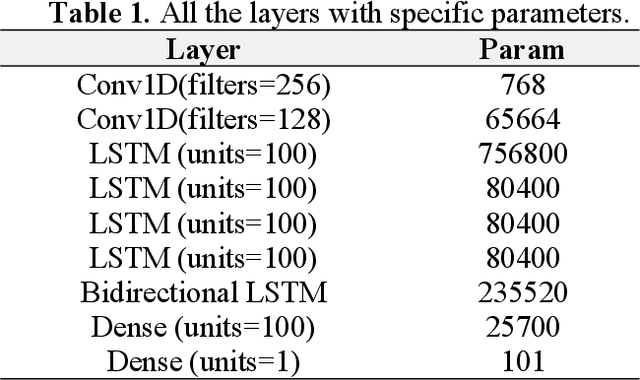
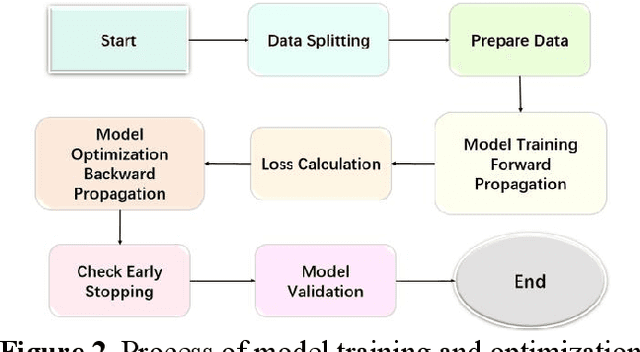
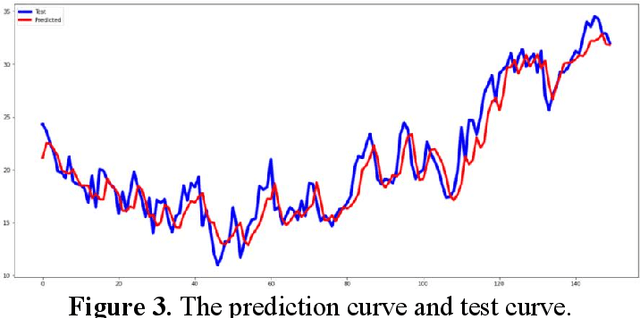
As global climate change intensifies, accurate weather forecasting is increasingly crucial for sectors such as agriculture, energy management, and environmental protection. Traditional methods, which rely on physical and statistical models, often struggle with complex, nonlinear, and time-varying data, underscoring the need for more advanced techniques. This study explores a hybrid CNN-LSTM model to enhance temperature forecasting accuracy for the Delhi region, using historical meteorological data from 1996 to 2017. We employed both direct and indirect methods, including comprehensive data preprocessing and exploratory analysis, to construct and train our model. The CNN component effectively extracts spatial features, while the LSTM captures temporal dependencies, leading to improved prediction accuracy. Experimental results indicate that the CNN-LSTM model significantly outperforms traditional forecasting methods in terms of both accuracy and stability, with a mean square error (MSE) of 3.26217 and a root mean square error (RMSE) of 1.80615. The hybrid model demonstrates its potential as a robust tool for temperature prediction, offering valuable insights for meteorological forecasting and related fields. Future research should focus on optimizing model architecture, exploring additional feature extraction techniques, and addressing challenges such as overfitting and computational complexity. This approach not only advances temperature forecasting but also provides a foundation for applying deep learning to other time series forecasting tasks.