 Add to Chrome
 Add to Firefox
 Add to Edge
Lost in Simulation: LLM-Simulated Users are Unreliable Proxies for Human Users in Agentic Evaluations
Jan 23, 2026
Agentic benchmarks increasingly rely on LLM-simulated users to scalably evaluate agent performance, yet the robustness, validity, and fairness of this approach remain unexamined. Through a user study with participants across the United States, India, Kenya, and Nigeria, we investigate whether LLM-simulated users serve as reliable proxies for real human users in evaluating agents on τ-Bench retail tasks. We find that user simulation lacks robustness, with agent success rates varying up to 9 percentage points across different user LLMs. Furthermore, evaluations using simulated users exhibit systematic miscalibration, underestimating agent performance on challenging tasks and overestimating it on moderately difficult ones. African American Vernacular English (AAVE) speakers experience consistently worse success rates and calibration errors than Standard American English (SAE) speakers, with disparities compounding significantly with age. We also find simulated users to be a differentially effective proxy for different populations, performing worst for AAVE and Indian English speakers. Additionally, simulated users introduce conversational artifacts and surface different failure patterns than human users. These findings demonstrate that current evaluation practices risk misrepresenting agent capabilities across diverse user populations and may obscure real-world deployment challenges.

Multilingual Arbitrage: Optimizing Data Pools to Accelerate Multilingual Progress
Aug 27, 2024
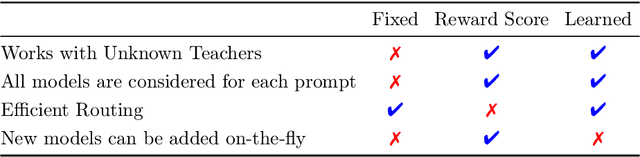

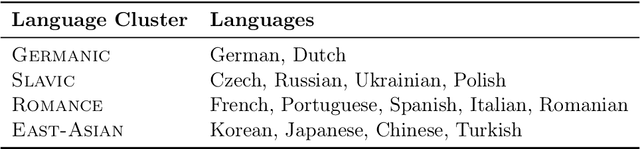
The use of synthetic data has played a critical role in recent state-of-art breakthroughs. However, overly relying on a single oracle teacher model to generate data has been shown to lead to model collapse and invite propagation of biases. These limitations are particularly evident in multilingual settings, where the absence of a universally effective teacher model that excels across all languages presents significant challenges. In this work, we address these extreme difference by introducing "multilingual arbitrage", which capitalizes on performance variations between multiple models for a given language. To do so, we strategically route samples through a diverse pool of models, each with unique strengths in different languages. Across exhaustive experiments on state-of-art models, our work suggests that arbitrage techniques allow for spectacular gains in performance that far outperform relying on a single teacher. In particular, compared to the best single teacher, we observe gains of up to 56.5% improvement in win rates averaged across all languages when switching to multilingual arbitrage. We observe the most significant gains for the least resourced languages in our pool.