 Add to Chrome
 Add to Firefox
 Add to Edge
EMMA: Extracting Multiple physical parameters from Multimodal Data
May 21, 2026
We introduce EMMA, a physics-informed multimodal framework that recovers all identifiable dynamical parameters of a system directly from raw video, audio, and image-based time-series observations. Unlike prior video-only approaches that struggle with occluded states, hidden actuation inputs, or assumptions about known initial conditions and coordinate frames, EMMA performs joint inference of explicit parameters, implicit dynamical components, and calibration invariants within a unified continuous-time model. EMMA leverages a Liquid Time-Constant (LTC) network to learn latent dynamics from heterogeneous modalities while a physics-constrained loss enforces consistency with the governing differential equations. A unified feature pipeline enables consistent alignment across video trajectories, acoustic signatures, and chart-derived measurements, allowing EMMA to estimate parameters under forced, implicit, and multivariate dynamics without requiring segmentation masks, differentiable rendering, or specialized sensors. Across 100+ scenarios including five standard dynamical benchmarks (75 Delfys videos), real-world rover and quadrotor systems with hidden inputs, and simulation-chart case studies spanning biological and chaotic systems, EMMA delivers robust multi-parameter recovery and significantly outperforms existing single-modality and equation-discovery baselines. Our results establish EMMA as a general, scalable solution for physics-consistent model extraction from opportunistic multimodal data. Code and data are available at: https://github.com/ImpactLabASU/EMMA-CVPR2026

DocRevive: A Unified Pipeline for Document Text Restoration
Apr 11, 2026In Document Understanding, the challenge of reconstructing damaged, occluded, or incomplete text remains a critical yet unexplored problem. Subsequent document understanding tasks can benefit from a document reconstruction process. In response, this paper presents a novel unified pipeline combining state-of-the-art Optical Character Recognition (OCR), advanced image analysis, masked language modeling, and diffusion-based models to restore and reconstruct text while preserving visual integrity. We create a synthetic dataset of 30{,}078 degraded document images that simulates diverse document degradation scenarios, setting a benchmark for restoration tasks. Our pipeline detects and recognizes text, identifies degradation with an occlusion detector, and uses an inpainting model for semantically coherent reconstruction. A diffusion-based module seamlessly reintegrates text, matching font, size, and alignment. To evaluate restoration quality, we propose a Unified Context Similarity Metric (UCSM), incorporating edit, semantic, and length similarities with a contextual predictability measure that penalizes deviations when the correct text is contextually obvious. Our work advances document restoration, benefiting archival research and digital preservation while setting a new standard for text reconstruction. The OPRB dataset and code are available at \href{https://huggingface.co/datasets/kpurkayastha/OPRB}{Hugging Face} and \href{https://github.com/kunalpurkayastha/DocRevive}{Github} respectively.
Human Knowledge Integrated Multi-modal Learning for Single Source Domain Generalization
Mar 12, 2026Generalizing image classification across domains remains challenging in critical tasks such as fundus image-based diabetic retinopathy (DR) grading and resting-state fMRI seizure onset zone (SOZ) detection. When domains differ in unknown causal factors, achieving cross-domain generalization is difficult, and there is no established methodology to objectively assess such differences without direct metadata or protocol-level information from data collectors, which is typically inaccessible. We first introduce domain conformal bounds (DCB), a theoretical framework to evaluate whether domains diverge in unknown causal factors. Building on this, we propose GenEval, a multimodal Vision Language Models (VLM) approach that combines foundational models (e.g., MedGemma-4B) with human knowledge via Low-Rank Adaptation (LoRA) to bridge causal gaps and enhance single-source domain generalization (SDG). Across eight DR and two SOZ datasets, GenEval achieves superior SDG performance, with average accuracy of 69.2% (DR) and 81% (SOZ), outperforming the strongest baselines by 9.4% and 1.8%, respectively.
Experience with Single Domain Generalization in Real World Medical Imaging Deployments
Jan 22, 2026A desirable property of any deployed artificial intelligence is generalization across domains, i.e. data generation distribution under a specific acquisition condition. In medical imagining applications the most coveted property for effective deployment is Single Domain Generalization (SDG), which addresses the challenge of training a model on a single domain to ensure it generalizes well to unseen target domains. In multi-center studies, differences in scanners and imaging protocols introduce domain shifts that exacerbate variability in rare class characteristics. This paper presents our experience on SDG in real life deployment for two exemplary medical imaging case studies on seizure onset zone detection using fMRI data, and stress electrocardiogram based coronary artery detection. Utilizing the commonly used application of diabetic retinopathy, we first demonstrate that state-of-the-art SDG techniques fail to achieve generalized performance across data domains. We then develop a generic expert knowledge integrated deep learning technique DL+EKE and instantiate it for the DR application and show that DL+EKE outperforms SOTA SDG methods on DR. We then deploy instances of DL+EKE technique on the two real world examples of stress ECG and resting state (rs)-fMRI and discuss issues faced with SDG techniques.
Personalized Model-Based Design of Human Centric AI enabled CPS for Long term usage
Jan 08, 2026Human centric critical systems are increasingly involving artificial intelligence to enable knowledge extraction from sensor collected data. Examples include medical monitoring and control systems, gesture based human computer interaction systems, and autonomous cars. Such systems are intended to operate for a long term potentially for a lifetime in many scenarios such as closed loop blood glucose control for Type 1 diabetics, self-driving cars, and monitoting systems for stroke diagnosis, and rehabilitation. Long term operation of such AI enabled human centric applications can expose them to corner cases for which their operation is may be uncertain. This can be due to many reasons such as inherent flaws in the design, limited resources for testing, inherent computational limitations of the testing methodology, or unknown use cases resulting from human interaction with the system. Such untested corner cases or cases for which the system performance is uncertain can lead to violations in the safety, sustainability, and security requirements of the system. In this paper, we analyze the existing techniques for safety, sustainability, and security analysis of an AI enabled human centric control system and discuss their limitations for testing the system for long term use in practice. We then propose personalized model based solutions for potentially eliminating such limitations.
Detection of Deployment Operational Deviations for Safety and Security of AI-Enabled Human-Centric Cyber Physical Systems
Jan 08, 2026In recent years, Human-centric cyber-physical systems have increasingly involved artificial intelligence to enable knowledge extraction from sensor-collected data. Examples include medical monitoring and control systems, as well as autonomous cars. Such systems are intended to operate according to the protocols and guidelines for regular system operations. However, in many scenarios, such as closed-loop blood glucose control for Type 1 diabetics, self-driving cars, and monitoring systems for stroke diagnosis. The operations of such AI-enabled human-centric applications can expose them to cases for which their operational mode may be uncertain, for instance, resulting from the interactions with a human with the system. Such cases, in which the system is in uncertain conditions, can violate the system's safety and security requirements. This paper will discuss operational deviations that can lead these systems to operate in unknown conditions. We will then create a framework to evaluate different strategies for ensuring the safety and security of AI-enabled human-centric cyber-physical systems in operation deployment. Then, as an example, we show a personalized image-based novel technique for detecting the non-announcement of meals in closed-loop blood glucose control for Type 1 diabetics.
XAI-MeD: Explainable Knowledge Guided Neuro-Symbolic Framework for Domain Generalization and Rare Class Detection in Medical Imaging
Jan 05, 2026Explainability domain generalization and rare class reliability are critical challenges in medical AI where deep models often fail under real world distribution shifts and exhibit bias against infrequent clinical conditions This paper introduces XAIMeD an explainable medical AI framework that integrates clinically accurate expert knowledge into deep learning through a unified neuro symbolic architecture XAIMeD is designed to improve robustness under distribution shift enhance rare class sensitivity and deliver transparent clinically aligned interpretations The framework encodes clinical expertise as logical connectives over atomic medical propositions transforming them into machine checkable class specific rules Their diagnostic utility is quantified through weighted feature satisfaction scores enabling a symbolic reasoning branch that complements neural predictions A confidence weighted fusion integrates symbolic and deep outputs while a Hunt inspired adaptive routing mechanism guided by Entropy Imbalance Gain EIG and Rare Class Gini mitigates class imbalance high intra class variability and uncertainty We evaluate XAIMeD across diverse modalities on four challenging tasks i Seizure Onset Zone SOZ localization from rs fMRI ii Diabetic Retinopathy grading across 6 multicenter datasets demonstrate substantial performance improvements including 6 percent gains in cross domain generalization and a 10 percent improved rare class F1 score far outperforming state of the art deep learning baselines Ablation studies confirm that the clinically grounded symbolic components act as effective regularizers ensuring robustness to distribution shifts XAIMeD thus provides a principled clinically faithful and interpretable approach to multimodal medical AI.
Enabling Physical AI at the Edge: Hardware-Accelerated Recovery of System Dynamics
Dec 29, 2025Physical AI at the edge -- enabling autonomous systems to understand and predict real-world dynamics in real time -- requires hardware-efficient learning and inference. Model recovery (MR), which identifies governing equations from sensor data, is a key primitive for safe and explainable monitoring in mission-critical autonomous systems operating under strict latency, compute, and power constraints. However, state-of-the-art MR methods (e.g., EMILY and PINN+SR) rely on Neural ODE formulations that require iterative solvers and are difficult to accelerate efficiently on edge hardware. We present \textbf{MERINDA} (Model Recovery in Reconfigurable Dynamic Architecture), an FPGA-accelerated MR framework designed to make physical AI practical on resource-constrained devices. MERINDA replaces expensive Neural ODE components with a hardware-friendly formulation that combines (i) GRU-based discretized dynamics, (ii) dense inverse-ODE layers, (iii) sparsity-driven dropout, and (iv) lightweight ODE solvers. The resulting computation is structured for streaming parallelism, enabling critical kernels to be fully parallelized on the FPGA. Across four benchmark nonlinear dynamical systems, MERINDA delivers substantial gains over GPU implementations: \textbf{114$\times$ lower energy} (434~J vs.\ 49{,}375~J), \textbf{28$\times$ smaller memory footprint} (214~MB vs.\ 6{,}118~MB), and \textbf{1.68$\times$ faster training}, while matching state-of-the-art model-recovery accuracy. These results demonstrate that MERINDA can bring accurate, explainable MR to the edge for real-time monitoring of autonomous systems.
NEURO-GUARD: Neuro-Symbolic Generalization and Unbiased Adaptive Routing for Diagnostics -- Explainable Medical AI
Dec 20, 2025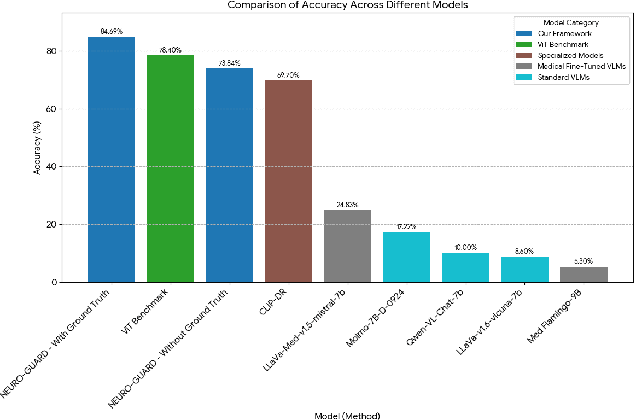
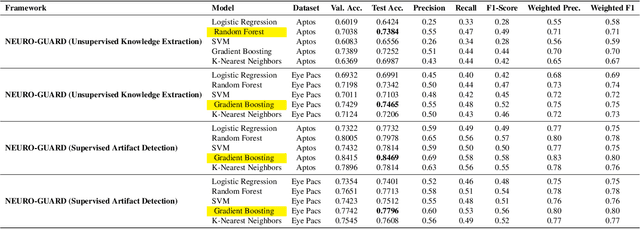
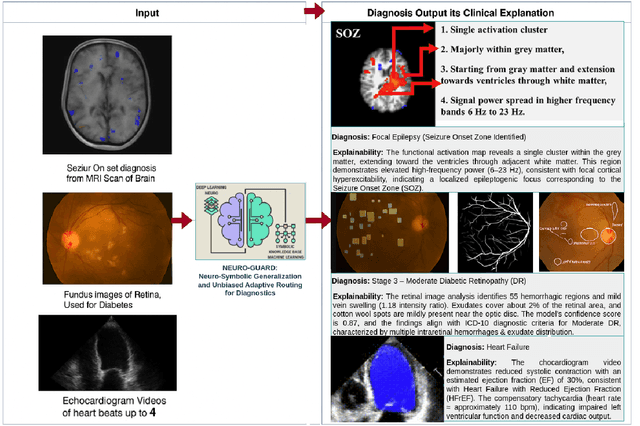
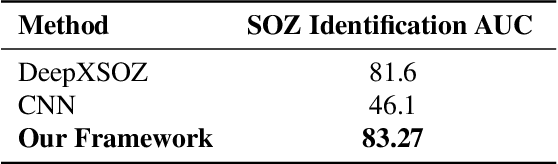
Accurate yet interpretable image-based diagnosis remains a central challenge in medical AI, particularly in settings characterized by limited data, subtle visual cues, and high-stakes clinical decision-making. Most existing vision models rely on purely data-driven learning and produce black-box predictions with limited interpretability and poor cross-domain generalization, hindering their real-world clinical adoption. We present NEURO-GUARD, a novel knowledge-guided vision framework that integrates Vision Transformers (ViTs) with language-driven reasoning to improve performance, transparency, and domain robustness. NEURO-GUARD employs a retrieval-augmented generation (RAG) mechanism for self-verification, in which a large language model (LLM) iteratively generates, evaluates, and refines feature-extraction code for medical images. By grounding this process in clinical guidelines and expert knowledge, the framework progressively enhances feature detection and classification beyond purely data-driven baselines. Extensive experiments on diabetic retinopathy classification across four benchmark datasets APTOS, EyePACS, Messidor-1, and Messidor-2 demonstrate that NEURO-GUARD improves accuracy by 6.2% over a ViT-only baseline (84.69% vs. 78.4%) and achieves a 5% gain in domain generalization. Additional evaluations on MRI-based seizure detection further confirm its cross-domain robustness, consistently outperforming existing methods. Overall, NEURO-GUARD bridges symbolic medical reasoning with subsymbolic visual learning, enabling interpretable, knowledge-aware, and generalizable medical image diagnosis while achieving state-of-the-art performance across multiple datasets.
Accelerated Digital Twin Learning for Edge AI: A Comparison of FPGA and Mobile GPU
Dec 13, 2025Digital twins (DTs) can enable precision healthcare by continually learning a mathematical representation of patient-specific dynamics. However, mission critical healthcare applications require fast, resource-efficient DT learning, which is often infeasible with existing model recovery (MR) techniques due to their reliance on iterative solvers and high compute/memory demands. In this paper, we present a general DT learning framework that is amenable to acceleration on reconfigurable hardware such as FPGAs, enabling substantial speedup and energy efficiency. We compare our FPGA-based implementation with a multi-processing implementation in mobile GPU, which is a popular choice for AI in edge devices. Further, we compare both edge AI implementations with cloud GPU baseline. Specifically, our FPGA implementation achieves an 8.8x improvement in \text{performance-per-watt} for the MR task, a 28.5x reduction in DRAM footprint, and a 1.67x runtime speedup compared to cloud GPU baselines. On the other hand, mobile GPU achieves 2x better performance per watts but has 2x increase in runtime and 10x more DRAM footprint than FPGA. We show the usage of this technique in DT guided synthetic data generation for Type 1 Diabetes and proactive coronary artery disease detection.