 Add to Chrome
 Add to Firefox
 Add to Edge
Predictable GRPO: A Closed-Form Model of Training Dynamics
Jul 01, 2026
We develop a first-principles reduced-order model of these dynamics. Under a single mean-field assumption that summarizes the policy by its expected reward, we reduce the GRPO update to a stochastically-forced damped oscillator whose mass, damping, and stiffness are fixed in closed form by the optimizer hyperparameters together with a single measured curvature scale -- momentum supplies the inertia, off-policy lag erodes the damping, and the group size enters, to leading order, as a noise temperature. The reduction has three consequences. First, it subsumes the empirical single-exponential saturation law as its overdamped limit, recasting the fitted plateau, timescale, and size exponent as the fixed point, inverse stiffness, and curvature-scaling exponent of the underlying potential, and adding, through the retained inertial term, the slow-start phase the single exponential cannot represent. Second, it yields predictions tied to independently measurable quantities rather than fitted ones: group-size invariance of the deterministic trajectory with a $1/G$ stationary fluctuation, a sharp stability threshold in the refresh interval, and an overdamped-to-oscillatory transition. Third, it furnishes diagnostics that separate failure modes a reward curve alone conflates -- reward hacking, advantage degeneracy, policy concentration, and dynamical instability. Across three models and two group sizes, the closed-form trajectory fits training reward to $R^2 \geq 0.91$ and the mean trajectory is group-size invariant to leading order -- on both the reward curve and out-of-distribution transfer to eight math benchmarks -- while the within-group reward spread retains a residual $G$-dependence that the leading-order temperature picture does not capture.

Semantic Search and Recommendation Algorithm
Dec 09, 2024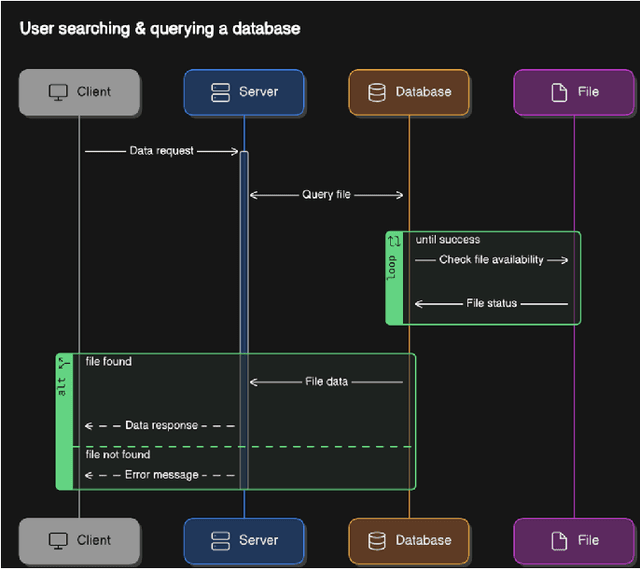
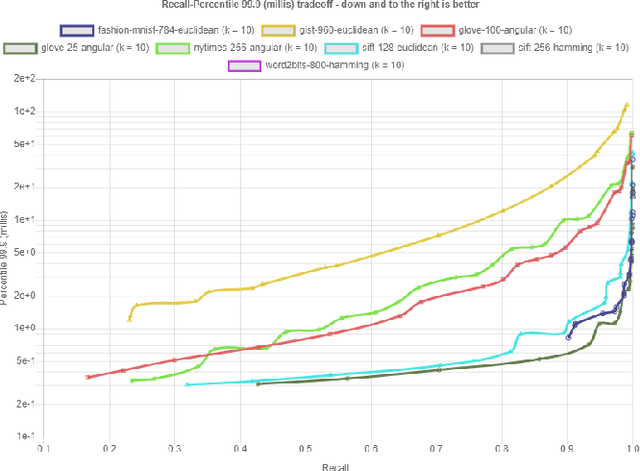
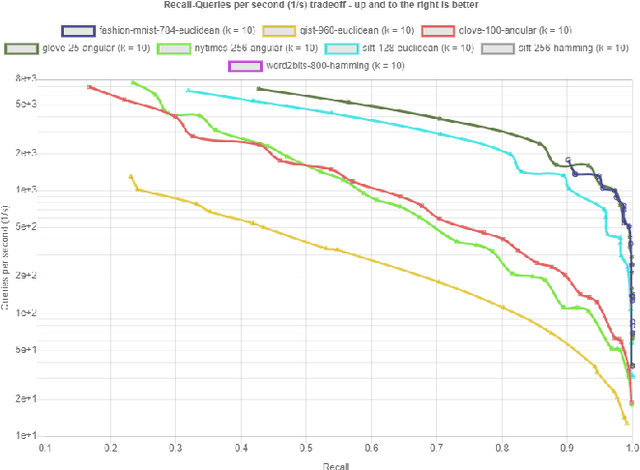
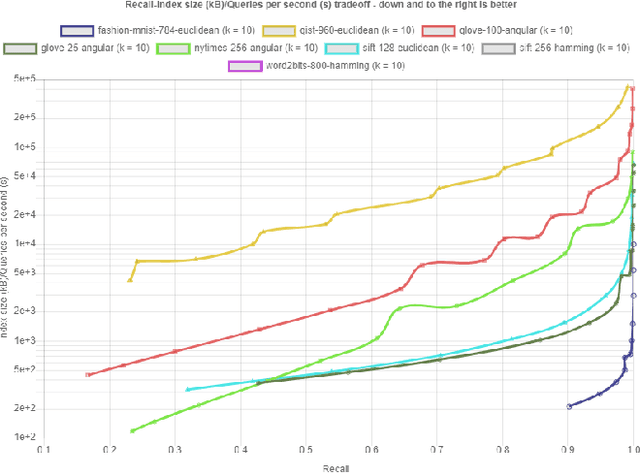
This paper introduces a new semantic search algorithm that uses Word2Vec and Annoy Index to improve the efficiency of information retrieval from large datasets. The proposed approach addresses the limitations of traditional search methods by offering enhanced speed, accuracy, and scalability. Testing on datasets up to 100GB demonstrates the method's effectiveness in processing vast amounts of data while maintaining high precision and performance.
A Comparative Study of Translation Bias and Accuracy in Multilingual Large Language Models for Cross-Language Claim Verification
Oct 14, 2024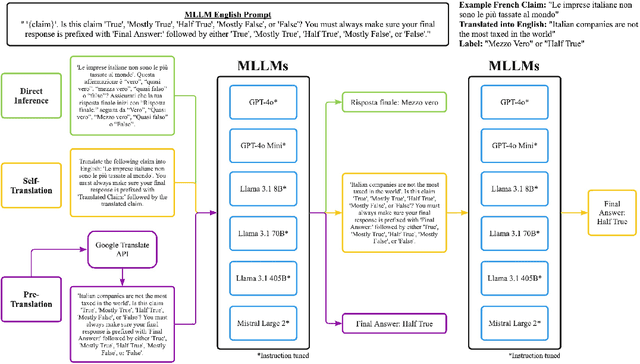


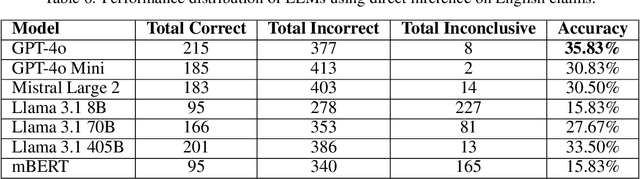
The rise of digital misinformation has heightened interest in using multilingual Large Language Models (LLMs) for fact-checking. This study systematically evaluates translation bias and the effectiveness of LLMs for cross-lingual claim verification across 15 languages from five language families: Romance, Slavic, Turkic, Indo-Aryan, and Kartvelian. Using the XFACT dataset to assess their impact on accuracy and bias, we investigate two distinct translation methods: pre-translation and self-translation. We use mBERT's performance on the English dataset as a baseline to compare language-specific accuracies. Our findings reveal that low-resource languages exhibit significantly lower accuracy in direct inference due to underrepresentation in the training data. Furthermore, larger models demonstrate superior performance in self-translation, improving translation accuracy and reducing bias. These results highlight the need for balanced multilingual training, especially in low-resource languages, to promote equitable access to reliable fact-checking tools and minimize the risk of spreading misinformation in different linguistic contexts.