 Add to Chrome
 Add to Firefox
 Add to Edge
Hilti-Trimble-Oxford Dataset: 360 Visual-Inertial Benchmark with Floor Plan Priors for SLAM and Localization
Jul 07, 2026
Automated progress monitoring on construction sites is an active area of research and development. Robot and human-carried mapping systems have been developed to build 3D maps of building and infrastructure projects. While LiDAR-based mapping systems achieve high accuracy, the cost of LiDAR can be prohibitive. Consumer-grade cameras with wide field of view ("360 cameras") combined with embedded inertial measurement units (IMUs) provide a cost-effective alternative. To support change detection and progress monitoring, highly accurate visual Simultaneous Localization and Mapping (SLAM) and floor plan-referenced localization systems are required. In this paper we present a high-quality dataset collected at an active construction site, which captures realistic challenges such as variable lighting conditions, moving workers, fast motions, and repetitive structures. The dataset offers thirty visual-inertial sequences recorded across seven floors over an eight-month period of the construction project. Ground truth trajectories were collected using a high quality LiDAR-inertial SLAM system rigidly attached to the 360 camera. Additionally, we report the results of an open research challenge evaluating the best visual SLAM and localization systems from around the world. The Challenge attracted substantially higher participation in SLAM, with 62 teams compared to 22 in floor-plan-referenced localization, reflecting the broader maturity of SLAM methods. The higher errors in localization further highlight the difficulty of this task in construction and point to the need for continued research, which this dataset is intended to support. The dataset and the benchmark are publicly available at: https://hilti-trimble-challenge.com/dataset-2026.

Solution to Advanced Manufacturing Process Problems using Cohort Intelligence Algorithm with Improved Constraint Handling Approaches
Oct 16, 2023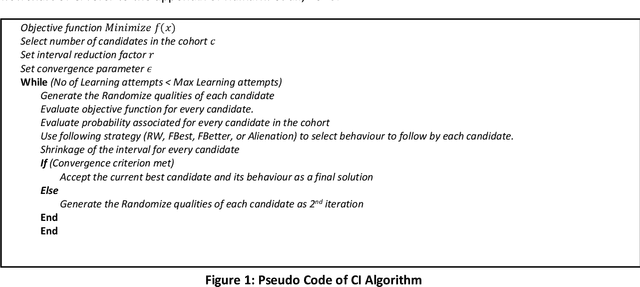
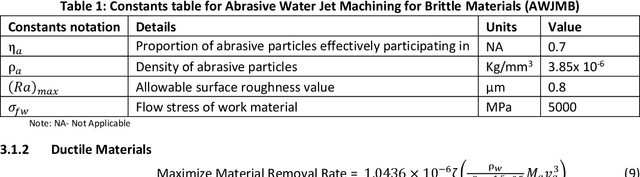
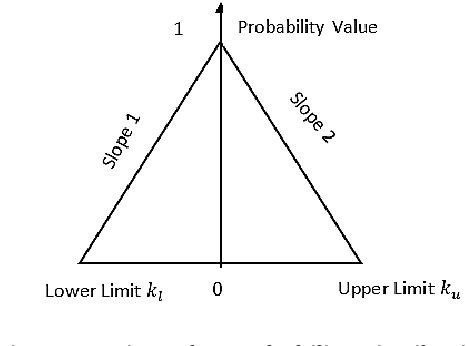
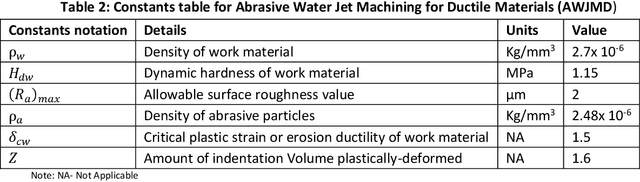
Recently, various Artificial Intelligence (AI) based optimization metaheuristics are proposed and applied for a variety of problems. Cohort Intelligence (CI) algorithm is a socio inspired optimization technique which is successfully applied for solving several unconstrained & constrained real-world problems from the domains such as design, manufacturing, supply chain, healthcare, etc. Generally, real-world problems are constrained in nature. Even though most of the Evolutionary Algorithms (EAs) can efficiently solve unconstrained problems, their performance degenerates when the constraints are involved. In this paper, two novel constraint handling approaches based on modulus and hyperbolic tangent probability distributions are proposed. Constrained CI algorithm with constraint handling approaches based on triangular, modulus and hyperbolic tangent is presented and applied for optimizing advanced manufacturing processes such as Water Jet Machining (WJM), Abrasive Jet Machining (AJM), Ultrasonic Machining (USM) and Grinding process. The solutions obtained using proposed CI algorithm are compared with contemporary algorithms such as Genetic Algorithm, Simulated Annealing, Teaching Learning Based Optimization, etc. The proposed approaches achieved 2%-127% maximization of material removal rate satisfying hard constraints. As compared to the GA, CI with Hyperbolic tangent probability distribution achieved 15%, 2%, 2%, 127%, and 4% improvement in MRR for AJMB, AJMD, WJM, USM, and Grinding processes, respectively contributing to the productivity improvement. The contributions in this paper have opened several avenues for further applicability of the proposed constraint handling approaches for solving complex constrained problems.