 Add to Chrome
 Add to Firefox
 Add to Edge
Exploring Parallelism in FPGA-Based Accelerators for Machine Learning Applications
Nov 09, 2025
Speculative backpropagation has emerged as a promising technique to accelerate the training of neural networks by overlapping the forward and backward passes. Leveraging speculative weight updates when error gradients fall within a specific threshold reduces training time without substantially compromising accuracy. In this work, we implement speculative backpropagation on the MNIST dataset using OpenMP as the parallel programming platform. OpenMP's multi-threading capabilities enable simultaneous execution of forward and speculative backpropagation steps, significantly improving training speed. The application is planned for synthesis on a state-of-the-art FPGA to demonstrate its potential for hardware acceleration. Our CPU-based experimental results demonstrate that speculative backpropagation achieves a maximum speedup of 24% in execution time when using a threshold of 0.25, and accuracy remaining within 3-4% of the baseline across various epochs. Additionally, when comparing individual step execution time, speculative backpropagation yields a maximum speedup of 35% over the baseline, demonstrating the effectiveness of overlapping forward and backward passes.

FPGA or GPU? Analyzing comparative research for application-specific guidance
Nov 09, 2025The growing complexity of computational workloads has amplified the need for efficient and specialized hardware accelerators. Field Programmable Gate Arrays (FPGAs) and Graphics Processing Units (GPUs) have emerged as prominent solutions, each excelling in specific domains. Although there is substantial research comparing FPGAs and GPUs, most of the work focuses primarily on performance metrics, offering limited insight into the specific types of applications that each accelerator benefits the most. This paper aims to bridge this gap by synthesizing insights from various research articles to guide users in selecting the appropriate accelerator for domain-specific applications. By categorizing the reviewed studies and analyzing key performance metrics, this work highlights the strengths, limitations, and ideal use cases for FPGAs and GPUs. The findings offer actionable recommendations, helping researchers and practitioners navigate trade-offs in performance, energy efficiency, and programmability.
A Comprehensive Survey of Graph-based Deep Learning Approaches for Anomaly Detection in Complex Distributed Systems
Jun 08, 2022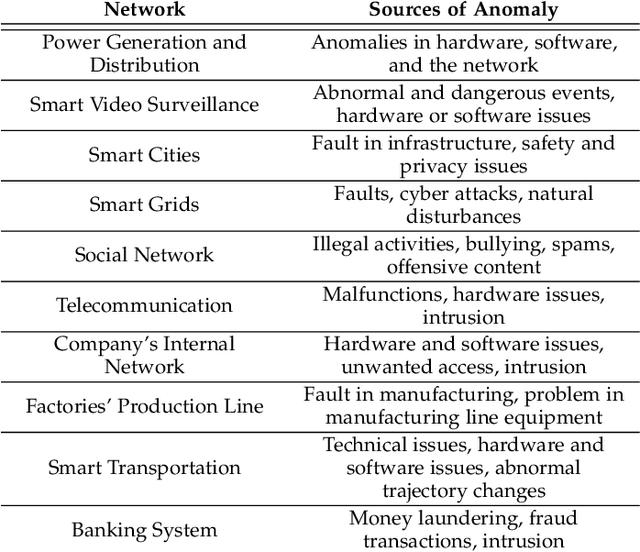
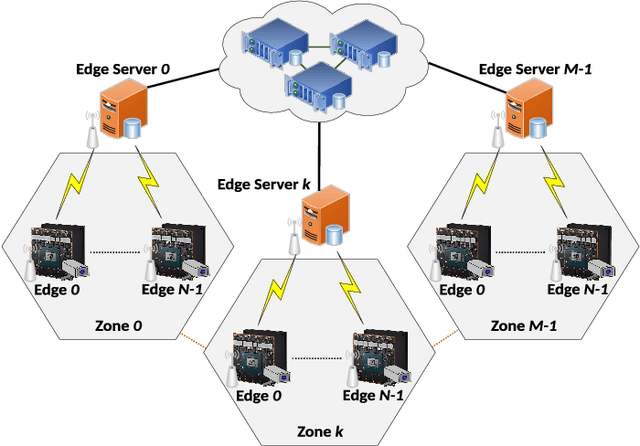
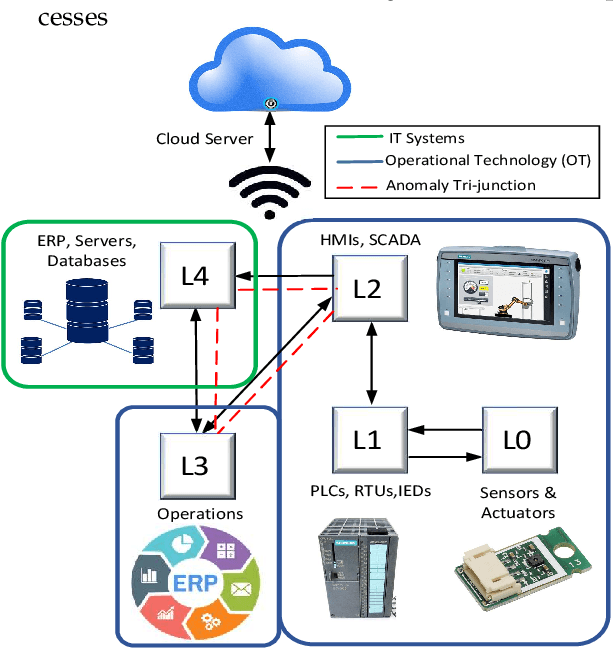
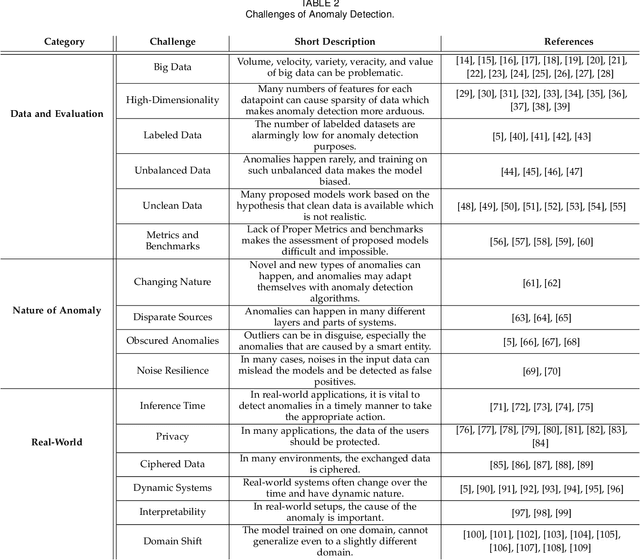
Anomaly detection is an important problem for complex distributed systems consisting of hardware and software components. A thorough understanding of the requirements and challenges of anomaly detection for such systems is pivotal to the security of a system, especially for real-world deployment. While there have been many diverse research areas and application domains that deal with the problem, few have attempted to provide an in-depth look at such systems. Most anomaly detection techniques have been specifically developed for certain application domains, while others are more generic. In this survey, we explore the significant potential of graph-based algorithms to identify and mitigate different types of anomalies in complex distributed heterogeneous systems. Our main focus is to provide an in-depth look at graphs when applied on heterogeneous computing devices spread across complex distributed systems. This study analyzes, compares, and contrasts the state-of-the-art research articles in the field. First, we describe the characteristics of the real-world distributed systems and their specific challenges of anomaly detection in such complex networks, such as data and evaluation, nature of the anomalies, and real-world requirements. Later, we discuss why graphs can be leveraged in such systems and the benefits of utilizing graphs. Then we will aptly delve into the state-of-the-art approaches and highlight their strength and weaknesses. Finally, we evaluate and compare these approaches and point out the areas for possible improvements.