 Add to Chrome
 Add to Firefox
 Add to Edge
An Additive MLP-GNN Framework for Characterizing Chemical and Structural Contributions to Aqueous Solubility
Jul 02, 2026
Aqueous solubility is a key property in early-stage drug discovery, but most predictive models merge physicochemical descriptors and molecular graph information into a single representation, obscuring whether a prediction is driven by global chemistry, molecular structure, or both. We present an additive deep-learning framework that keeps these two sources of information separate throughout training: physicochemical descriptors are encoded by a multilayer perceptron (the chemical branch) and molecular graph topology by a graph neural network (the structural branch), with the two outputs combined only at the prediction stage through an additive model with an optional multiplicative interaction. This design provides a direct decomposition of chemical and structural components that can be examined separately after training. Furthermore, pretraining on the larger AqSolDB dataset and fine-tuning on the smaller BigSolDB2 dataset substantially improve accuracy and reduce run-to-run variations, indicating generalizability of the learned features from the data-rich settings. We further interpret the fitted model using best linear projections of the branch outputs, molecule-level embedding summaries across solubility classes, and atom-level GNNExplainer masks aggregated over functional groups. These analyses show that the chemical branch aligns with familiar physicochemical descriptors, while the structural branch captures graph-topological and functional-group patterns associated with solubility. Across both datasets, the framework attains competitive predictive performance while making the distinct roles of chemical and structural information more transparent.

Individualized Multi-Treatment Response Curves Estimation using RBF-net with Shared Neurons
Feb 08, 2024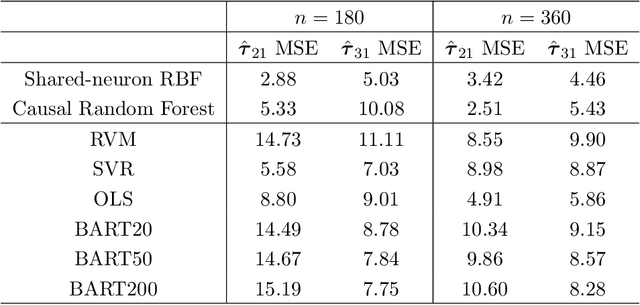
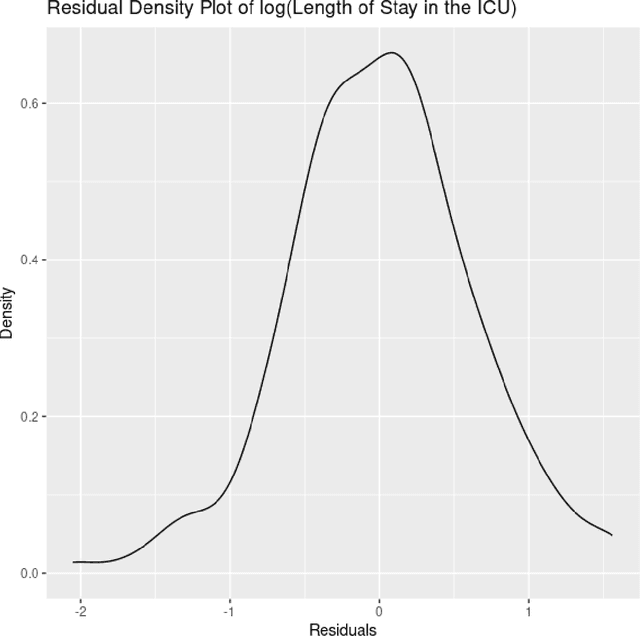
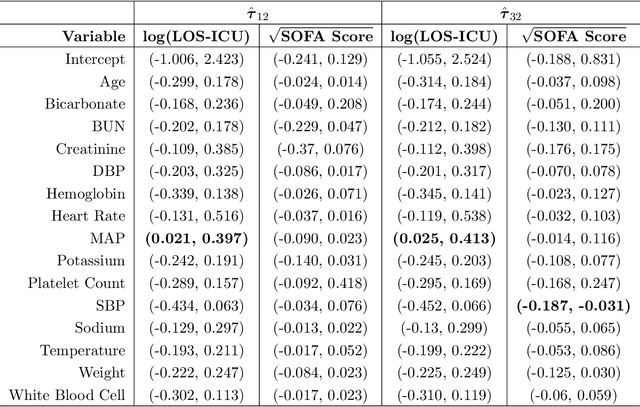
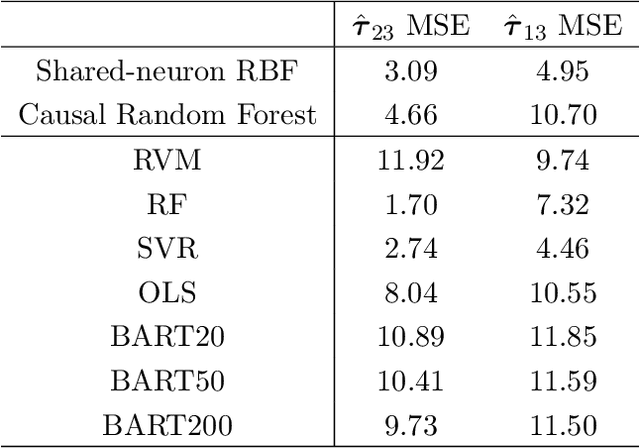
Heterogeneous treatment effect estimation is an important problem in precision medicine. Specific interests lie in identifying the differential effect of different treatments based on some external covariates. We propose a novel non-parametric treatment effect estimation method in a multi-treatment setting. Our non-parametric modeling of the response curves relies on radial basis function (RBF)-nets with shared hidden neurons. Our model thus facilitates modeling commonality among the treatment outcomes. The estimation and inference schemes are developed under a Bayesian framework and implemented via an efficient Markov chain Monte Carlo algorithm, appropriately accommodating uncertainty in all aspects of the analysis. The numerical performance of the method is demonstrated through simulation experiments. Applying our proposed method to MIMIC data, we obtain several interesting findings related to the impact of different treatment strategies on the length of ICU stay and 12-hour SOFA score for sepsis patients who are home-discharged.
EmotionGIF-IITP-AINLPML: Ensemble-based Automated Deep Neural System for predicting category(ies) of a GIF response
Dec 23, 2020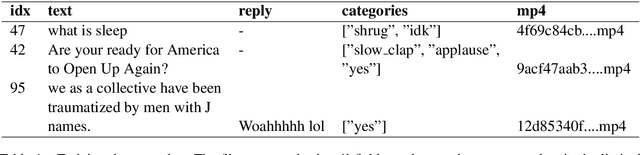
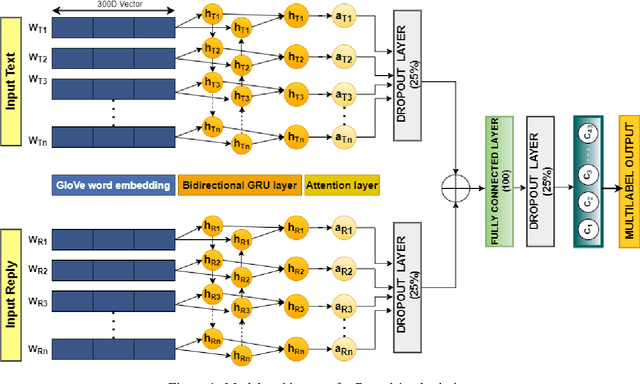
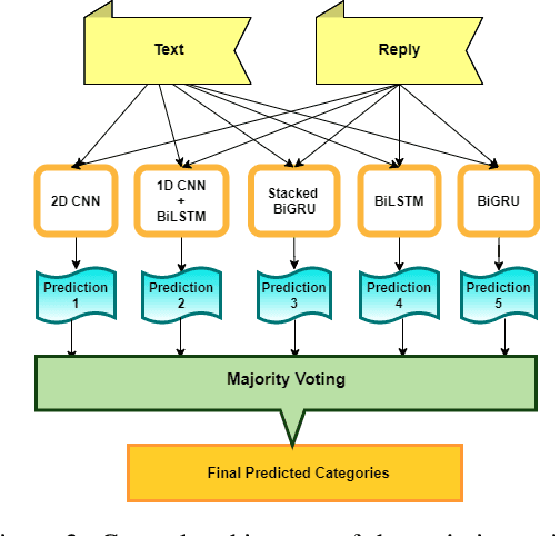
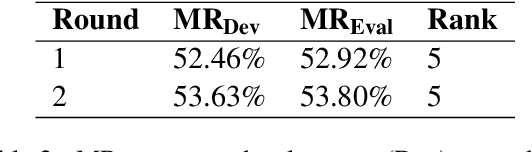
In this paper, we describe the systems submitted by our IITP-AINLPML team in the shared task of SocialNLP 2020, EmotionGIF 2020, on predicting the category(ies) of a GIF response for a given unlabelled tweet. For the round 1 phase of the task, we propose an attention-based Bi-directional GRU network trained on both the tweet (text) and their replies (text wherever available) and the given category(ies) for its GIF response. In the round 2 phase, we build several deep neural-based classifiers for the task and report the final predictions through a majority voting based ensemble technique. Our proposed models attain the best Mean Recall (MR) scores of 52.92% and 53.80% in round 1 and round 2, respectively.