 Add to Chrome
 Add to Firefox
 Add to Edge
Learning Action Hierarchies via Hybrid Geometric Diffusion
Jan 05, 2026
Temporal action segmentation is a critical task in video understanding, where the goal is to assign action labels to each frame in a video. While recent advances leverage iterative refinement-based strategies, they fail to explicitly utilize the hierarchical nature of human actions. In this work, we propose HybridTAS - a novel framework that incorporates a hybrid of Euclidean and hyperbolic geometries into the denoising process of diffusion models to exploit the hierarchical structure of actions. Hyperbolic geometry naturally provides tree-like relationships between embeddings, enabling us to guide the action label denoising process in a coarse-to-fine manner: higher diffusion timesteps are influenced by abstract, high-level action categories (root nodes), while lower timesteps are refined using fine-grained action classes (leaf nodes). Extensive experiments on three benchmark datasets, GTEA, 50Salads, and Breakfast, demonstrate that our method achieves state-of-the-art performance, validating the effectiveness of hyperbolic-guided denoising for the temporal action segmentation task.

Forget Less by Learning from Parents Through Hierarchical Relationships
Jan 05, 2026Custom Diffusion Models (CDMs) offer impressive capabilities for personalization in generative modeling, yet they remain vulnerable to catastrophic forgetting when learning new concepts sequentially. Existing approaches primarily focus on minimizing interference between concepts, often neglecting the potential for positive inter-concept interactions. In this work, we present Forget Less by Learning from Parents (FLLP), a novel framework that introduces a parent-child inter-concept learning mechanism in hyperbolic space to mitigate forgetting. By embedding concept representations within a Lorentzian manifold, naturally suited to modeling tree-like hierarchies, we define parent-child relationships in which previously learned concepts serve as guidance for adapting to new ones. Our method not only preserves prior knowledge but also supports continual integration of new concepts. We validate FLLP on three public datasets and one synthetic benchmark, showing consistent improvements in both robustness and generalization.
Forget Less by Learning Together through Concept Consolidation
Jan 05, 2026Custom Diffusion Models (CDMs) have gained significant attention due to their remarkable ability to personalize generative processes. However, existing CDMs suffer from catastrophic forgetting when continuously learning new concepts. Most prior works attempt to mitigate this issue under the sequential learning setting with a fixed order of concept inflow and neglect inter-concept interactions. In this paper, we propose a novel framework - Forget Less by Learning Together (FL2T) - that enables concurrent and order-agnostic concept learning while addressing catastrophic forgetting. Specifically, we introduce a set-invariant inter-concept learning module where proxies guide feature selection across concepts, facilitating improved knowledge retention and transfer. By leveraging inter-concept guidance, our approach preserves old concepts while efficiently incorporating new ones. Extensive experiments, across three datasets, demonstrates that our method significantly improves concept retention and mitigates catastrophic forgetting, highlighting the effectiveness of inter-concept catalytic behavior in incremental concept learning of ten tasks with at least 2% gain on average CLIP Image Alignment scores.
Enhancing Authorship Attribution through Embedding Fusion: A Novel Approach with Masked and Encoder-Decoder Language Models
Nov 01, 2024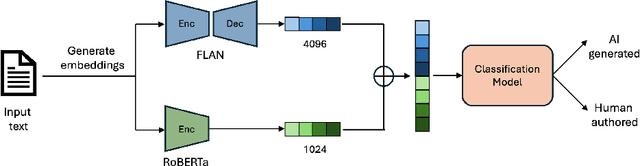
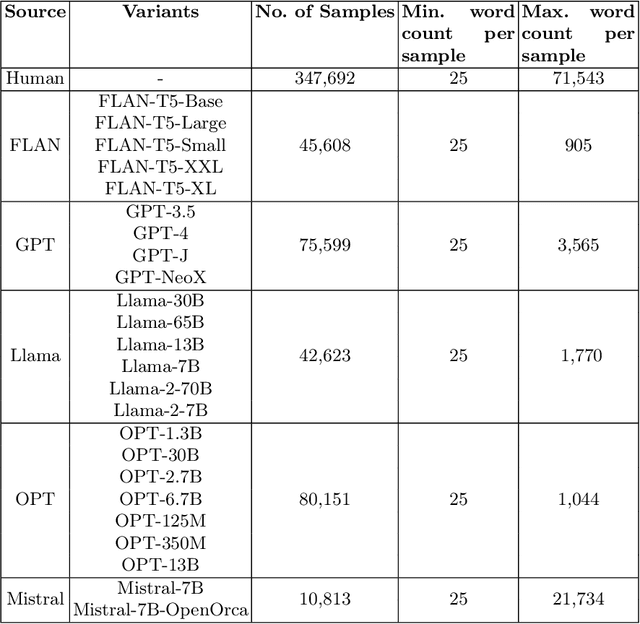
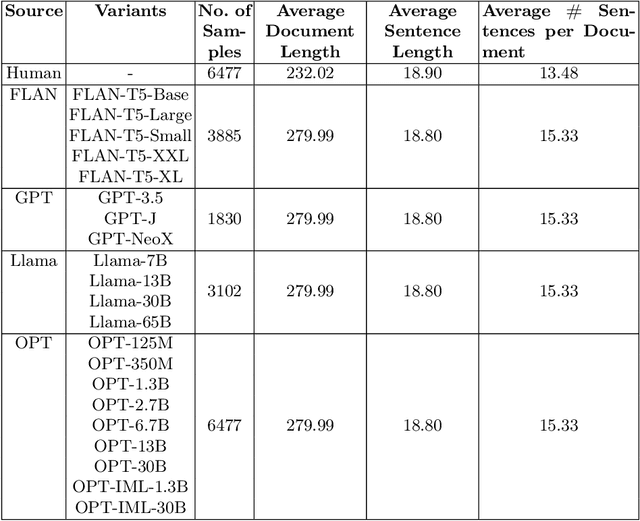
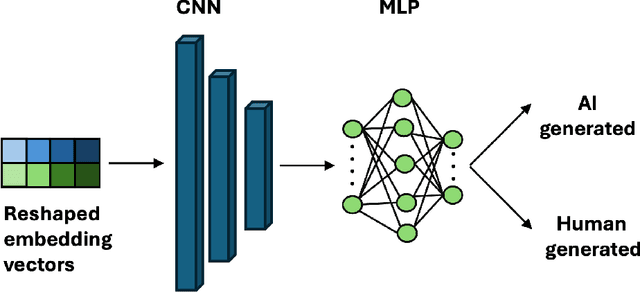
The increasing prevalence of AI-generated content alongside human-written text underscores the need for reliable discrimination methods. To address this challenge, we propose a novel framework with textual embeddings from Pre-trained Language Models (PLMs) to distinguish AI-generated and human-authored text. Our approach utilizes Embedding Fusion to integrate semantic information from multiple Language Models, harnessing their complementary strengths to enhance performance. Through extensive evaluation across publicly available diverse datasets, our proposed approach demonstrates strong performance, achieving classification accuracy greater than 96% and a Matthews Correlation Coefficient (MCC) greater than 0.93. This evaluation is conducted on a balanced dataset of texts generated from five well-known Large Language Models (LLMs), highlighting the effectiveness and robustness of our novel methodology.
Towards Building Secure UAV Navigation with FHE-aware Knowledge Distillation
Nov 01, 2024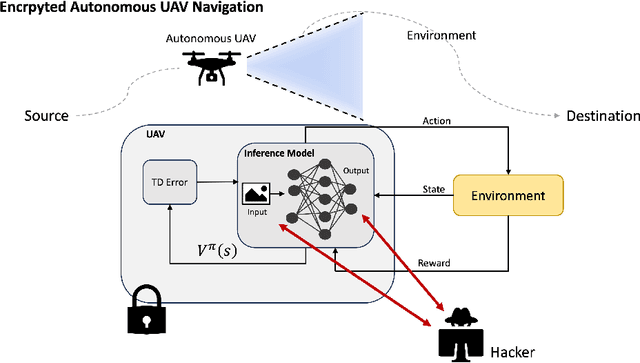
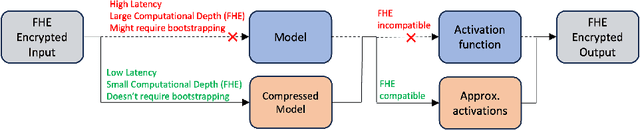
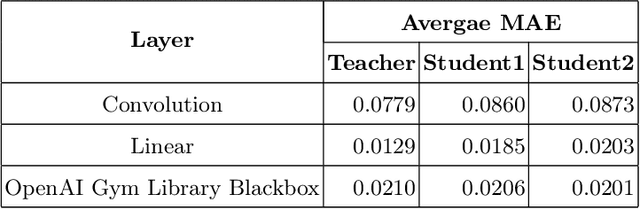
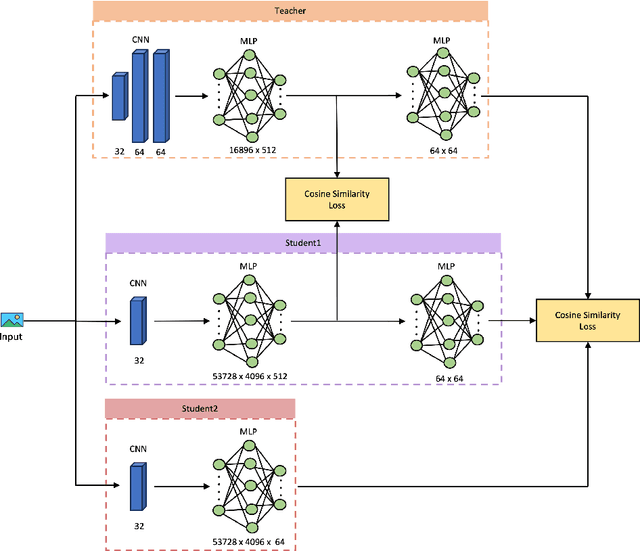
In safeguarding mission-critical systems, such as Unmanned Aerial Vehicles (UAVs), preserving the privacy of path trajectories during navigation is paramount. While the combination of Reinforcement Learning (RL) and Fully Homomorphic Encryption (FHE) holds promise, the computational overhead of FHE presents a significant challenge. This paper proposes an innovative approach that leverages Knowledge Distillation to enhance the practicality of secure UAV navigation. By integrating RL and FHE, our framework addresses vulnerabilities to adversarial attacks while enabling real-time processing of encrypted UAV camera feeds, ensuring data security. To mitigate FHE's latency, Knowledge Distillation is employed to compress the network, resulting in an impressive 18x speedup without compromising performance, as evidenced by an R-squared score of 0.9499 compared to the original model's score of 0.9631. Our methodology underscores the feasibility of processing encrypted data for UAV navigation tasks, emphasizing security alongside performance efficiency and timely processing. These findings pave the way for deploying autonomous UAVs in sensitive environments, bolstering their resilience against potential security threats.
Enhancing Privacy and Security of Autonomous UAV Navigation
Apr 26, 2024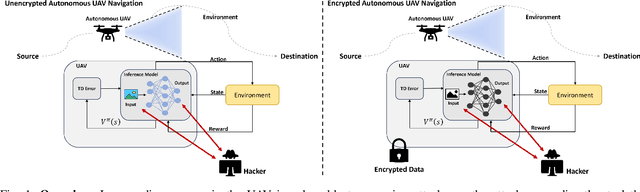
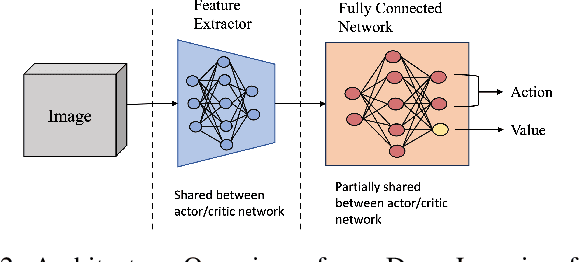
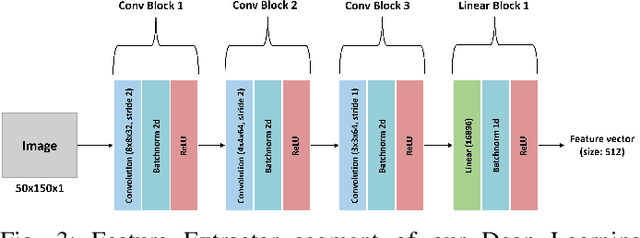
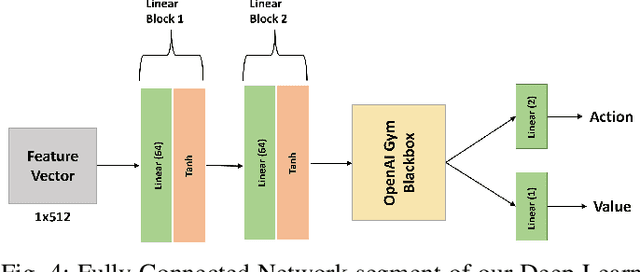
Autonomous Unmanned Aerial Vehicles (UAVs) have become essential tools in defense, law enforcement, disaster response, and product delivery. These autonomous navigation systems require a wireless communication network, and of late are deep learning based. In critical scenarios such as border protection or disaster response, ensuring the secure navigation of autonomous UAVs is paramount. But, these autonomous UAVs are susceptible to adversarial attacks through the communication network or the deep learning models - eavesdropping / man-in-the-middle / membership inference / reconstruction. To address this susceptibility, we propose an innovative approach that combines Reinforcement Learning (RL) and Fully Homomorphic Encryption (FHE) for secure autonomous UAV navigation. This end-to-end secure framework is designed for real-time video feeds captured by UAV cameras and utilizes FHE to perform inference on encrypted input images. While FHE allows computations on encrypted data, certain computational operators are yet to be implemented. Convolutional neural networks, fully connected neural networks, activation functions and OpenAI Gym Library are meticulously adapted to the FHE domain to enable encrypted data processing. We demonstrate the efficacy of our proposed approach through extensive experimentation. Our proposed approach ensures security and privacy in autonomous UAV navigation with negligible loss in performance.
Enhancing Privacy in Face Analytics Using Fully Homomorphic Encryption
Apr 24, 2024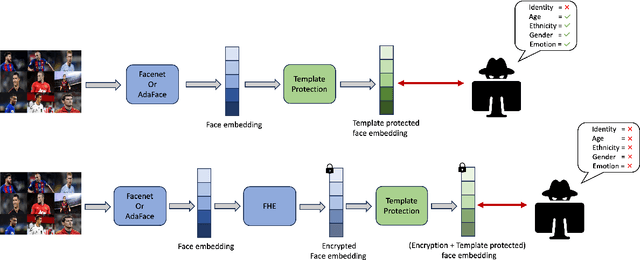
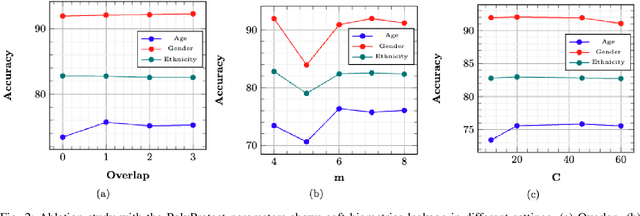
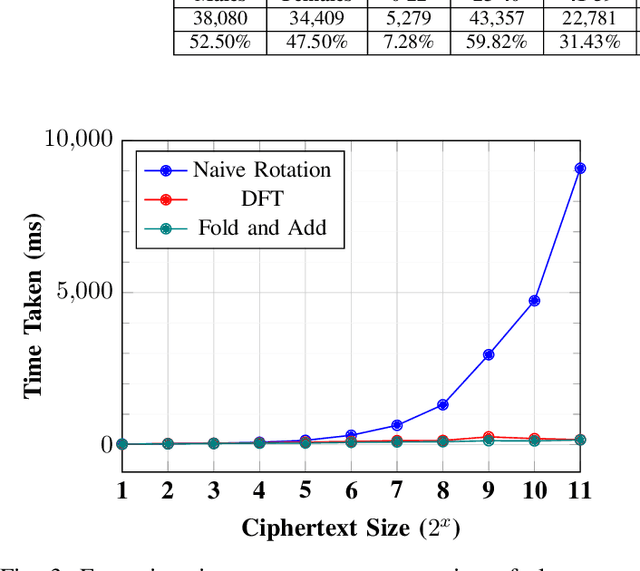
Modern face recognition systems utilize deep neural networks to extract salient features from a face. These features denote embeddings in latent space and are often stored as templates in a face recognition system. These embeddings are susceptible to data leakage and, in some cases, can even be used to reconstruct the original face image. To prevent compromising identities, template protection schemes are commonly employed. However, these schemes may still not prevent the leakage of soft biometric information such as age, gender and race. To alleviate this issue, we propose a novel technique that combines Fully Homomorphic Encryption (FHE) with an existing template protection scheme known as PolyProtect. We show that the embeddings can be compressed and encrypted using FHE and transformed into a secure PolyProtect template using polynomial transformation, for additional protection. We demonstrate the efficacy of the proposed approach through extensive experiments on multiple datasets. Our proposed approach ensures irreversibility and unlinkability, effectively preventing the leakage of soft biometric attributes from face embeddings without compromising recognition accuracy.