 Add to Chrome
 Add to Firefox
 Add to Edge
ArogyaSutra: A Multi-Agent Framework for Multimodal Medical Reasoning in Indic Languages
Jun 11, 2026
Multimodal Large Language Models (MLLMs) have shown promising reasoning capabilities in general domains, yet their performance remains limited in specialized settings such as healthcare, especially in multilingual and low-resource scenarios. This gap is critical in regions like rural India, where patients often express complex medical queries in native Indic languages and rely on multimodal inputs such as medical images. Existing English-centric MLLMs struggle to support such use cases, limiting equitable access to AI-driven healthcare assistance. To address this challenge, we introduce ArogyaBodha, a large-scale multilingual multimodal medical question-answer dataset constructed from eight heterogeneous sources, covering 31 body systems, six imaging modalities, and 21 clinical domains across English and seven major Indian languages. We further propose ArogyaSutra, an actor-critic-based multi-agent framework that integrates tool grounding with dual-memory mechanisms for step-wise, reasoning-aware decision making, and uses stored actor-critic simulation trajectories for distillation. Experiments show that our dataset and framework improve multilingual medical reasoning accuracy across all Indic languages, with ablations validating the contribution of each component. The source code and dataset are available at: https://iitp-cse.github.io/ ArogyaSutra/

Superimposed Chirp Waveforms for SWIPT with Diplexer-based Integrated Receivers
Nov 08, 2023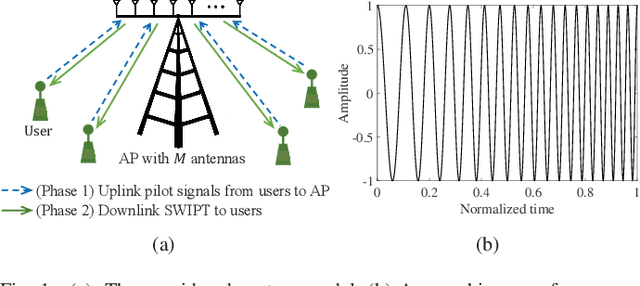
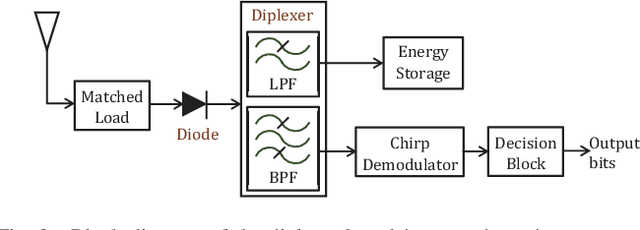
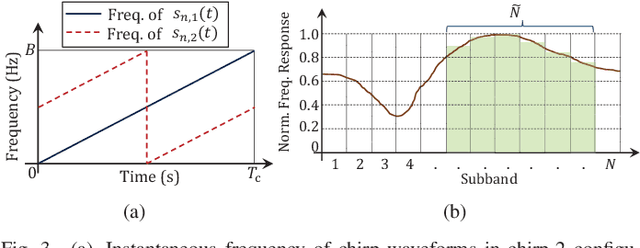
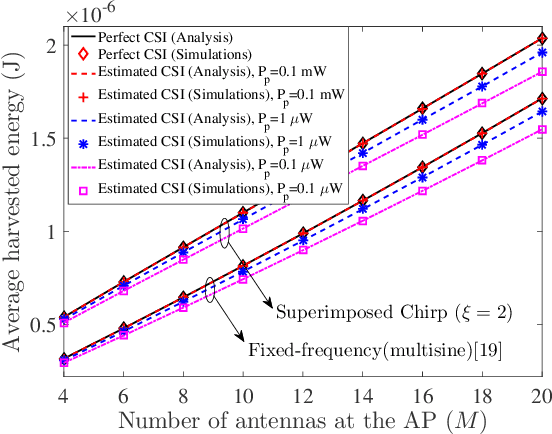
In this paper, we present the superposition of chirp waveforms for simultaneous wireless information and power transfer (SWIPT) applications. Exploiting the chirp waveform characteristics enables us to superimpose multiple chirps, thereby allowing transmission of the same number of waveforms over less bandwidth. This enables us to perform subband selection when operating over set of orthogonal subbands. Furthermore, we consider a user equipped with a diplexer-based integrated receiver (DIR), which enables to extract radio frequency power and decode information from the same signal without splitting. Thereby, incorporating chirp superposition and subband selection, a transmission scheme is proposed to exploit both the diode's nonlinearity and frequency diversity. We derive novel closed-form analytical expressions of the average harvested energy (HE) via transmission of superimposed chirp over selected subbands based on tools from order statistics. We also analyze the downlink information rate achieved at the user. Through our analytical and numerical results, for the considered system setup, we show that superimposed chirp-based SWIPT provides an improvement of 30$\%$ in average HE performance as compared to multisine waveforms consisting of a set of fixed-frequency cosine signals, improves the minimum level of HE in a multiuser network, and extends the operating range of energy transfer as compared to fixed-frequency waveforms. Furthermore, we illustrate that the inclusion of DIR at the receiver for SWIPT enlarges the energy-information transfer region when compared to the widely considered power splitting receiver.