 Add to Chrome
 Add to Firefox
 Add to Edge
Gemma 4 Technical Report
Jul 02, 2026
We introduce Gemma 4, a new generation of open-weight, natively multimodal language models in the Gemma model family. Designed to advance compute efficiency and reasoning, the Gemma 4 model suite features dense and Mixture-of-Experts architectures, ranging from 2.3B to 31B parameters. Alongside improved vision and audio encoders for all model sizes, we propose a unified, encoder-free architecture for our 12B model, which ingests raw audio and image patches. Furthermore, we integrate a thinking mode, enabling Gemma models to generate reasoning traces prior to responding. We improve inference speed, memory, and compute efficiency, as well as long-context abilities through critical design choices. Gemma 4 establishes a leap in performance across STEM, multimodal, and long-context benchmarks, and rivals larger, frontier open models in human-rated tasks.

Generating summaries tailored to target characteristics
Dec 18, 2019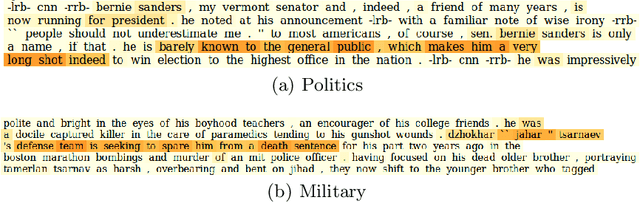
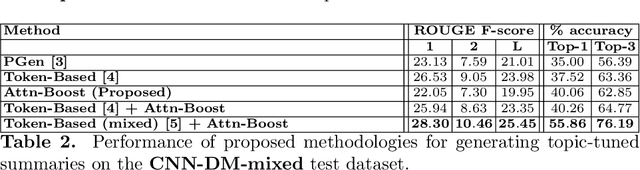
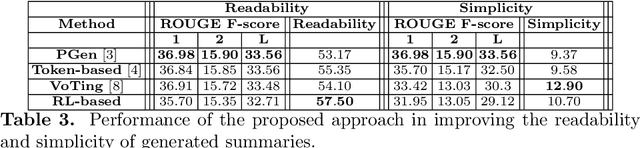
Recently, research efforts have gained pace to cater to varied user preferences while generating text summaries. While there have been attempts to incorporate a few handpicked characteristics such as length or entities, a holistic view around these preferences is missing and crucial insights on why certain characteristics should be incorporated in a specific manner are absent. With this objective, we provide a categorization around these characteristics relevant to the task of text summarization: one, focusing on what content needs to be generated and second, focusing on the stylistic aspects of the output summaries. We use our insights to provide guidelines on appropriate methods to incorporate various classes characteristics in sequence-to-sequence summarization framework. Our experiments with incorporating topics, readability and simplicity indicate the viability of the proposed prescriptions