 Add to Chrome
 Add to Firefox
 Add to Edge
Efficient and Robust Online Learning to Rank in Decentralized Systems
Jun 10, 2026
In Online Learning to Rank (OLTR), ranking models are trained directly from live user interactions, but existing systems rely on a trusted central server to collect and process these interactions. This leaves operators free to introduce biases that conflict with user interests. Decentralized learning offers an attractive alternative, allowing users to collaboratively train a shared ranking model by exchanging model updates directly with one another, without any central authority. In such settings, however, malicious nodes can send poisoned model updates that degrade the ranking quality of honest nodes. We introduce RankGuard, a decentralized OLTR framework in which users collaboratively train ranking models and exchange model updates directly with other nodes. RankGuard defends against poisoning attacks by carefully evaluating incoming models against the user's own private click history, corrected for position bias. An incoming model is only aggregated if it better explains the user's past interactions than the current local model, making it fundamentally hard for malicious nodes to craft updates that pass this test without also genuinely helping the user. We derive a theoretical convergence guarantee of RankGuard. To the best of our knowledge, this is the first formal convergence analysis of a decentralized OLTR algorithm. We evaluate RankGuard against four poisoning attacks, including a powerful adaptive attack, using four standard benchmarks and three click models. RankGuard outperforms all baselines in most settings while being up to 62x more efficient than its closest competitors.

The Evaluation Game: Beyond Static LLM Benchmarking
May 19, 2026As jailbreaks, adversarially crafted inputs that bypass safety constraints, continue to be discovered in Large Language Models, practitioners increasingly rely on fine-tuning as a defensive strategy. Yet the theoretical foundations underlying this robustness fine-tuning remain underexplored. We introduce a game-theoretic framework in which the interaction between an evaluator (auditing the model for jailbreaks) and a trainer is formalized as a two-player game. A key feature of our approach is the use of group actions, a mathematical structure that captures symmetries and transformations, to formally represent data augmentation. The simplest non-trivial instance is the circle with cyclic translation groups, where we exhibit various regimes depending on the trainer's generalization range. Below a critical threshold, the evaluator maintains a constant miss ratio for linearly many rounds, whereas other settings can yield very different behaviors. We further provide empirical evidence supporting locality-dependence of the model: for the three model families we tested (Llama, Qwen and Mistral), we have significant evidence that fine-tuning on adversarial prompts induces only local generalization, with refusal rates on test examples highly correlated with the distance to the fine-tuning prompts. Our framework recasts the central object of adversarial evaluation: a benchmark is not a static set of prompts but an orbit under the evaluator's group action, and audit protocols that ignore trainer-side adaptation cannot distinguish a genuine fix from a memorized patch.
Your Neighbors Know: Leveraging Local Neighborhoods for Backdoor Detection in Decentralized Learning
May 19, 2026Decentralized learning (DL) is an emerging machine learning paradigm where nodes collaboratively train models without a central server. However, the collaborative nature of DL makes it vulnerable to backdoor attacks, where a model is taught to behave normally on standard inputs while executing hidden, malicious actions when encountering data with specific triggers. Backdoor attacks in DL remain understudied and existing defenses often overlook DL constraints. We introduce Argus, a novel backdoor detection framework native to DL that requires neither a central coordinator nor prior knowledge of the trigger. In Argus, honest nodes locally analyze received model updates to identify potential backdoor triggers. Nodes then collectively share their triggers with their neighbors and use a structural similarity metric to separate true backdoors from false alarms induced by data heterogeneity. A key insight is that false positive triggers exhibit inconsistencies across participants while true positive ones show consistent patterns. Model updates that fail this collaborative test are rejected, and persistently malicious senders are eventually evicted. We provide the first theoretical convergence guarantees for a DL-specific backdoor detection mechanism, showing that filtering out suspicious model updates with high probability preserves a convergence rate comparable to standard DL. We implement and evaluate Argus on three standard datasets and against three state-of-the-art baselines. Across settings, Argus reduces attack success rates by up to 90 points compared to no defense, while preserving model utility within 5 percentage points of an omniscient oracle. Furthermore, the effectiveness of Argus compared to baselines improves as data heterogeneity increases.
RIVA: Leveraging LLM Agents for Reliable Configuration Drift Detection
Mar 02, 2026Infrastructure as code (IaC) tools automate cloud provisioning but verifying that deployed systems remain consistent with the IaC specifications remains challenging. Such configuration drift occurs because of bugs in the IaC specification, manual changes, or system updates. Large language model (LLM)-based agentic AI systems can automate the analysis of large volumes of telemetry data, making them suitable for the detection of configuration drift. However, existing agentic systems implicitly assume that the tools they invoke always return correct outputs, making them vulnerable to erroneous tool responses. Since agents cannot distinguish whether an anomalous tool output reflects a real infrastructure problem or a broken tool, such errors may cause missed drift or false alarms, reducing reliability precisely when it is most needed. We introduce RIVA (Robust Infrastructure by Verification Agents), a novel multi-agent system that performs robust IaC verification even when tools produce incorrect or misleading outputs. RIVA employs two specialized agents, a verifier agent and a tool generation agent, that collaborate through iterative cross-validation, multi-perspective verification, and tool call history tracking. Evaluation on the AIOpsLab benchmark demonstrates that RIVA, in the presence of erroneous tool responses, recovers task accuracy from 27.3% when using a baseline ReAct agent to 50.0% on average. RIVA also improves task accuracy 28% to 43.8% without erroneous tool responses. Our results show that cross-validation of diverse tool calls enables more reliable autonomous infrastructure verification in production cloud environments.
Mosaic Learning: A Framework for Decentralized Learning with Model Fragmentation
Feb 04, 2026Decentralized learning (DL) enables collaborative machine learning (ML) without a central server, making it suitable for settings where training data cannot be centrally hosted. We introduce Mosaic Learning, a DL framework that decomposes models into fragments and disseminates them independently across the network. Fragmentation reduces redundant communication across correlated parameters and enables more diverse information propagation without increasing communication cost. We theoretically show that Mosaic Learning (i) shows state-of-the-art worst-case convergence rate, and (ii) leverages parameter correlation in an ML model, improving contraction by reducing the highest eigenvalue of a simplified system. We empirically evaluate Mosaic Learning on four learning tasks and observe up to 12 percentage points higher node-level test accuracy compared to epidemic learning (EL), a state-of-the-art baseline. In summary, Mosaic Learning improves DL performance without sacrificing its utility or efficiency, and positions itself as a new DL standard.
Effective LoRA Adapter Routing using Task Representations
Jan 29, 2026Low-rank adaptation (LoRA) enables parameter efficient specialization of large language models (LLMs) through modular adapters, resulting in rapidly growing public adapter pools spanning diverse tasks. Effectively using these adapters requires routing: selecting and composing the appropriate adapters for a query. We introduce LORAUTER, a novel routing framework that selects and composes LoRA adapters using task representations rather than adapter characteristics. Unlike existing approaches that map queries directly to adapters, LORAUTER routes queries via task embeddings derived from small validation sets and does not require adapter training data. By operating at the task level, LORAUTER achieves efficient routing that scales with the number of tasks rather than the number of adapters. Experiments across multiple tasks show that LORAUTER consistently outperforms baseline routing approaches, matching Oracle performance (101.2%) when task-aligned adapters exist and achieving state-of-the-art results on unseen tasks (+5.2 points). We further demonstrate the robustness of LORAUTER to very large, noisy adapter pools by scaling it to over 1500 adapters.
Optimizing Agentic Workflows using Meta-tools
Jan 29, 2026Agentic AI enables LLM to dynamically reason, plan, and interact with tools to solve complex tasks. However, agentic workflows often require many iterative reasoning steps and tool invocations, leading to significant operational expense, end-to-end latency and failures due to hallucinations. This work introduces Agent Workflow Optimization (AWO), a framework that identifies and optimizes redundant tool execution patterns to improve the efficiency and robustness of agentic workflows. AWO analyzes existing workflow traces to discover recurring sequences of tool calls and transforms them into meta-tools, which are deterministic, composite tools that bundle multiple agent actions into a single invocation. Meta-tools bypass unnecessary intermediate LLM reasoning steps and reduce operational cost while also shortening execution paths, leading to fewer failures. Experiments on two agentic AI benchmarks show that AWO reduces the number of LLM calls up to 11.9% while also increasing the task success rate by up to 4.2 percent points.
Navigating the Accuracy-Size Trade-Off with Flexible Model Merging
May 29, 2025Model merging has emerged as an efficient method to combine multiple single-task fine-tuned models. The merged model can enjoy multi-task capabilities without expensive training. While promising, merging into a single model often suffers from an accuracy gap with respect to individual fine-tuned models. On the other hand, deploying all individual fine-tuned models incurs high costs. We propose FlexMerge, a novel data-free model merging framework to flexibly generate merged models of varying sizes, spanning the spectrum from a single merged model to retaining all individual fine-tuned models. FlexMerge treats fine-tuned models as collections of sequential blocks and progressively merges them using any existing data-free merging method, halting at a desired size. We systematically explore the accuracy-size trade-off exhibited by different merging algorithms in combination with FlexMerge. Extensive experiments on vision and NLP benchmarks, with up to 30 tasks, reveal that even modestly larger merged models can provide substantial accuracy improvements over a single model. By offering fine-grained control over fused model size, FlexMerge provides a flexible, data-free, and high-performance solution for diverse deployment scenarios.
Collaborative Agentic AI Needs Interoperability Across Ecosystems
May 25, 2025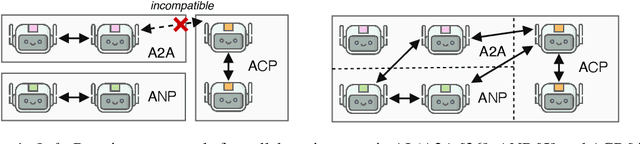
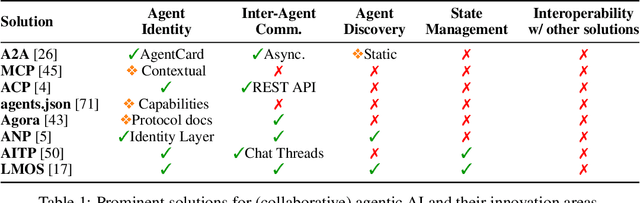
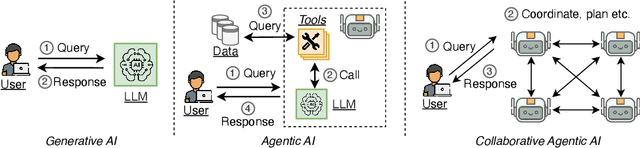
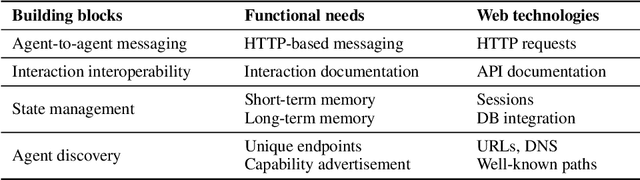
Collaborative agentic AI is projected to transform entire industries by enabling AI-powered agents to autonomously perceive, plan, and act within digital environments. Yet, current solutions in this field are all built in isolation, and we are rapidly heading toward a landscape of fragmented, incompatible ecosystems. In this position paper, we argue that interoperability, achieved by the adoption of minimal standards, is essential to ensure open, secure, web-scale, and widely-adopted agentic ecosystems. To this end, we devise a minimal architectural foundation for collaborative agentic AI, named Web of Agents, which is composed of four components: agent-to-agent messaging, interaction interoperability, state management, and agent discovery. Web of Agents adopts existing standards and reuses existing infrastructure where possible. With Web of Agents, we take the first but critical step toward interoperable agentic systems and offer a pragmatic path forward before ecosystem fragmentation becomes the norm.
Robust ML Auditing using Prior Knowledge
May 07, 2025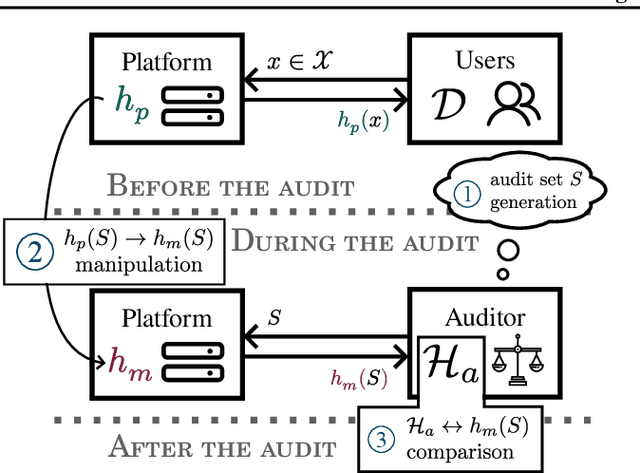
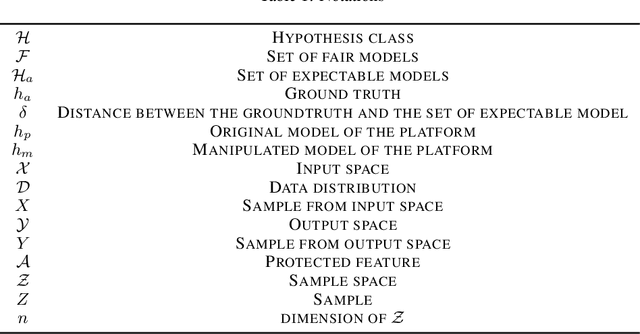
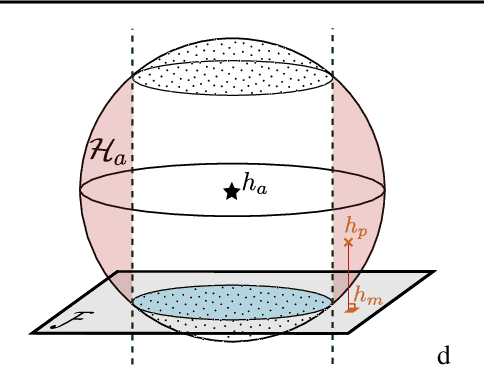
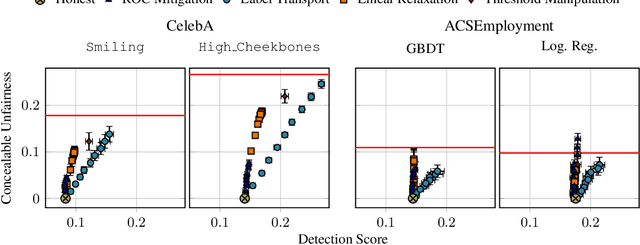
The rapid adoption of ML decision-making systems across products and services has led to a set of regulations on how such systems should behave and be built. Among all the technical challenges to enforcing these regulations, one crucial, yet under-explored problem is the risk of manipulation while these systems are being audited for fairness. This manipulation occurs when a platform deliberately alters its answers to a regulator to pass an audit without modifying its answers to other users. In this paper, we introduce a novel approach to manipulation-proof auditing by taking into account the auditor's prior knowledge of the task solved by the platform. We first demonstrate that regulators must not rely on public priors (e.g. a public dataset), as platforms could easily fool the auditor in such cases. We then formally establish the conditions under which an auditor can prevent audit manipulations using prior knowledge about the ground truth. Finally, our experiments with two standard datasets exemplify the maximum level of unfairness a platform can hide before being detected as malicious. Our formalization and generalization of manipulation-proof auditing with a prior opens up new research directions for more robust fairness audits.