 Add to Chrome
 Add to Firefox
 Add to Edge
Steins;Gate Drive: Semantic Safety Arbitration over Structured Futures for Latency-Decoupled LLM Planning
May 21, 2026
Cloud-hosted LLM driver agents provide useful semantic judgments, but their inference latency exceeds stepwise vehicle-control windows. Learned world models predict futures, but they usually keep future generation and action selection inside large coupled loops. We present SteinsGateDrive, a latency-decoupled planner-runtime architecture in which the worldline metaphor from the eponymous story names one plausible consequence of an intervention: the LLM selects counterfactual driving futures before the final control instant, and a runtime reuses the selected forecast only while safety contracts remain valid. The generator builds three world-line roles: alpha nominal ego-conditioned futures, beta interaction counterfactuals around nearby vehicles, and gamma hazard-stress futures such as braking, cut-ins, or blocked corridors. The selected branch becomes a typed StrategicForecast with horizon, validity/abort conditions, fallback, and authority. On a within-subject, matched-seed normal-highway protocol with 10 seeds and 20 steps, GPT-5.4 mini reduces effective lag from +3.07 s at 1-second horizon to -0.01 s at 4-second horizon while preserving the measured no-collision safety boundary. The architecture's safety contribution comes from the atom-predicate runtime check, not from the drift score, which functions as a refresh-frequency knob.

Towards Energy Impact on AI-Powered 6G IoT Networks: Centralized vs. Decentralized
Apr 21, 2026The emergence of sixth-generation (6G) technologies has introduced new challenges and opportunities for machine learning (ML) applications in Internet of Things (IoT) networks, particularly concerning energy efficiency. As model training and data transmission contribute significantly to energy consumption, optimizing these processes has become critical for sustainable system design. This study first conduct analysis on the energy consumption model for both centralized and decentralized architecture and then presents a testbed deployed within the German railway infrastructure, leveraging sensor data for ML-based predictive maintenance. A comparative analysis of distributed versus Centralized Learning (CL) architectures reveals that distributed models maintain competitive predictive accuracy (~90%) while reducing overall electricity consumption by up to 70%. These findings underscore the potential of distributed ML to improve energy efficiency in real-world IoT deployments, particularly by mitigating transmission-related energy costs.
Quality-Aware Denoising of Ultra-Short TDoA Measurements for 5G-NR UAV Localization
Apr 09, 2026Reliable positioning is essential for Uncrewed Aerial Vehicles (UAVs) in safety-critical urban operations, yet achieving sub-meter accuracy under stringent latency constraints remains challenging. While 3rd Generation Partnership Project (3GPP) specifies repeated Positioning Reference Signals (PRS) transmissions for accurate Time Difference of Arrival (TDoA) measurements, denoising techniques specifically tailored for extremely limited measurement sequences within 3GPP frameworks remain underexplored. We propose Adaptive Gain Exponential Smoother (AGES), a lightweight filter combining exponentially weighted averaging with adaptive gains informed by 3GPP measurement quality reports. Simulations demonstrate AGES achieves 30-40% reduction in positioning error with only 3-5 repeated measurements while maintaining Fifth Generation New Radio (5G-NR) infrastructure compatibility.
Mobility prediction Based on Machine Learning Algorithms
Nov 12, 2021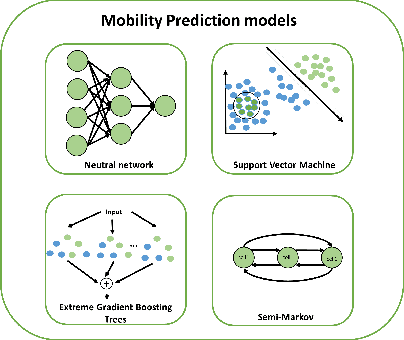
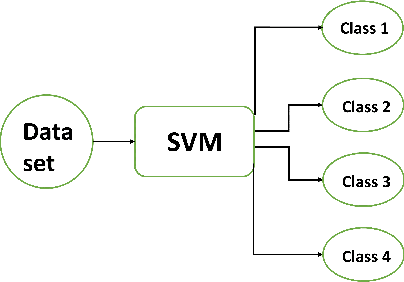
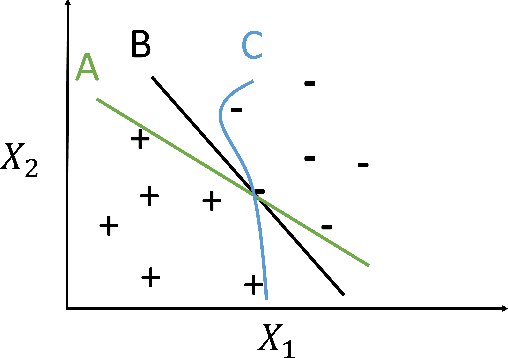
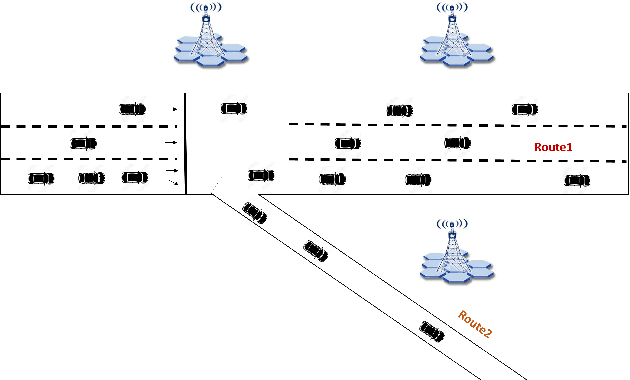
Nowadays mobile communication is growing fast in the 5G communication industry. With the increasing capacity requirements and requirements for quality of experience, mobility prediction has been widely applied to mobile communication and has becoming one of the key enablers that utilizes historical traffic information to predict future locations of traffic users, Since accurate mobility prediction can help enable efficient radio resource management, assist route planning, guide vehicle dispatching, or mitigate traffic congestion. However, mobility prediction is a challenging problem due to the complicated traffic network. In the past few years, plenty of researches have been done in this area, including Non-Machine-Learning (Non-ML)- based and Machine-Learning (ML)-based mobility prediction. In this paper, firstly we introduce the state of the art technologies for mobility prediction. Then, we selected Support Vector Machine (SVM) algorithm, the ML algorithm for practical traffic date training. Lastly, we analyse the simulation results for mobility prediction and introduce a future work plan where mobility prediction will be applied for improving mobile communication.