 Add to Chrome
 Add to Firefox
 Add to Edge
Now You See Me, Now You Don't: A Unified Framework for Expression Consistent Anonymization in Talking Head Videos
Jan 14, 2026
Face video anonymization is aimed at privacy preservation while allowing for the analysis of videos in a number of computer vision downstream tasks such as expression recognition, people tracking, and action recognition. We propose here a novel unified framework referred to as Anon-NET, streamlined to de-identify facial videos, while preserving age, gender, race, pose, and expression of the original video. Specifically, we inpaint faces by a diffusion-based generative model guided by high-level attribute recognition and motion-aware expression transfer. We then animate deidentified faces by video-driven animation, which accepts the de-identified face and the original video as input. Extensive experiments on the datasets VoxCeleb2, CelebV-HQ, and HDTF, which include diverse facial dynamics, demonstrate the effectiveness of AnonNET in obfuscating identity while retaining visual realism and temporal consistency. The code of AnonNet will be publicly released.

Salp Swarm Optimization: a Critical Review
Jun 03, 2021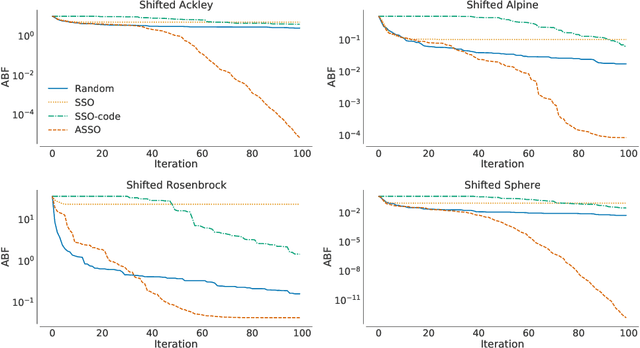
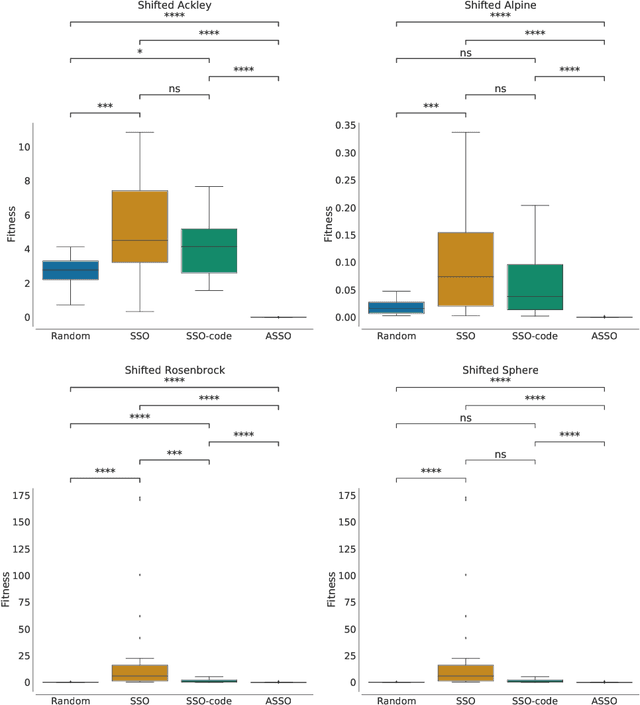
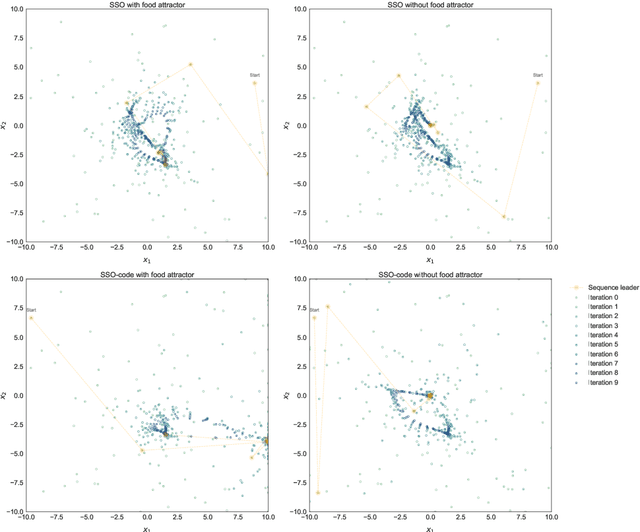
In the crowded environment of bio-inspired population-based meta-heuristics, the Salp Swarm Optimization (SSO) algorithm recently appeared and immediately gained a lot of momentum. Inspired by the peculiar spatial arrangement of salp colonies, which are displaced in long chains following a leader, this algorithm seems to provide interesting optimization performances. However, the original work was characterized by some conceptual and mathematical flaws, which influenced all ensuing papers on the subject. In this manuscript, we perform a critical review of SSO, highlighting all the issues present in the literature and their negative effects on the optimization process carried out by the algorithm. We also propose a mathematically correct version of SSO, named Amended Salp Swarm Optimizer (ASSO) that fixes all the discussed problems. Finally, we benchmark the performance of ASSO on a set of tailored experiments, showing it achieves better results than the original SSO.
USE-Net: incorporating Squeeze-and-Excitation blocks into U-Net for prostate zonal segmentation of multi-institutional MRI datasets
Apr 17, 2019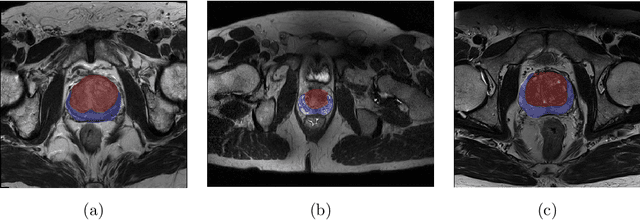
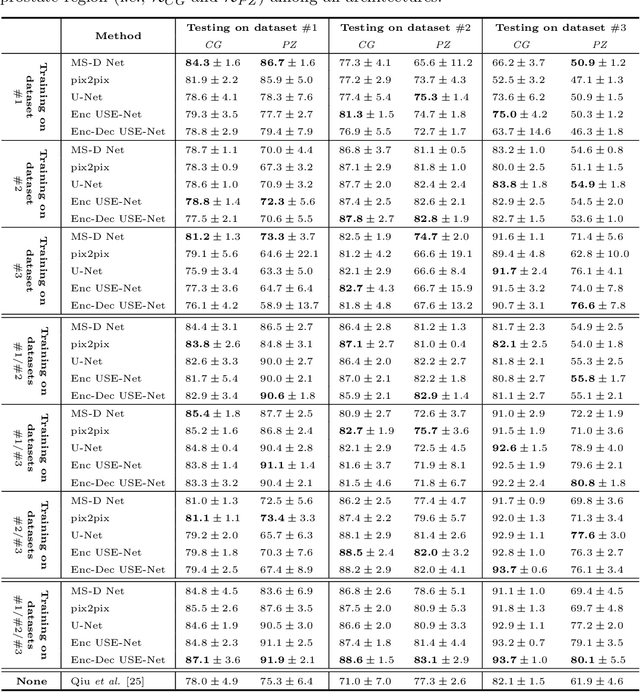
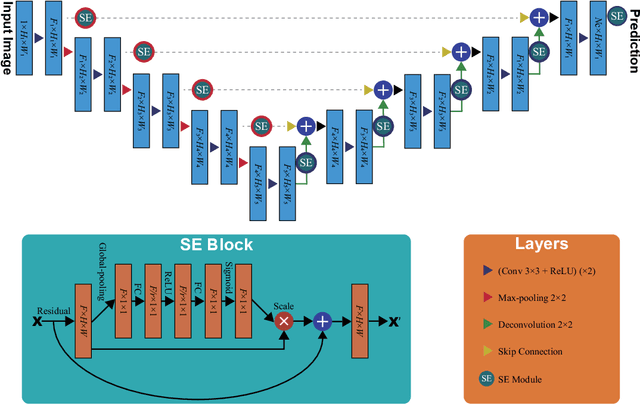
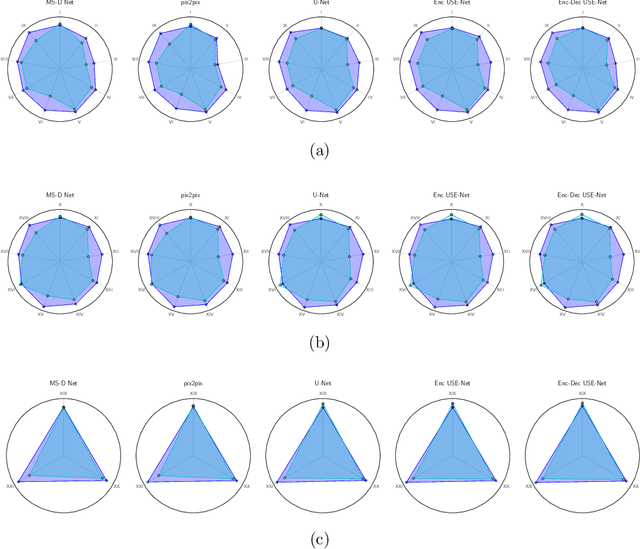
Prostate cancer is the most common malignant tumors in men but prostate Magnetic Resonance Imaging (MRI) analysis remains challenging. Besides whole prostate gland segmentation, the capability to differentiate between the blurry boundary of the Central Gland (CG) and Peripheral Zone (PZ) can lead to differential diagnosis, since tumor's frequency and severity differ in these regions. To tackle the prostate zonal segmentation task, we propose a novel Convolutional Neural Network (CNN), called USE-Net, which incorporates Squeeze-and-Excitation (SE) blocks into U-Net. Especially, the SE blocks are added after every Encoder (Enc USE-Net) or Encoder-Decoder block (Enc-Dec USE-Net). This study evaluates the generalization ability of CNN-based architectures on three T2-weighted MRI datasets, each one consisting of a different number of patients and heterogeneous image characteristics, collected by different institutions. The following mixed scheme is used for training/testing: (i) training on either each individual dataset or multiple prostate MRI datasets and (ii) testing on all three datasets with all possible training/testing combinations. USE-Net is compared against three state-of-the-art CNN-based architectures (i.e., U-Net, pix2pix, and Mixed-Scale Dense Network), along with a semi-automatic continuous max-flow model. The results show that training on the union of the datasets generally outperforms training on each dataset separately, allowing for both intra-/cross-dataset generalization. Enc USE-Net shows good overall generalization under any training condition, while Enc-Dec USE-Net remarkably outperforms the other methods when trained on all datasets. These findings reveal that the SE blocks' adaptive feature recalibration provides excellent cross-dataset generalization when testing is performed on samples of the datasets used during training.
CNN-based Prostate Zonal Segmentation on T2-weighted MR Images: A Cross-dataset Study
Mar 29, 2019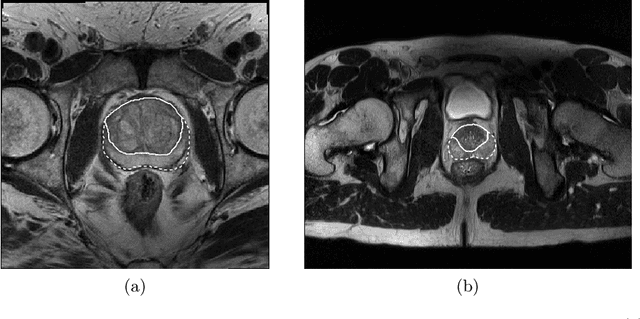
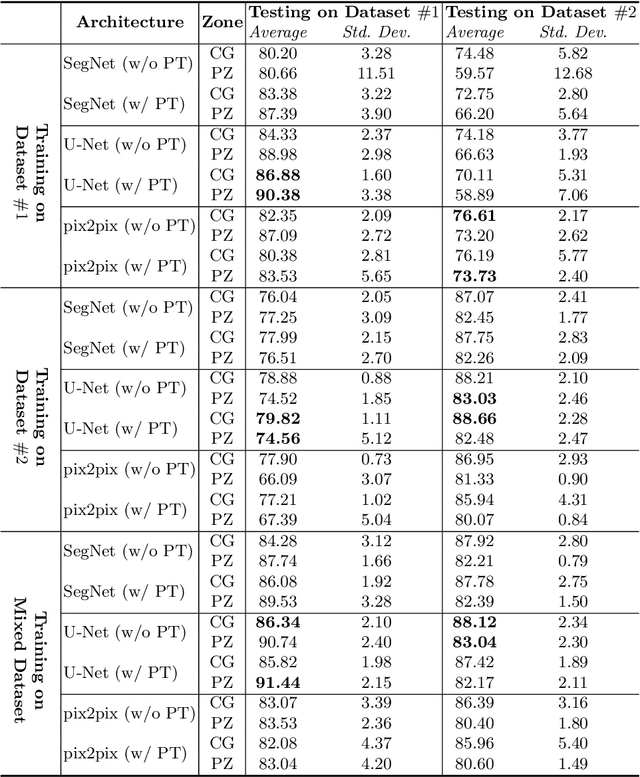
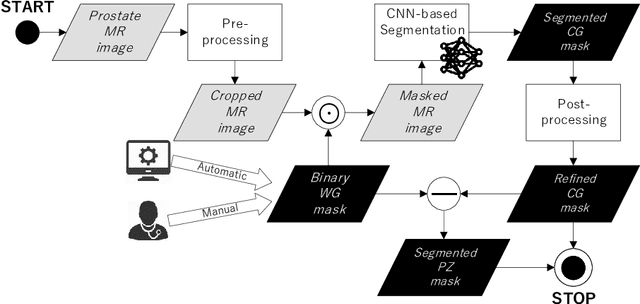
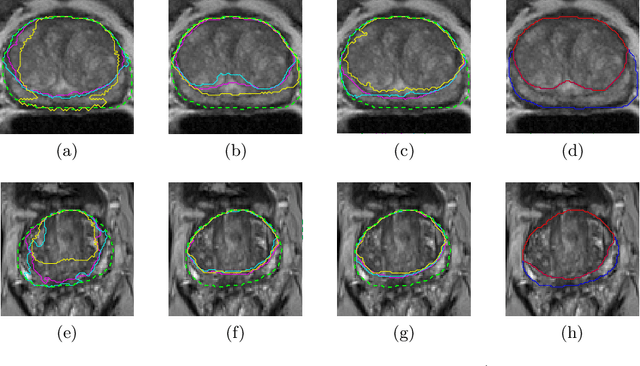
Prostate cancer is the most common cancer among US men. However, prostate imaging is still challenging despite the advances in multi-parametric Magnetic Resonance Imaging (MRI), which provides both morphologic and functional information pertaining to the pathological regions. Along with whole prostate gland segmentation, distinguishing between the Central Gland (CG) and Peripheral Zone (PZ) can guide towards differential diagnosis, since the frequency and severity of tumors differ in these regions; however, their boundary is often weak and fuzzy. This work presents a preliminary study on Deep Learning to automatically delineate the CG and PZ, aiming at evaluating the generalization ability of Convolutional Neural Networks (CNNs) on two multi-centric MRI prostate datasets. Especially, we compared three CNN-based architectures: SegNet, U-Net, and pix2pix. In such a context, the segmentation performances achieved with/without pre-training were compared in 4-fold cross-validation. In general, U-Net outperforms the other methods, especially when training and testing are performed on multiple datasets.