 Add to Chrome
 Add to Firefox
 Add to Edge
Multi-Agent Multimodal Large Language Model Framework for Automated Interpretation of Fuel Efficiency Analytics in Public Transportation
Nov 17, 2025
Enhancing fuel efficiency in public transportation requires the integration of complex multimodal data into interpretable, decision-relevant insights. However, traditional analytics and visualization methods often yield fragmented outputs that demand extensive human interpretation, limiting scalability and consistency. This study presents a multi-agent framework that leverages multimodal large language models (LLMs) to automate data narration and energy insight generation. The framework coordinates three specialized agents, including a data narration agent, an LLM-as-a-judge agent, and an optional human-in-the-loop evaluator, to iteratively transform analytical artifacts into coherent, stakeholder-oriented reports. The system is validated through a real-world case study on public bus transportation in Northern Jutland, Denmark, where fuel efficiency data from 4006 trips are analyzed using Gaussian Mixture Model clustering. Comparative experiments across five state-of-the-art LLMs and three prompting paradigms identify GPT-4.1 mini with Chain-of-Thought prompting as the optimal configuration, achieving 97.3% narrative accuracy while balancing interpretability and computational cost. The findings demonstrate that multi-agent orchestration significantly enhances factual precision, coherence, and scalability in LLM-based reporting. The proposed framework establishes a replicable and domain-adaptive methodology for AI-driven narrative generation and decision support in energy informatics.

Transferring knowledge from monitored to unmonitored areas for forecasting parking spaces
Aug 07, 2019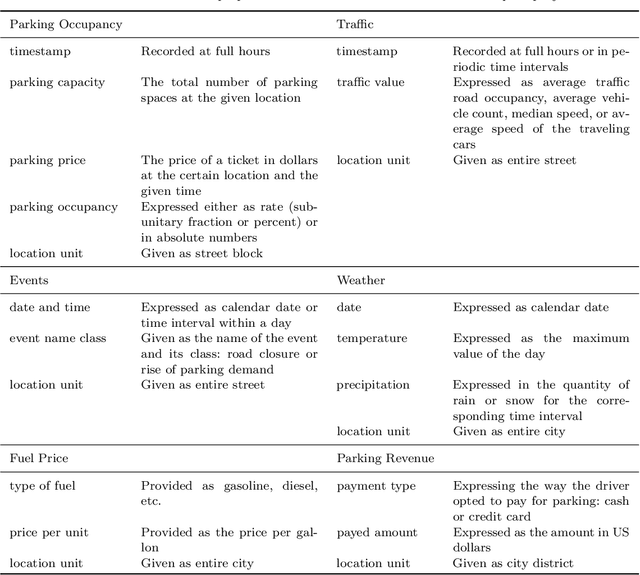
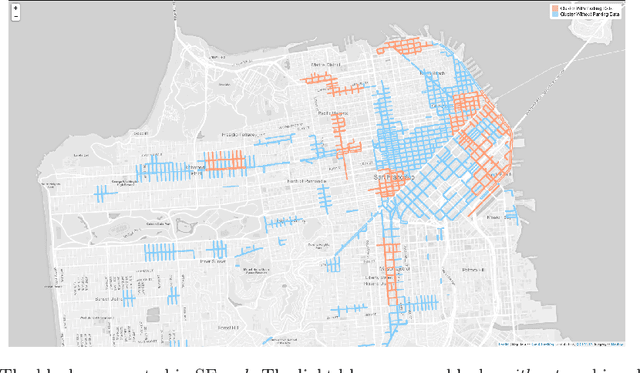
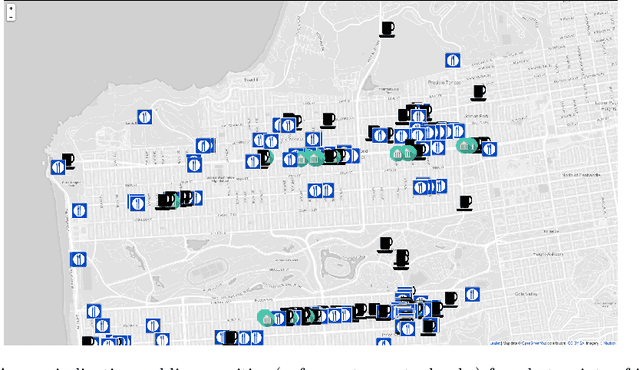
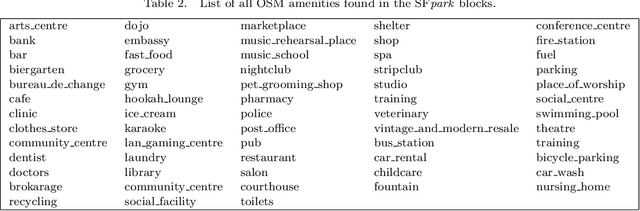
Smart cities around the world have begun monitoring parking areas in order to estimate available parking spots and help drivers looking for parking. The current results are promising, indeed. However, existing approaches are limited by the high cost of sensors that need to be installed throughout the city in order to achieve an accurate estimation. This work investigates the extension of estimating parking information from areas equipped with sensors to areas where they are missing. To this end, the similarity between city neighborhoods is determined based on background data, i.e., from geographic information systems. Using the derived similarity values, we analyze the adaptation of occupancy rates from monitored- to unmonitored parking areas.