 Add to Chrome
 Add to Firefox
 Add to Edge
VineetVC: Adaptive Video Conferencing Under Severe Bandwidth Constraints Using Audio-Driven Talking-Head Reconstruction
Feb 13, 2026
Intense bandwidth depletion within consumer and constrained networks has the potential to undermine the stability of real-time video conferencing: encoder rate management becomes saturated, packet loss escalates, frame rates deteriorate, and end-to-end latency significantly increases. This work delineates an adaptive conferencing system that integrates WebRTC media delivery with a supplementary audio-driven talking-head reconstruction pathway and telemetry-driven mode regulation. The system consists of a WebSocket signaling service, an optional SFU for multi-party transmission, a browser client capable of real-time WebRTC statistics extraction and CSV telemetry export, and an AI REST service that processes a reference face image and recorded audio to produce a synthesized MP4; the browser can substitute its outbound camera track with the synthesized stream with a median bandwidth of 32.80 kbps. The solution incorporates a bandwidth-mode switching strategy and a client-side mode-state logger.

VedicTHG: Symbolic Vedic Computation for Low-Resource Talking-Head Generation in Educational Avatars
Feb 09, 2026Talking-head avatars are increasingly adopted in educational technology to deliver content with social presence and improved engagement. However, many recent talking-head generation (THG) methods rely on GPU-centric neural rendering, large training sets, or high-capacity diffusion models, which limits deployment in offline or resource-constrained learning environments. A deterministic and CPU-oriented THG framework is described, termed Symbolic Vedic Computation, that converts speech to a time-aligned phoneme stream, maps phonemes to a compact viseme inventory, and produces smooth viseme trajectories through symbolic coarticulation inspired by Vedic sutra Urdhva Tiryakbhyam. A lightweight 2D renderer performs region-of-interest (ROI) warping and mouth compositing with stabilization to support real-time synthesis on commodity CPUs. Experiments report synchronization accuracy, temporal stability, and identity consistency under CPU-only execution, alongside benchmarking against representative CPU-feasible baselines. Results indicate that acceptable lip-sync quality can be achieved while substantially reducing computational load and latency, supporting practical educational avatars on low-end hardware. GitHub: https://vineetkumarrakesh.github.io/vedicthg
Enhancing ASL Recognition with GCNs and Successive Residual Connections
Aug 18, 2024This study presents a novel approach for enhancing American Sign Language (ASL) recognition using Graph Convolutional Networks (GCNs) integrated with successive residual connections. The method leverages the MediaPipe framework to extract key landmarks from each hand gesture, which are then used to construct graph representations. A robust preprocessing pipeline, including translational and scale normalization techniques, ensures consistency across the dataset. The constructed graphs are fed into a GCN-based neural architecture with residual connections to improve network stability. The architecture achieves state-of-the-art results, demonstrating superior generalization capabilities with a validation accuracy of 99.14%.
Analyzing and Improving Performance of a Class of Anomaly-based Intrusion Detectors
Oct 26, 2004
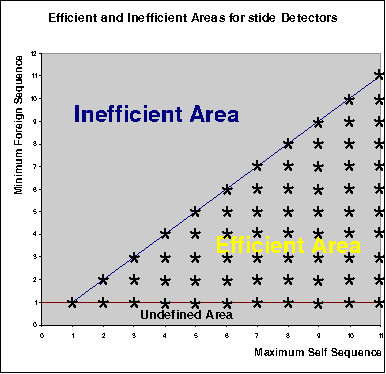
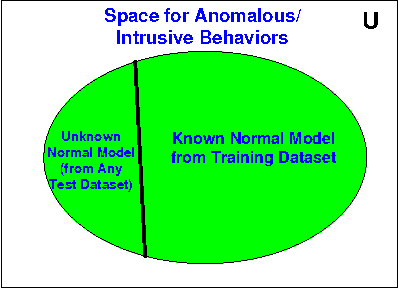
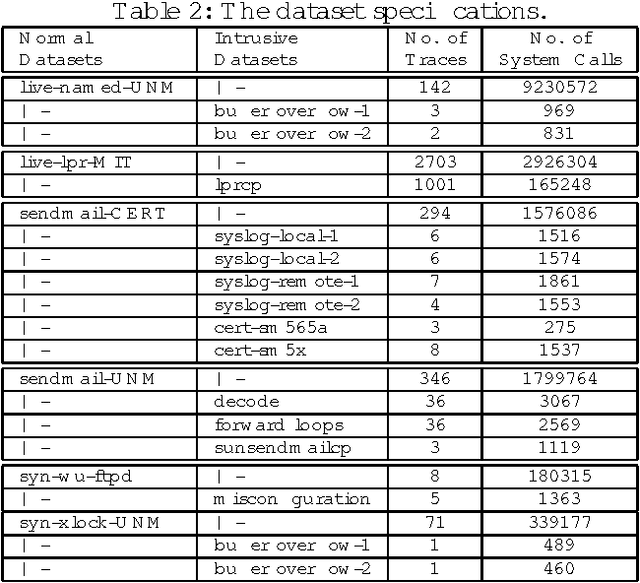
Anomaly-based intrusion detection (AID) techniques are useful for detecting novel intrusions into computing resources. One of the most successful AID detectors proposed to date is stide, which is based on analysis of system call sequences. In this paper, we present a detailed formal framework to analyze, understand and improve the performance of stide and similar AID techniques. Several important properties of stide-like detectors are established through formal proofs, and validated by carefully conducted experiments using test datasets. Finally, the framework is utilized to design two applications to improve the cost and performance of stide-like detectors which are based on sequence analysis. The first application reduces the cost of developing AID detectors by identifying the critical sections in the training dataset, and the second application identifies the intrusion context in the intrusive dataset, that helps to fine-tune the detectors. Such fine-tuning in turn helps to improve detection rate and reduce false alarm rate, thereby increasing the effectiveness and efficiency of the intrusion detectors.