 Add to Chrome
 Add to Firefox
 Add to Edge
QoS-Aware Energy Optimization via Cell Switching in Heterogeneous Networks
Jan 19, 2026
The growing demand for mobile data services in dense urban areas has intensified the need for energy-efficient radio access networks (RANs) in future 6G systems. In this context, one promising strategy is cell switching (CS), which dynamically deactivates underutilized small base stations (SBSs) to reduce power consumption. However, while previous research explored CS primarily based on traffic load, ensuring user quality of service (QoS) under realistic channel conditions remains a challenge. In this paper, we propose a novel optimization-driven CS framework that jointly minimizes network power consumption and guarantees user QoS by enforcing a minimum received power threshold as part of offloading decisions. In contrast to prior load-based or learning-based approaches, our method explicitly integrates channel-aware information into the CS process, thus ensuring reliable service quality for offloaded users. Furthermore, flexibility of the proposed framework enables operators to adapt system behavior between energy-saving and QoS-preserving modes by tuning a single design parameter. Simulation results demonstrate that the proposed approach achieves up to 30% power savings as compared to baseline methods while fully maintaining QoS under diverse network conditions. Scalability and robustness of the proposed method in realistic heterogeneous networks (HetNets) further highlight its potential as a practical solution for sustainable 6G deployments.

RL-Based Hyperparameter Selection for Spectrum Sensing With CNNs
Jan 29, 2024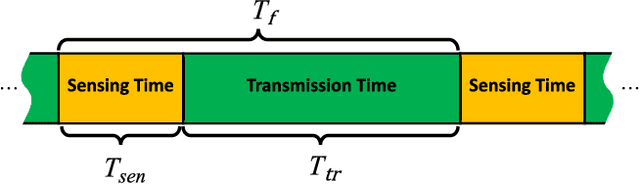
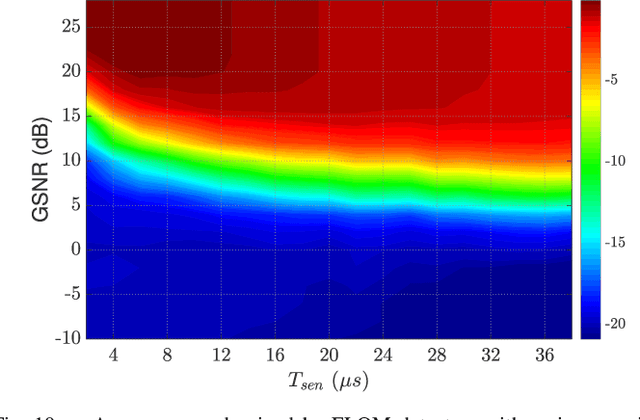
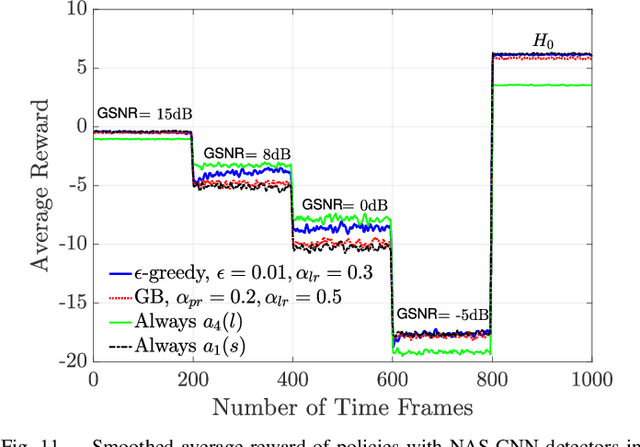
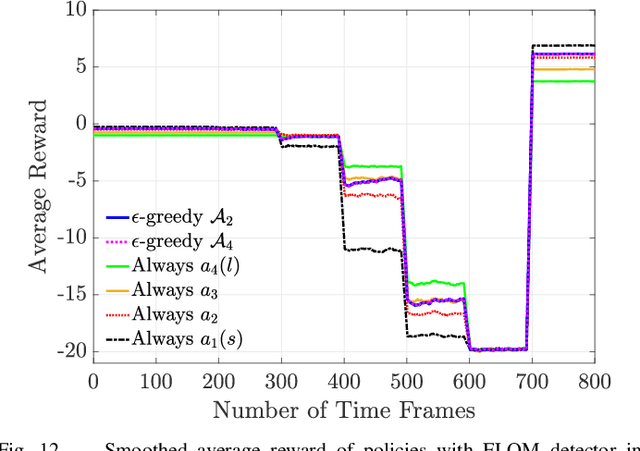
Selection of hyperparameters in deep neural networks is a challenging problem due to the wide search space and emergence of various layers with specific hyperparameters. There exists an absence of consideration for the neural architecture selection of convolutional neural networks (CNNs) for spectrum sensing. Here, we develop a method using reinforcement learning and Q-learning to systematically search and evaluate various architectures for generated datasets including different signals and channels in the spectrum sensing problem. We show by extensive simulations that CNN-based detectors proposed by our developed method outperform several detectors in the literature. For the most complex dataset, the proposed approach provides 9% enhancement in accuracy at the cost of higher computational complexity. Furthermore, a novel method using multi-armed bandit model for selection of the sensing time is proposed to achieve higher throughput and accuracy while minimizing the consumed energy. The method dynamically adjusts the sensing time under the time-varying condition of the channel without prior information. We demonstrate through a simulated scenario that the proposed method improves the achieved reward by about 20% compared to the conventional policies. Consequently, this study effectively manages the selection of important hyperparameters for CNN-based detectors offering superior performance of cognitive radio network.