 Add to Chrome
 Add to Firefox
 Add to Edge
MUST-PET: MUltimodal Self-supervised learning across Tracers for whole-body PET/CT-based lesion segmentation
Aug 20, 2026
Deep learning-based whole-body PET-CT lesion segmentation can support cancer staging, treatment planning, and response assessment, but generalization is limited by scarce annotations and domain shifts. Self-supervised learning (SSL) can address these challenges but remains underexplored in pan-cancer, multi-tracer PET-CT. In this work, we propose MUST-PET (MUltimodal Self-Supervised learning across Tracers), a multimodal, multi-tracer SSL framework for generalizable whole-body PET-CT lesion segmentation. MUST-PET is trained and validated on a diverse, multi-institutional collection of pan-cancer PET-CT scans acquired with FDG and prostate-specific membrane antigen (PSMA)-targeted radiotracers. MUST-PET uses context-aware masked reconstruction, where one modality is partially masked and reconstructed using complementary information from both PET and CT. The pretrained model is subsequently fine-tuned with labeled samples and evaluated for reconstruction quality, lesion segmentation, label efficiency, and generalizability across independent held-out datasets. MUST-PET reduces reconstruction error, improves lesion segmentation over training from scratch, and performs well with limited labeled data and on unseen external datasets, demonstrating the potential of multi-tracer SSL for label-efficient, generalizable whole-body PET-CT. segmentation.

DTVEM-RE: A Hierarchical Random-Effects Extension of the Differential Time-Varying Effect Model for Person-Specific Multi-Lag Estimation in Intensive Longitudinal Data
Jun 12, 2026The Differential Time-Varying Effect Model (DTVEM) of Jacobson et al. (2019) is a popular tool for finding the best time lag in intensive longitudinal data, but it assumes everyone shares the same lag structure. The original authors named fixing this as future work, and it clashes with the premise of modern clinical research, which is that people differ. We present DTVEM-RE, an extension that lets each person have their own lag coefficients, with two versions of the confirmatory step: a discrete-time hierarchical Bayesian VAR in Stan, which pools across people and gives calibrated uncertainty, and a continuous-time per-person Ornstein-Uhlenbeck model in ctsem, which handles unevenly spaced beeps directly. We report four results. A simulation shows the Bayesian version recovers the between-person spread tau_a with bias below 0.01 and coverage of 90 to 93 percent. On the Fisher et al. (2017) EMA dataset (N=40), person-specific lag-1 effects vary by an order of magnitude across three mood items, the Bayesian and GAMM estimates agree closely (r=0.87 to 0.92), and DTVEM-RE gives the best one-step-ahead prediction among four discrete-time methods. A multi-lag version shows all nine tau_k values have credible intervals excluding zero, and the lag where people differ most changes across items, something lag-1-only methods like mlVAR cannot detect. Finally, the two versions agree almost exactly on person-specific lag-1 estimates (r >= 0.995), differing only as shrinkage predicts. DTVEM-RE is, to our knowledge, the first person-specific implementation of DTVEM-style lag detection, and it contains standard DTVEM as a special case.
Inference-Time Structural Reasoning for Compositional Vision-Language Understanding
Mar 28, 2026Vision-language models (VLMs) excel at image-text retrieval yet persistently fail at compositional reasoning, distinguishing captions that share the same words but differ in relational structure. We present, a unified evaluation and augmentation framework benchmarking four architecturally diverse VLMs,CLIP, BLIP, LLaVA, and Qwen3-VL-8B-Thinking,on the Winoground benchmark under plain and scene-graph-augmented regimes. We introduce a dependency-based TextSceneGraphParser (spaCy) extracting subject-relation-object triples, and a Graph Asymmetry Scorer using optimal bipartite matching to inject structural relational priors. Caption ablation experiments (subject-object masking and swapping) reveal that Qwen3-VL-8B-Thinking achieves a group score of 62.75, far above all encoder-based models, while a proposed multi-turn SG filtering strategy further lifts it to 66.0, surpassing prior open-source state-of-the-art. We analyze the capability augmentation tradeoff and find that SG augmentation benefits already capable models while providing negligible or negative gains for weaker baselines. Code: https://github.com/amartyacodes/Inference-Time-Structural-Reasoning-for-Compositional-Vision-Language-Understanding
Leveraging Out-of-Domain Data for Domain-Specific Prompt Tuning in Multi-Modal Fake News Detection
Nov 27, 2023The spread of fake news using out-of-context images has become widespread and is a challenging task in this era of information overload. Since annotating huge amounts of such data requires significant time of domain experts, it is imperative to develop methods which can work in limited annotated data scenarios. In this work, we explore whether out-of-domain data can help to improve out-of-context misinformation detection (termed here as multi-modal fake news detection) of a desired domain, eg. politics, healthcare, etc. Towards this goal, we propose a novel framework termed DPOD (Domain-specific Prompt-tuning using Out-of-Domain data). First, to compute generalizable features, we modify the Vision-Language Model, CLIP to extract features that helps to align the representations of the images and corresponding text captions of both the in-domain and out-of-domain data in a label-aware manner. Further, we propose a domain-specific prompt learning technique which leverages the training samples of all the available domains based on the the extent they can be useful to the desired domain. Extensive experiments on a large-scale benchmark dataset, namely NewsClippings demonstrate that the proposed framework achieves state of-the-art performance, significantly surpassing the existing approaches for this challenging task.
A Fully Unsupervised Instance Segmentation Technique for White Blood Cell Images
Jun 26, 2023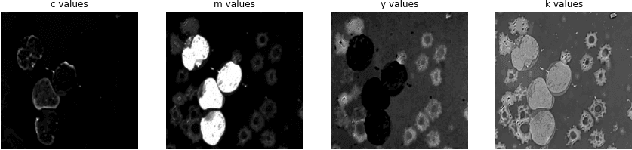
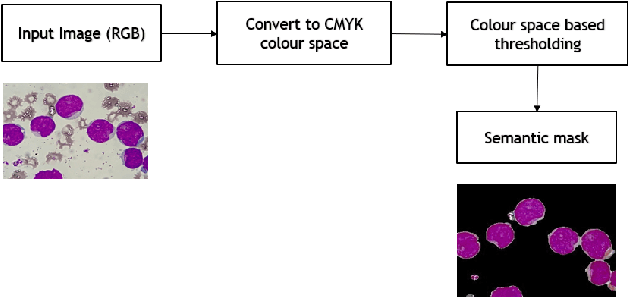
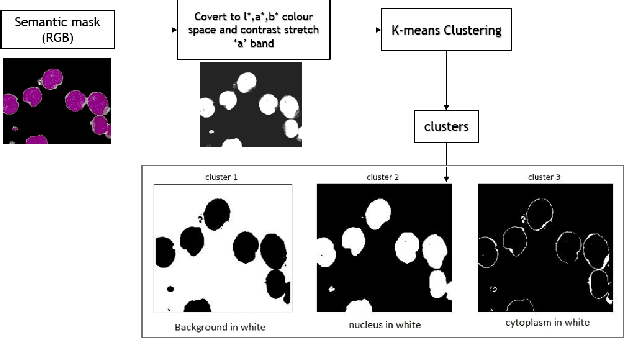
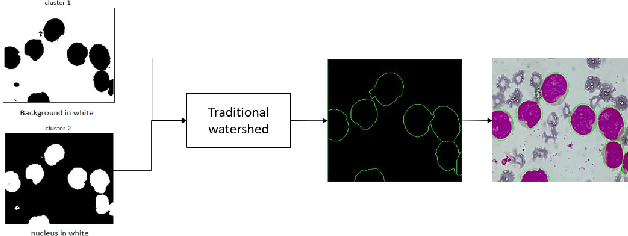
White blood cells, also known as leukocytes are group of heterogeneously nucleated cells which act as salient immune system cells. These are originated in the bone marrow and are found in blood, plasma, and lymph tissues. Leukocytes kill the bacteria, virus and other kind of pathogens which invade human body through phagocytosis that in turn results immunity. Detection of a white blood cell count can reveal camouflaged infections and warn doctors about chronic medical conditions such as autoimmune diseases, immune deficiencies, and blood disorders. Segmentation plays an important role in identification of white blood cells (WBC) from microscopic image analysis. The goal of segmentation in a microscopic image is to divide the image into different distinct regions. In our paper, we tried to propose a novel instance segmentation method for segmenting the WBCs containing both the nucleus and the cytoplasm, from bone marrow images.
Application of Federated Learning in Building a Robust COVID-19 Chest X-ray Classification Model
Apr 22, 2022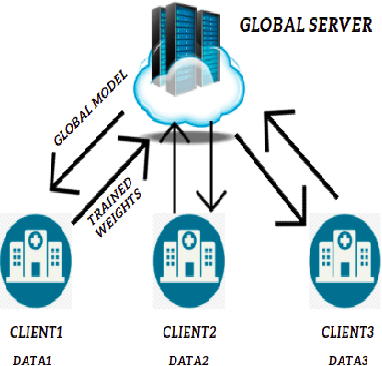
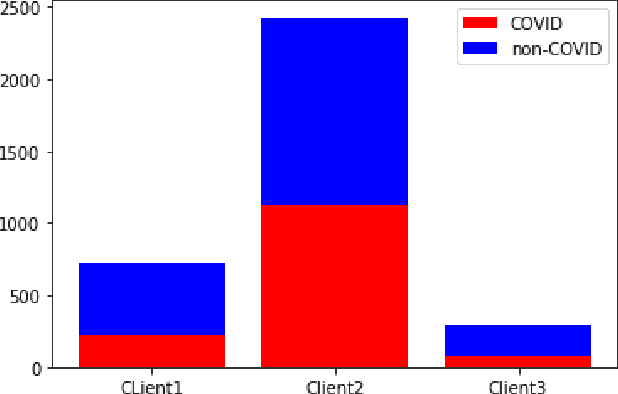
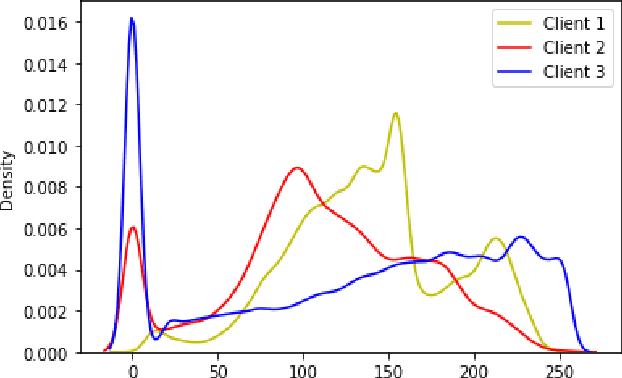
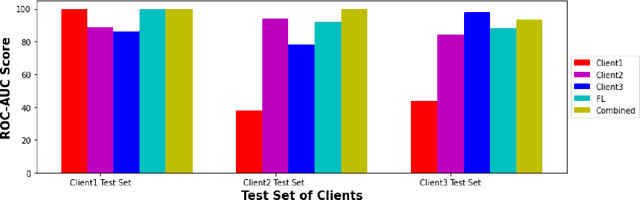
While developing artificial intelligence (AI)-based algorithms to solve problems, the amount of data plays a pivotal role - large amount of data helps the researchers and engineers to develop robust AI algorithms. In the case of building AI-based models for problems related to medical imaging, these data need to be transferred from the medical institutions where they were acquired to the organizations developing the algorithms. This movement of data involves time-consuming formalities like complying with HIPAA, GDPR, etc.There is also a risk of patients' private data getting leaked, compromising their confidentiality. One solution to these problems is using the Federated Learning framework. Federated Learning (FL) helps AI models to generalize better and create a robust AI model by using data from different sources having different distributions and data characteristics without moving all the data to a central server. In our paper, we apply the FL framework for training a deep learning model to solve a binary classification problem of predicting the presence or absence of COVID-19. We took three different sources of data and trained individual models on each source. Then we trained an FL model on the complete data and compared all the model performances. We demonstrated that the FL model performs better than the individual models. Moreover, the FL model performed at par with the model trained on all the data combined at a central server. Thus Federated Learning leads to generalized AI models without the cost of data transfer and regulatory overhead.