 Add to Chrome
 Add to Firefox
 Add to Edge
RMR-P: Road Metadata-Aware Restoration for Pavement Inspection
Aug 15, 2026
Road-surface images captured by vehicle-mounted cameras are often degraded by motion blur, defocus, poor illumination, and noise due to vehicle motion, camera limitations, and varying environmental conditions. These degradations can obscure thin cracks and pothole boundaries that are critical for accurate road-defect detection. This paper presents RMR-P, a restoration network designed to recover defect-relevant information from degraded road images. It estimates degradation characteristics from the input image and can optionally incorporate external degradation parameters to guide restoration. To evaluate whether the recovered information improves downstream detection, a clean-trained YOLO11s detector is applied to degraded and restored images without further modification. Experiments on the IVCNZ and PCM datasets, with known synthetic degradation parameters provided as conditioning information, demonstrate that RMR-P achieves the highest mAP50 in seven of eight held-out degradation conditions, including improvements from 0.140 to 0.427 under IVCNZ motion blur and from 0.060 to 0.233 under PCM defocus. Moreover, our ablation studies show that preserving fine pavement details (detail-preserving pathway) provides the largest contribution to defect-detection improvement, while degradation conditioning and task-guided training offer complementary benefits.

RMR-Net: Degradation-Evidence-Guided Road-Image Restoration for Defect Detection
Aug 09, 2026Vehicle-mounted road cameras are vulnerable to motion blur, defocus, poor illumination, and noise, which can erase thin cracks and pothole boundaries needed by road defect detectors. This paper presents RMR-Net, a compact task-aware restoration front end that estimates degradation evidence from the image, optionally fuses it with existing corruption context/parameters, conditions lightweight restoration blocks, and returns high-frequency pavement detail through a bounded residual path. The experimental scope is deliberately controlled: the conditioning information used on the Image and Vision Computing New Zealand (IVCNZ) pothole dataset and the Road Damage Dataset: Potholes, Cracks and Manholes (PCM) consists of saved synthetic-generator parameters, not measured vehicle telemetry. A clean-trained, frozen YOLO11s detector evaluates every image source. Across eight held-out degradation conditions, RMR-Net obtains the highest mAP50 in seven, including 0.140-0.427 for IVCNZ motion blur and 0.060-0.233 for PCM defocus. A compact ablation identifies the bounded detail path as the largest local contributor, while degradation conditioning and detector-aware stability terms provide complementary guidance.
Distributed Multi-Sensor Control for Multi-Target Tracking Using Adaptive Complementary Fusion for LMB Densities
Apr 21, 2026Tracking multiple targets in dynamic environments using distributed sensor networks is a fundamental problem in statistical signal processing. In such scenarios, the network of mobile sensors must coordinate their actions to accurately estimate the locations and trajectories of multiple targets, balancing limited computation and communication resources with multi-target tracking accuracy. Multi-sensor control methods can improve the performance of these networks by enabling efficient utilization of resources and enhancing the accuracy of the estimated target states. This paper proposes a novel multi-sensor control method that utilizes multi-agent coordinate descent to address this problem, ensuring distributed consensus of optimal sensor actions throughout the sensor network. To achieve this, a novel adaptive complementary fusion approach that prioritizes information from the most informative sensors is developed. Our method improves computational tractability and enables fully distributed control, ensuring the scalability and flexibility necessary for large-scale real-time sensing systems. Experimental results on several challenging multi-target tracking scenarios demonstrate that our approach significantly improves both multi-target tracking accuracy and computation efficiency over competing methods.
In-process 3D Deviation Mapping and Defect Monitoring (3D-DM2) in High Production-rate Robotic Additive Manufacturing
Nov 06, 2025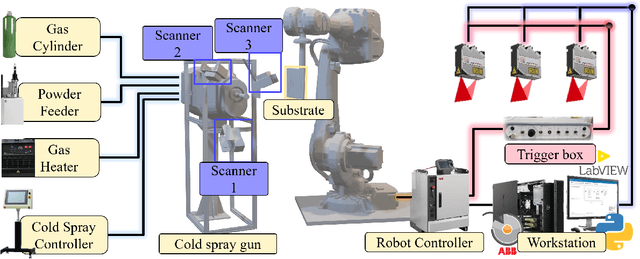
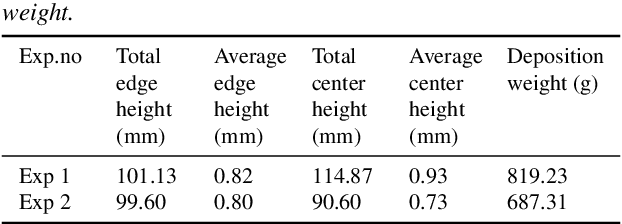
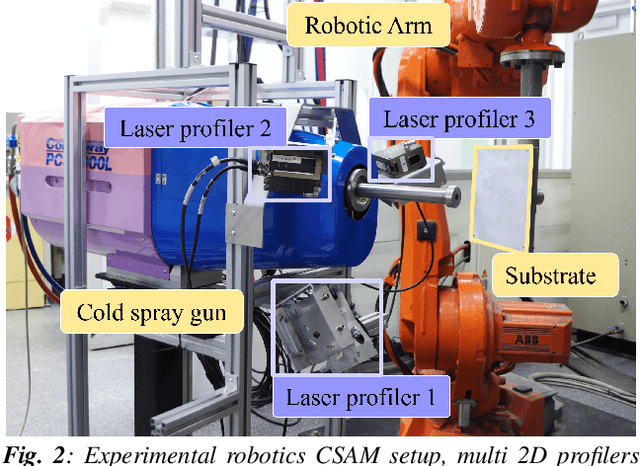
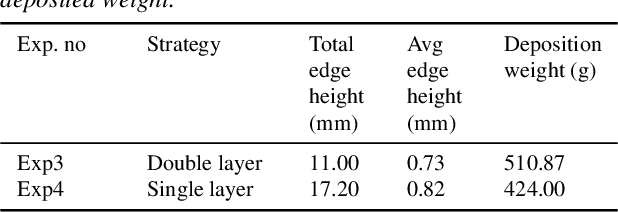
Additive manufacturing (AM) is an emerging digital manufacturing technology to produce complex and freeform objects through a layer-wise deposition. High deposition rate robotic AM (HDRRAM) processes, such as cold spray additive manufacturing (CSAM), offer significantly increased build speeds by delivering large volumes of material per unit time. However, maintaining shape accuracy remains a critical challenge, particularly due to process instabilities in current open-loop systems. Detecting these deviations as they occur is essential to prevent error propagation, ensure part quality, and minimize post-processing requirements. This study presents a real-time monitoring system to acquire and reconstruct the growing part and directly compares it with a near-net reference model to detect the shape deviation during the manufacturing process. The early identification of shape inconsistencies, followed by segmenting and tracking each deviation region, paves the way for timely intervention and compensation to achieve consistent part quality.
Enhanced Online Test-time Adaptation with Feature-Weight Cosine Alignment
May 12, 2024Online Test-Time Adaptation (OTTA) has emerged as an effective strategy to handle distributional shifts, allowing on-the-fly adaptation of pre-trained models to new target domains during inference, without the need for source data. We uncovered that the widely studied entropy minimization (EM) method for OTTA, suffers from noisy gradients due to ambiguity near decision boundaries and incorrect low-entropy predictions. To overcome these limitations, this paper introduces a novel cosine alignment optimization approach with a dual-objective loss function that refines the precision of class predictions and adaptability to novel domains. Specifically, our method optimizes the cosine similarity between feature vectors and class weight vectors, enhancing the precision of class predictions and the model's adaptability to novel domains. Our method outperforms state-of-the-art techniques and sets a new benchmark in multiple datasets, including CIFAR-10-C, CIFAR-100-C, ImageNet-C, Office-Home, and DomainNet datasets, demonstrating high accuracy and robustness against diverse corruptions and domain shifts.
Enhanced Multi-Target Tracking in Dynamic Environments: Distributed Control Methods Within the Random Finite Set Framework
Jan 25, 2024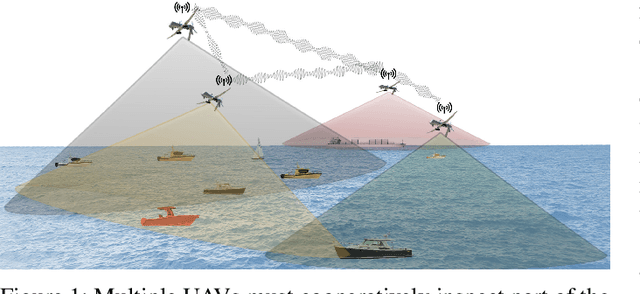
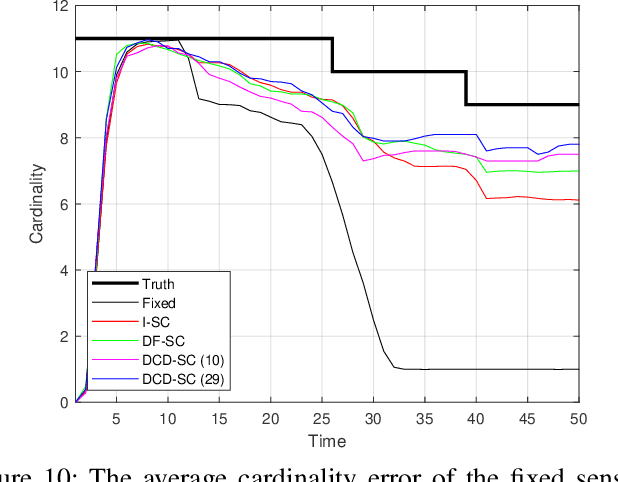
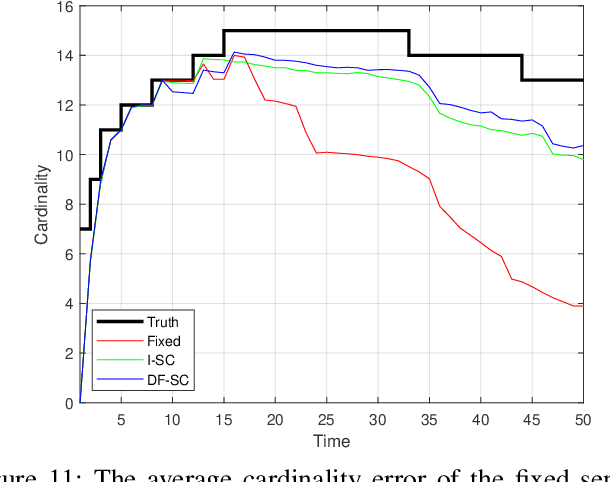
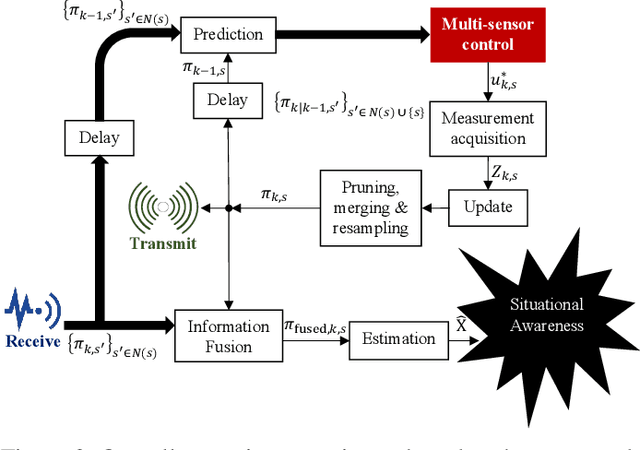
Tracking multiple targets in dynamic environments using distributed sensor networks is a challenging problem that has received significant attention in recent years. In such scenarios, the network of sensors must coordinate their actions to estimate the locations and trajectories of multiple targets accurately. Multi-sensor control methods can improve the performance of these networks by enabling efficient utilization of resources and enhancing the accuracy of the estimated target states. This paper proposes two novel multi-sensor control methods that utilize the Random Finite Set (RFS) framework to address this problem. Our methods improve computational tractability and enable fully distributed control, making them suitable for real-time applications.
Single Domain Generalization via Normalised Cross-correlation Based Convolutions
Jul 12, 2023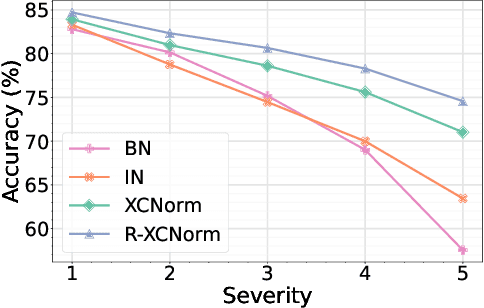

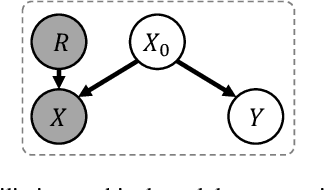
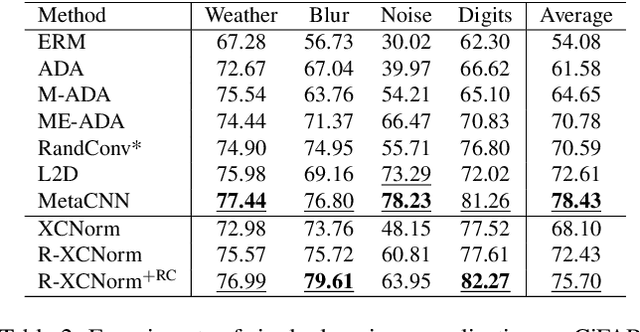
Deep learning techniques often perform poorly in the presence of domain shift, where the test data follows a different distribution than the training data. The most practically desirable approach to address this issue is Single Domain Generalization (S-DG), which aims to train robust models using data from a single source. Prior work on S-DG has primarily focused on using data augmentation techniques to generate diverse training data. In this paper, we explore an alternative approach by investigating the robustness of linear operators, such as convolution and dense layers commonly used in deep learning. We propose a novel operator called XCNorm that computes the normalized cross-correlation between weights and an input feature patch. This approach is invariant to both affine shifts and changes in energy within a local feature patch and eliminates the need for commonly used non-linear activation functions. We show that deep neural networks composed of this operator are robust to common semantic distribution shifts. Furthermore, our empirical results on single-domain generalization benchmarks demonstrate that our proposed technique performs comparably to the state-of-the-art methods.
IT-RUDA: Information Theory Assisted Robust Unsupervised Domain Adaptation
Oct 24, 2022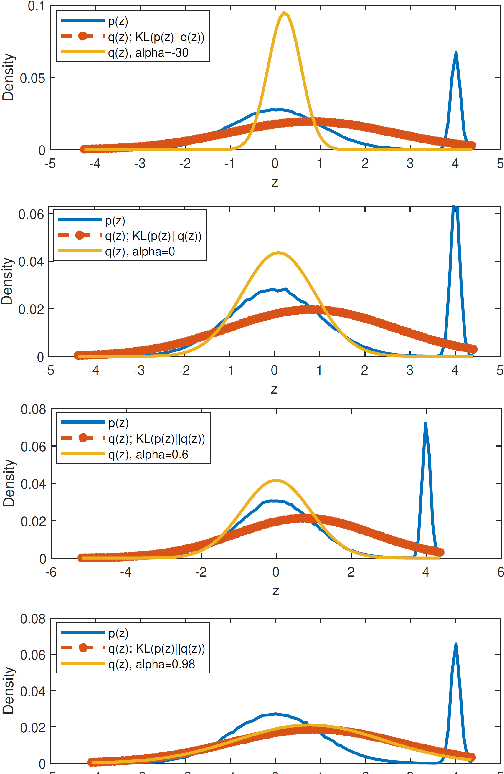
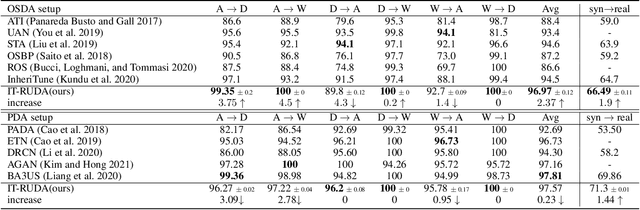

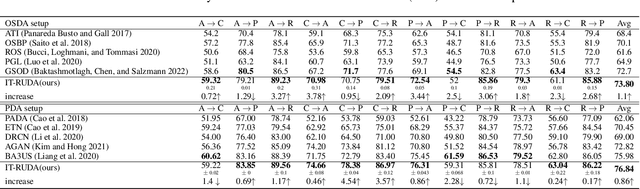
Distribution shift between train (source) and test (target) datasets is a common problem encountered in machine learning applications. One approach to resolve this issue is to use the Unsupervised Domain Adaptation (UDA) technique that carries out knowledge transfer from a label-rich source domain to an unlabeled target domain. Outliers that exist in either source or target datasets can introduce additional challenges when using UDA in practice. In this paper, $\alpha$-divergence is used as a measure to minimize the discrepancy between the source and target distributions while inheriting robustness, adjustable with a single parameter $\alpha$, as the prominent feature of this measure. Here, it is shown that the other well-known divergence-based UDA techniques can be derived as special cases of the proposed method. Furthermore, a theoretical upper bound is derived for the loss in the target domain in terms of the source loss and the initial $\alpha$-divergence between the two domains. The robustness of the proposed method is validated through testing on several benchmarked datasets in open-set and partial UDA setups where extra classes existing in target and source datasets are considered as outliers.
Distributed Complementary Fusion for Connected Vehicles
Sep 09, 2022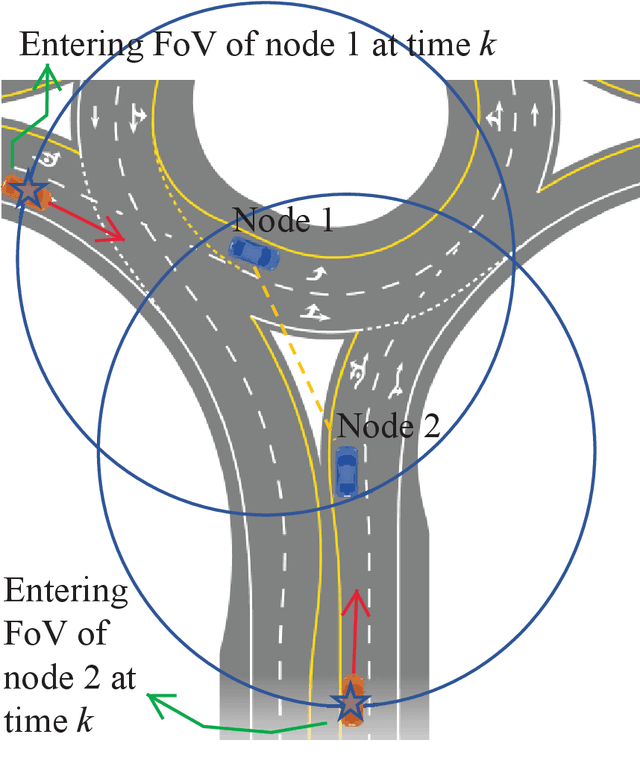
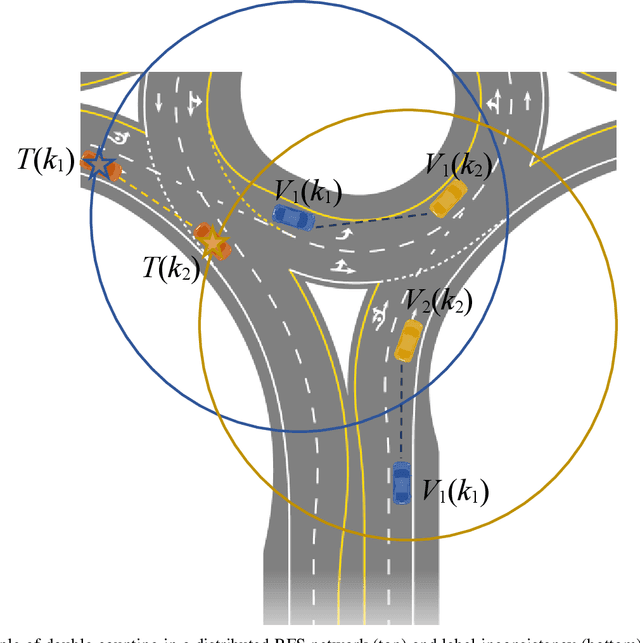
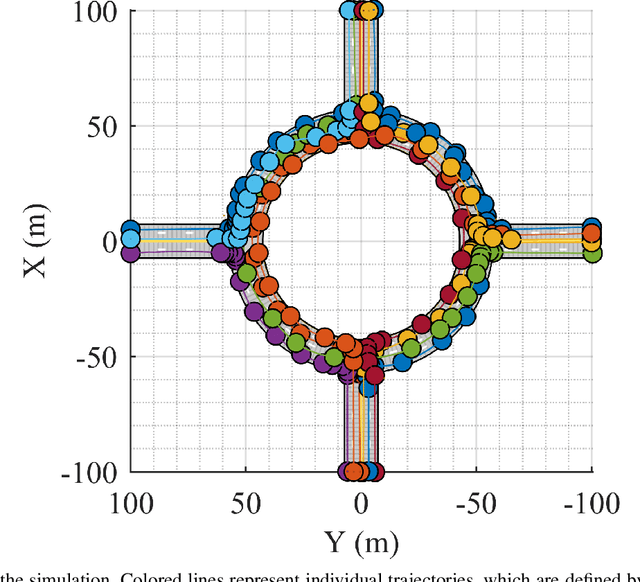
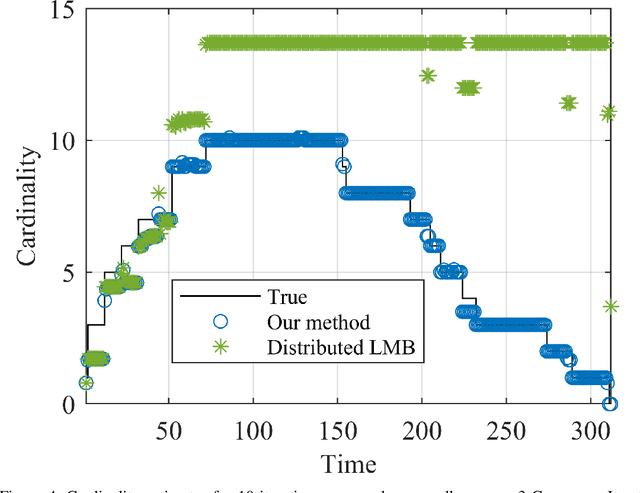
We present a random finite set-based method for achieving comprehensive situation awareness by each vehicle in a distributed vehicle network. Our solution is designed for labeled multi-Bernoulli filters running in each vehicle. It involves complementary fusion of sensor information locally running through consensus iterations. We introduce a novel label merging algorithm to eliminate double counting. We also extend the label space to incorporate sensor identities. This helps to overcome label inconsistencies. We show that the proposed algorithm is able to outperform the standard LMB filter using a distributed complementary approach with limited fields of view.
Interaction-Aware Labeled Multi-Bernoulli Filter
Apr 19, 2022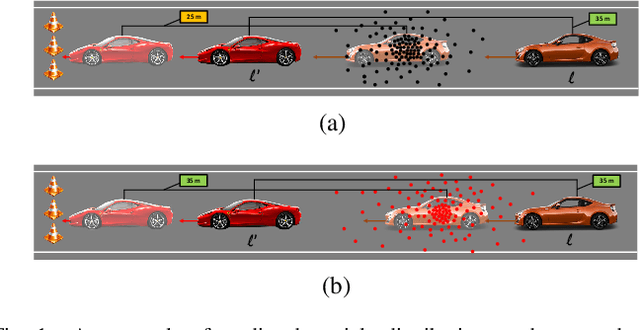
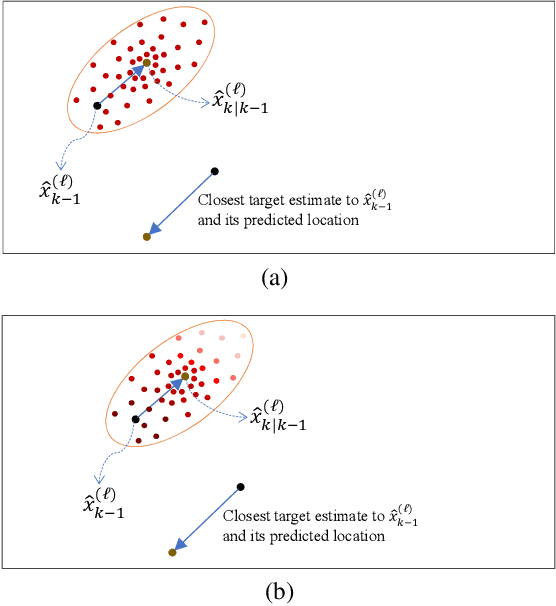
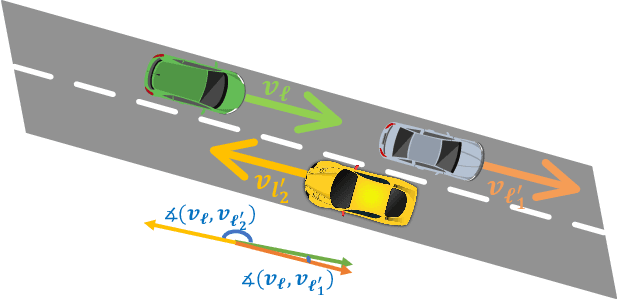
Tracking multiple objects through time is an important part of an intelligent transportation system. Random finite set (RFS)-based filters are one of the emerging techniques for tracking multiple objects. In multi-object tracking (MOT), a common assumption is that each object is moving independent of its surroundings. But in many real-world applications, target objects interact with one another and the environment. Such interactions, when considered for tracking, are usually modeled by an interactive motion model which is application specific. In this paper, we present a novel approach to incorporate target interactions within the prediction step of an RFS-based multi-target filter, i.e. labeled multi-Bernoulli (LMB) filter. The method has been developed for two practical applications of tracking a coordinated swarm and vehicles. The method has been tested for a complex vehicle tracking dataset and compared with the LMB filter through the OSPA and OSPA$^{(2)}$ metrics. The results demonstrate that the proposed interaction-aware method depicts considerable performance enhancement over the LMB filter in terms of the selected metrics.