 Add to Chrome
 Add to Firefox
 Add to Edge
ERUnderstand: Evaluating Vision-Language Models on Structured ER Diagrams
Jul 27, 2026
Entity-Relationship Diagrams (ERDs) are central to conceptual database design, yet they are typically available only as rendered images rather than machine-readable schemas, limiting AI-assisted database engineering. We introduce ERUnderstand, the first large-scale benchmark for structured understanding of ER diagrams, comprising 2,960 diagrams collected from curated educational sources, real-world schemas, and synthetically generated examples spanning diverse domains, notations, complexity levels, and Extended Entity-Relationship (EER) constructs. Each diagram is paired with a standardized machine-readable representation for fine-grained evaluation of schema elements. Evaluating state-of-the-art Vision-Language Models (VLMs), we find that while common ERD elements are recovered reliably (F1 > 0.74), performance drops sharply on weak entities (as low as 0.28 F1), multivalued attributes (0.14 F1), and N-ary relationships (0.07 F1). Reasoning-augmented models improve overall performance by 15-25% but remain sensitive to linguistic priors and increasing diagram complexity. ERUnderstand provides a standardized benchmark for evaluating multimodal understanding of conceptual database schemas. The benchmark, dataset, evaluation toolkit, and generation code are publicly available at https://github.com/salinaria/ERUnderstand.

RODEO: Robust Outlier Detection via Exposing Adaptive Out-of-Distribution Samples
Jan 28, 2025In recent years, there have been significant improvements in various forms of image outlier detection. However, outlier detection performance under adversarial settings lags far behind that in standard settings. This is due to the lack of effective exposure to adversarial scenarios during training, especially on unseen outliers, leading to detection models failing to learn robust features. To bridge this gap, we introduce RODEO, a data-centric approach that generates effective outliers for robust outlier detection. More specifically, we show that incorporating outlier exposure (OE) and adversarial training can be an effective strategy for this purpose, as long as the exposed training outliers meet certain characteristics, including diversity, and both conceptual differentiability and analogy to the inlier samples. We leverage a text-to-image model to achieve this goal. We demonstrate both quantitatively and qualitatively that our adaptive OE method effectively generates ``diverse'' and ``near-distribution'' outliers, leveraging information from both text and image domains. Moreover, our experimental results show that utilizing our synthesized outliers significantly enhances the performance of the outlier detector, particularly in adversarial settings.
Scanning Trojaned Models Using Out-of-Distribution Samples
Jan 28, 2025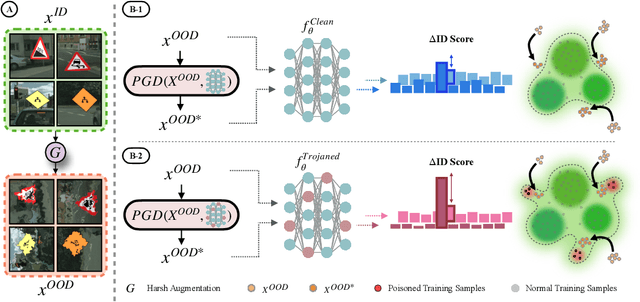
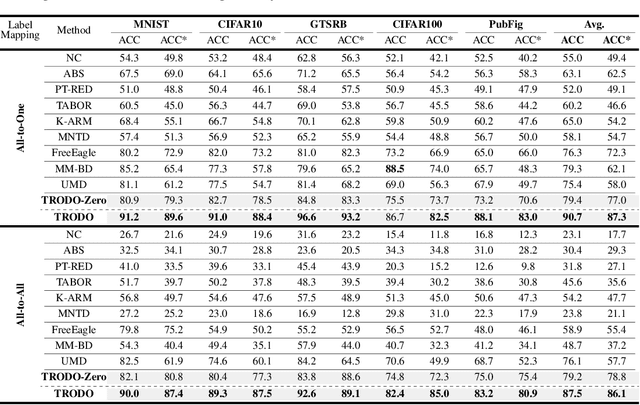
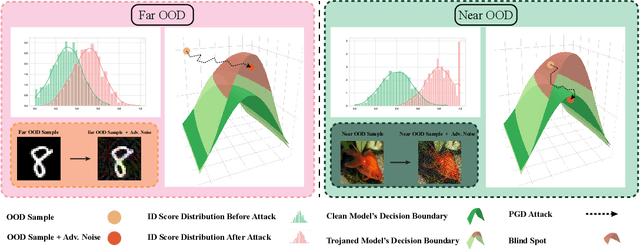

Scanning for trojan (backdoor) in deep neural networks is crucial due to their significant real-world applications. There has been an increasing focus on developing effective general trojan scanning methods across various trojan attacks. Despite advancements, there remains a shortage of methods that perform effectively without preconceived assumptions about the backdoor attack method. Additionally, we have observed that current methods struggle to identify classifiers trojaned using adversarial training. Motivated by these challenges, our study introduces a novel scanning method named TRODO (TROjan scanning by Detection of adversarial shifts in Out-of-distribution samples). TRODO leverages the concept of "blind spots"--regions where trojaned classifiers erroneously identify out-of-distribution (OOD) samples as in-distribution (ID). We scan for these blind spots by adversarially shifting OOD samples towards in-distribution. The increased likelihood of perturbed OOD samples being classified as ID serves as a signature for trojan detection. TRODO is both trojan and label mapping agnostic, effective even against adversarially trained trojaned classifiers. It is applicable even in scenarios where training data is absent, demonstrating high accuracy and adaptability across various scenarios and datasets, highlighting its potential as a robust trojan scanning strategy.
A Contrastive Teacher-Student Framework for Novelty Detection under Style Shifts
Jan 28, 2025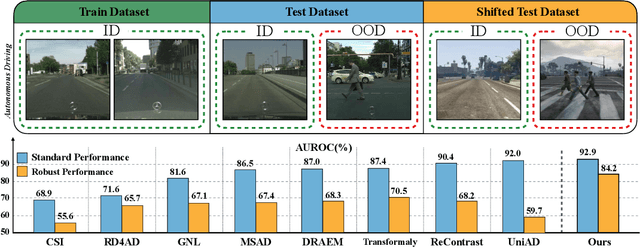
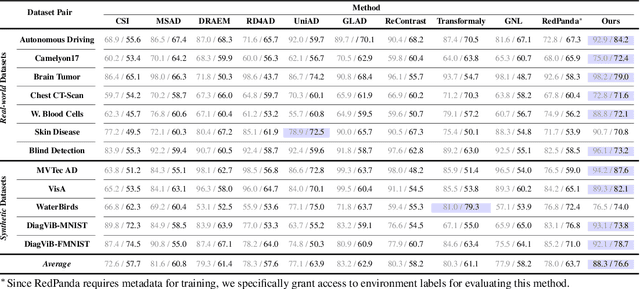
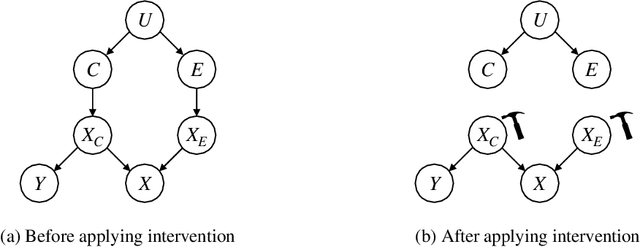

There have been several efforts to improve Novelty Detection (ND) performance. However, ND methods often suffer significant performance drops under minor distribution shifts caused by changes in the environment, known as style shifts. This challenge arises from the ND setup, where the absence of out-of-distribution (OOD) samples during training causes the detector to be biased toward the dominant style features in the in-distribution (ID) data. As a result, the model mistakenly learns to correlate style with core features, using this shortcut for detection. Robust ND is crucial for real-world applications like autonomous driving and medical imaging, where test samples may have different styles than the training data. Motivated by this, we propose a robust ND method that crafts an auxiliary OOD set with style features similar to the ID set but with different core features. Then, a task-based knowledge distillation strategy is utilized to distinguish core features from style features and help our model rely on core features for discriminating crafted OOD and ID sets. We verified the effectiveness of our method through extensive experimental evaluations on several datasets, including synthetic and real-world benchmarks, against nine different ND methods.