 Add to Chrome
 Add to Firefox
 Add to Edge
A 3D Reconstruction Benchmark for Asset Inspection
Mar 18, 2026
Asset management requires accurate 3D models to inform the maintenance, repair, and assessment of buildings, maritime vessels, and other key structures as they age. These downstream applications rely on high-fidelity models produced from aerial surveys in close proximity to the asset, enabling operators to locate and characterise deterioration or damage and plan repairs. Captured images typically have high overlap between adjacent camera poses, sufficient detail at millimetre scale, and challenging visual appearances such as reflections and transparency. However, existing 3D reconstruction datasets lack examples of these conditions, making it difficult to benchmark methods for this task. We present a new dataset with ground truth depth maps, camera poses, and mesh models of three synthetic scenes with simulated inspection trajectories and varying levels of surface condition on non-Lambertian scene content. We evaluate state-of-the-art reconstruction methods on this dataset. Our results demonstrate that current approaches struggle significantly with the dense capture trajectories and complex surface conditions inherent to this domain, exposing a critical scalability gap and pointing toward new research directions for deployable 3D reconstruction in asset inspection. Project page: https://roboticimaging.org/Projects/asset-inspection-dataset/

Learning Underwater Active Perception in Simulation
Apr 23, 2025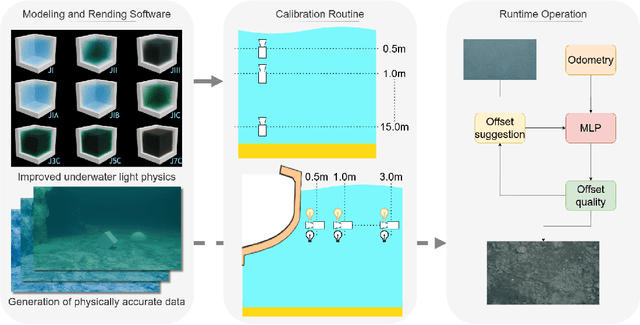
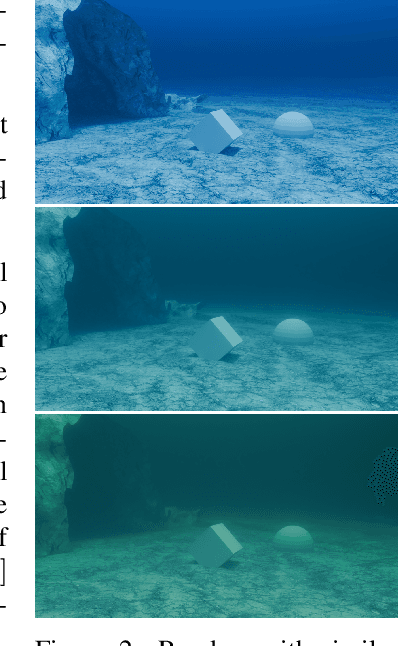
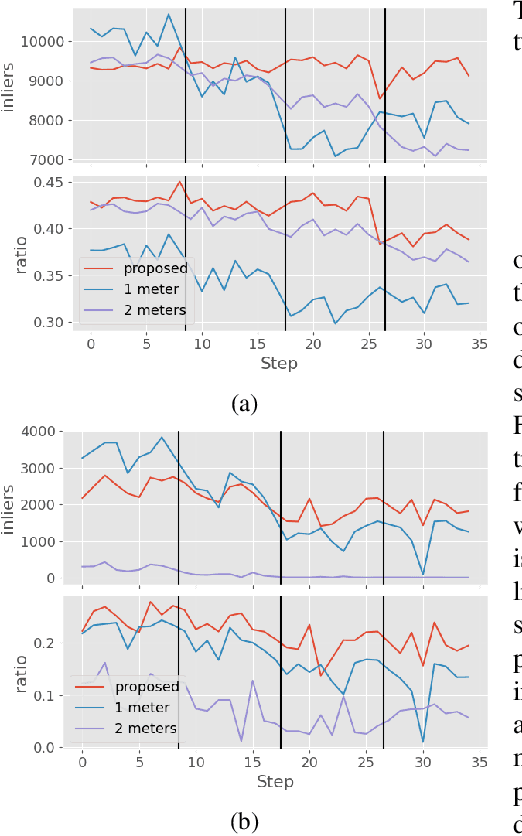
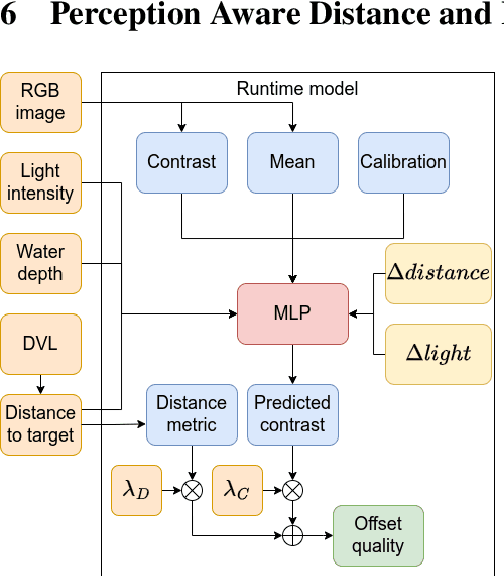
When employing underwater vehicles for the autonomous inspection of assets, it is crucial to consider and assess the water conditions. Indeed, they have a significant impact on the visibility, which also affects robotic operations. Turbidity can jeopardise the whole mission as it may prevent correct visual documentation of the inspected structures. Previous works have introduced methods to adapt to turbidity and backscattering, however, they also include manoeuvring and setup constraints. We propose a simple yet efficient approach to enable high-quality image acquisition of assets in a broad range of water conditions. This active perception framework includes a multi-layer perceptron (MLP) trained to predict image quality given a distance to a target and artificial light intensity. We generated a large synthetic dataset including ten water types with different levels of turbidity and backscattering. For this, we modified the modelling software Blender to better account for the underwater light propagation properties. We validated the approach in simulation and showed significant improvements in visual coverage and quality of imagery compared to traditional approaches. The project code is available on our project page at https://roboticimaging.org/Projects/ActiveUW/.