 Add to Chrome
 Add to Firefox
 Add to Edge
Collision-Aware Vision-Language Learning for End-to-End Driving with Multimodal Infraction Datasets
Mar 26, 2026
High infraction rates remain the primary bottleneck for end-to-end (E2E) autonomous driving, as evidenced by the low driving scores on the CARLA Leaderboard. Despite collision-related infractions being the dominant failure mode in closed-loop evaluations, collision-aware representation learning has received limited attention. To address this gap, we first develop a Video-Language-Augmented Anomaly Detector (VLAAD), leveraging a Multiple Instance Learning (MIL) formulation to obtain stable, temporally localized collision signals for proactive prediction. To transition these capabilities into closed-loop simulations, we must overcome the limitations of existing simulator datasets, which lack multimodality and are frequently restricted to simple intersection scenarios. Therefore, we introduce CARLA-Collide, a large-scale multimodal dataset capturing realistic collision events across highly diverse road networks. Trained on this diverse simulator data, VLAAD serves as a collision-aware plug-in module that can be seamlessly integrated into existing E2E driving models. By integrating our module into a pretrained TransFuser++ agent, we demonstrate a 14.12% relative increase in driving score with minimal fine-tuning. Beyond closed-loop evaluation, we further assess the generalization capability of VLAAD in an open-loop setting using real-world driving data. To support this analysis, we introduce Real-Collide, a multimodal dataset of diverse dashcam videos paired with semantically rich annotations for collision detection and prediction. On this benchmark, despite containing only 0.6B parameters, VLAAD outperforms a multi-billion-parameter vision-language model, achieving a 23.3% improvement in AUC.

Unveiling the Flaws: A Critical Analysis of Initialization Effect on Time Series Anomaly Detection
Aug 13, 2024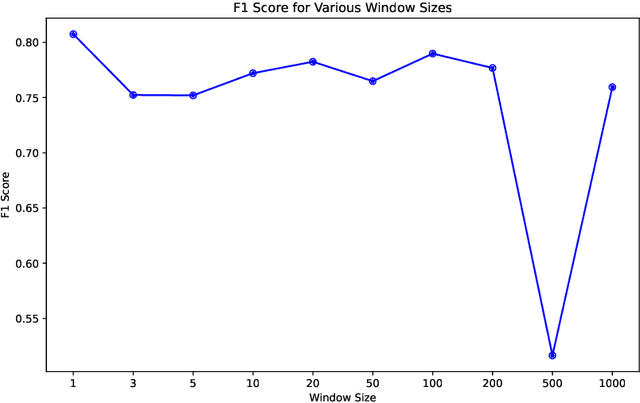
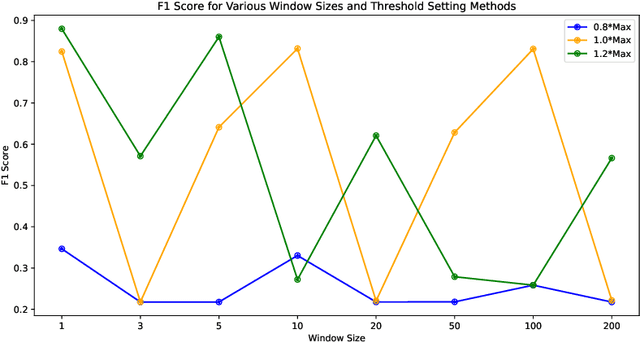
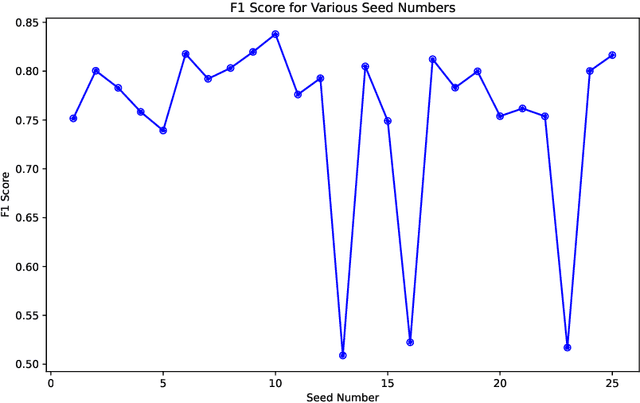
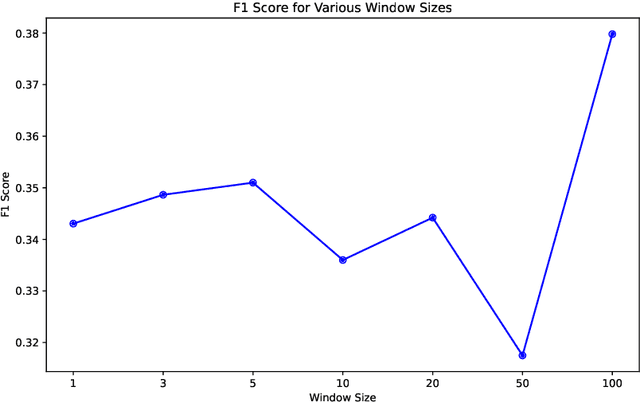
Deep learning for time-series anomaly detection (TSAD) has gained significant attention over the past decade. Despite the reported improvements in several papers, the practical application of these models remains limited. Recent studies have cast doubt on these models, attributing their results to flawed evaluation techniques. However, the impact of initialization has largely been overlooked. This paper provides a critical analysis of the initialization effects on TSAD model performance. Our extensive experiments reveal that TSAD models are highly sensitive to hyperparameters such as window size, seed number, and normalization. This sensitivity often leads to significant variability in performance, which can be exploited to artificially inflate the reported efficacy of these models. We demonstrate that even minor changes in initialization parameters can result in performance variations that overshadow the claimed improvements from novel model architectures. Our findings highlight the need for rigorous evaluation protocols and transparent reporting of preprocessing steps to ensure the reliability and fairness of anomaly detection methods. This paper calls for a more cautious interpretation of TSAD advancements and encourages the development of more robust and transparent evaluation practices to advance the field and its practical applications.