 Add to Chrome
 Add to Firefox
 Add to Edge
Synthesizing Procedural Memory: Challenges and Architectures in Automated Workflow Generation
Dec 23, 2025
While CodeMem establishes executable code as the optimal representation for agentic procedural memory, the mechanism for autonomously synthesizing this memory from a blank slate remains underexplored. This paper operationalizes the transition of Large Language Models from passive tool-users to active workflow architects. Through a high-fidelity case study of a cross-service orchestration task involving Outlook and OneDrive, we identify and address four structural bottlenecks in automated skill generation: the Discovery Gap involving navigation of large tool registries, the Verification Gap regarding grounding tool response structures, the Decomposition Gap which replaces inefficient search with Linear State Anchoring, and the Scaling Gap focused on concurrency and persistence. We demonstrate that by enforcing a scientific methodology of hypothesize, probe, and code, agents can autonomously write robust, production-grade code skills.

CodeMem: Architecting Reproducible Agents via Dynamic MCP and Procedural Memory
Dec 17, 2025

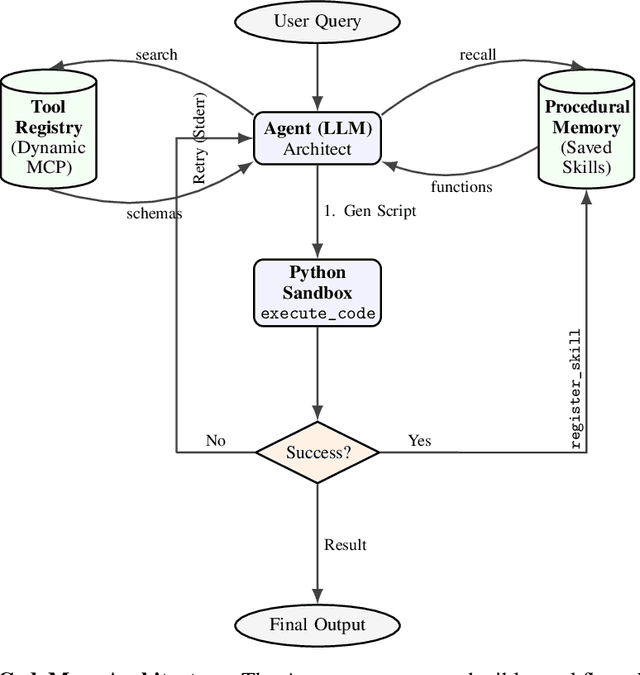

Current tool-using AI agents suffer from limited action space, context inefficiency, and probabilistic instability that makes them unsuitable for handling repetitive tasks which are otherwise reliably and efficiently tackled by agentic workflows built on platforms like n8n and Zapier. Earlier works like CodeAct, DynaSaur, Code Mode have tried to tackle the first two issues by using the whole Python language as its action space: The number of tools that the agent can call becomes infinite. Python code blocks can execute complex actions into a single step and print only relevant results which helps in keeping the context lean. However, the probabilistic instability issue still remains, as for the same task in the same environment, the agent can follow different trajectories due to the probabilistic nature of LLMs. Therefore, we need procedural memory for consistency and reliability. This paper proposes CodeMem, an architecture to implement procedural memory via code which can be used to build and run reusable agentic workflows with deterministic reliability.
GUIDEQ: Framework for Guided Questioning for progressive informational collection and classification
Nov 08, 2024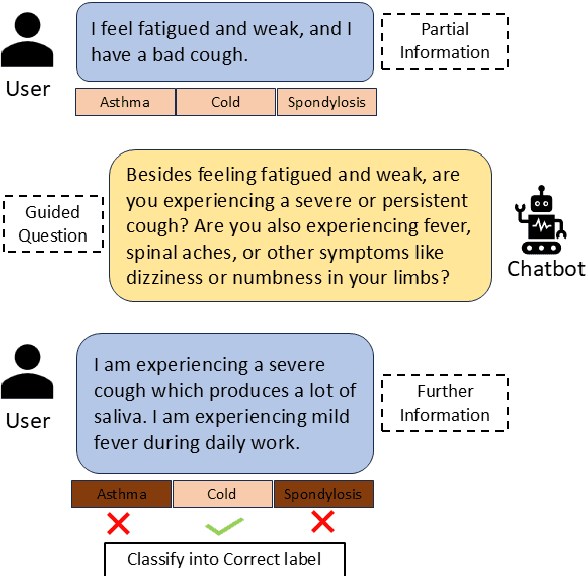
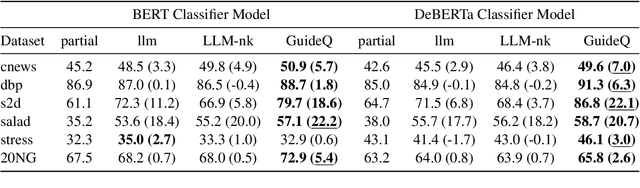
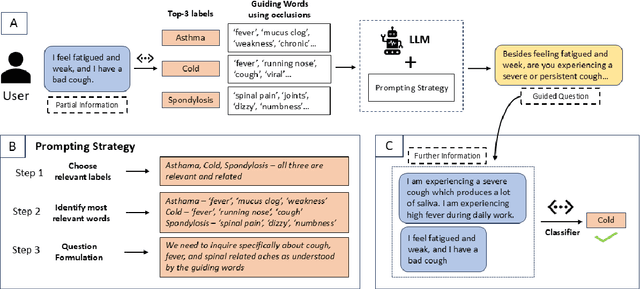
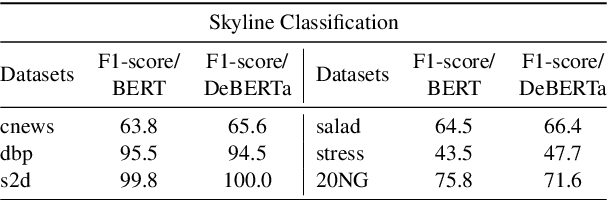
Question Answering (QA) is an important part of tasks like text classification through information gathering. These are finding increasing use in sectors like healthcare, customer support, legal services, etc., to collect and classify responses into actionable categories. LLMs, although can support QA systems, they face a significant challenge of insufficient or missing information for classification. Although LLMs excel in reasoning, the models rely on their parametric knowledge to answer. However, questioning the user requires domain-specific information aiding to collect accurate information. Our work, GUIDEQ, presents a novel framework for asking guided questions to further progress a partial information. We leverage the explainability derived from the classifier model for along with LLMs for asking guided questions to further enhance the information. This further information helps in more accurate classification of a text. GUIDEQ derives the most significant key-words representative of a label using occlusions. We develop GUIDEQ's prompting strategy for guided questions based on the top-3 classifier label outputs and the significant words, to seek specific and relevant information, and classify in a targeted manner. Through our experimental results, we demonstrate that GUIDEQ outperforms other LLM-based baselines, yielding improved F1-Score through the accurate collection of relevant further information. We perform various analytical studies and also report better question quality compared to our method.
Approximation of Convex Envelope Using Reinforcement Learning
Nov 24, 2023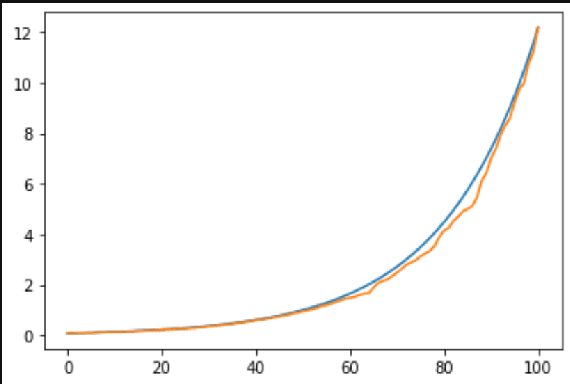
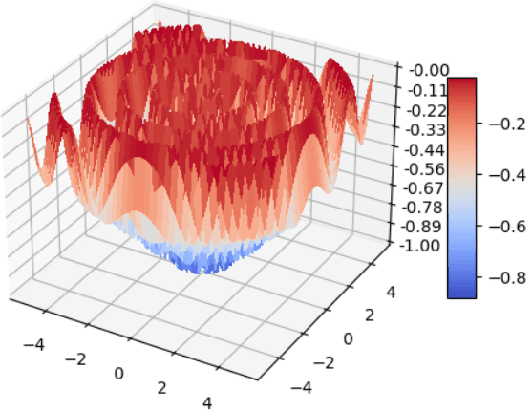
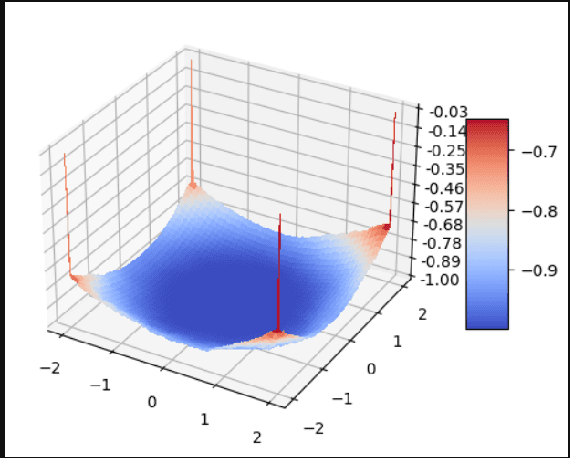
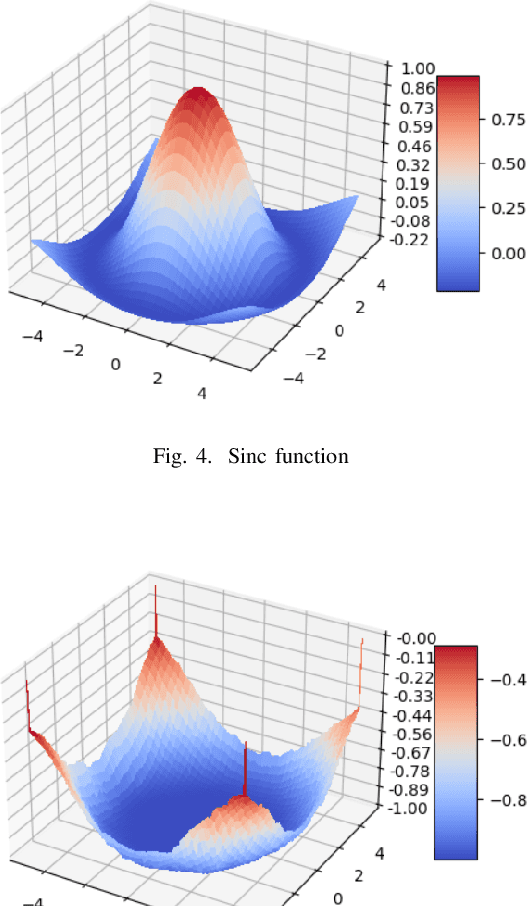
Oberman gave a stochastic control formulation of the problem of estimating the convex envelope of a non-convex function. Based on this, we develop a reinforcement learning scheme to approximate the convex envelope, using a variant of Q-learning for controlled optimal stopping. It shows very promising results on a standard library of test problems.