 Add to Chrome
 Add to Firefox
 Add to Edge
Synthesizing Procedural Memory: Challenges and Architectures in Automated Workflow Generation
Dec 23, 2025
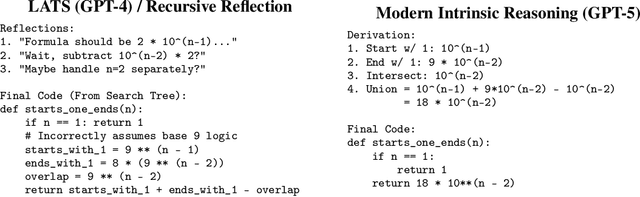
While CodeMem establishes executable code as the optimal representation for agentic procedural memory, the mechanism for autonomously synthesizing this memory from a blank slate remains underexplored. This paper operationalizes the transition of Large Language Models from passive tool-users to active workflow architects. Through a high-fidelity case study of a cross-service orchestration task involving Outlook and OneDrive, we identify and address four structural bottlenecks in automated skill generation: the Discovery Gap involving navigation of large tool registries, the Verification Gap regarding grounding tool response structures, the Decomposition Gap which replaces inefficient search with Linear State Anchoring, and the Scaling Gap focused on concurrency and persistence. We demonstrate that by enforcing a scientific methodology of hypothesize, probe, and code, agents can autonomously write robust, production-grade code skills.

Automatic Differentiation for All Photons Imaging to See Inside Volumetric Scattering Media
Jun 02, 2020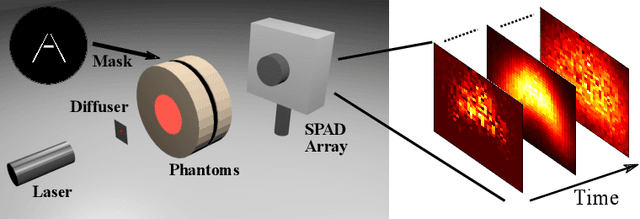
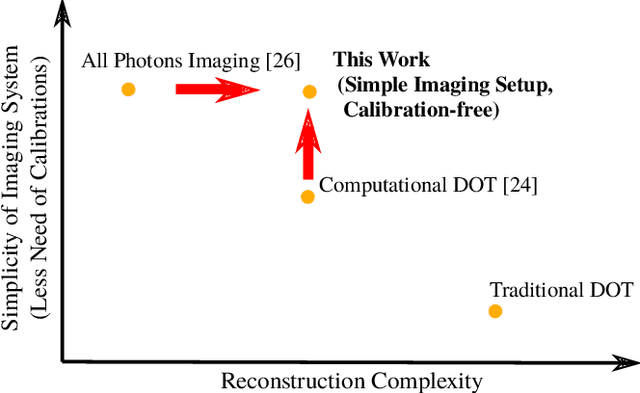
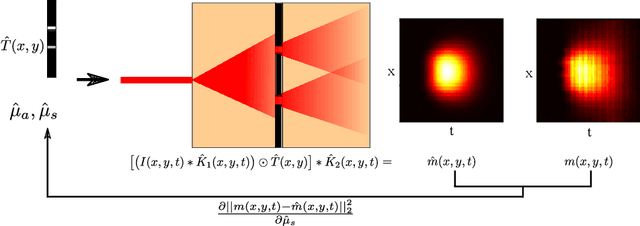
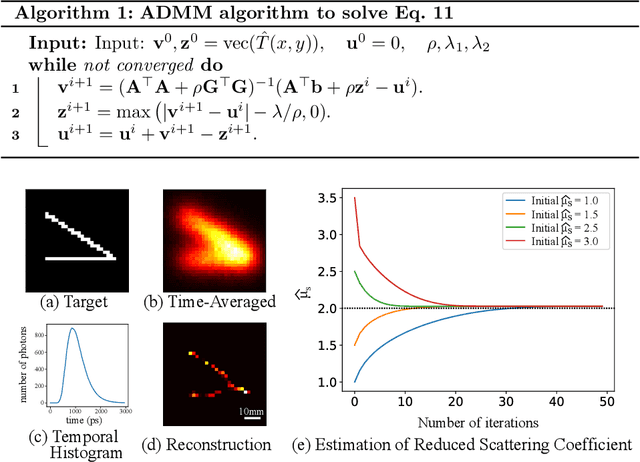
Imaging through dense scattering media - such as biological tissue, fog, and smoke - has applications in the medical and robotics fields. We propose a new framework using automatic differentiation for All Photons Imaging through homogeneous scattering media with unknown optical properties for non-invasive sensing and diagnostics. We overcome the need for the imaging target to be visible to the illumination source in All Photons Imaging, enabling practical and non-invasive imaging through turbid media with a simple optical setup. Our method does not require calibration to acquire the sensor position or optical properties of the media.