 Add to Chrome
 Add to Firefox
 Add to Edge
Locomotion Variability and User Experience in Smart Wheelchair Human-Robot Interaction
Aug 11, 2026
Human movement is inherently variable, with variability structured according to task relevance: movements are typically more consistent at task-critical points and more flexible elsewhere. In human-robot interaction (HRI), however, model-based assistance strategies commonly assume deterministic human behavior and suppress such variability, potentially altering how interactions are experienced and lowering sense of agency. While movement variability is increasingly recognized as functionally meaningful, its deliberate preservation in assisted interaction, and its consequences for user experience, remain underexplored. In this paper, we empirically investigate how different assistance strategies shape human movement variability, task performance, and subjective interaction experience in a shared control setting. We introduce an autonomy-supportive shared control strategy that preserves users' natural movement structure. This approach is evaluated in a user study in which participants push an intelligent powered wheelchair under three conditions: no assistance, conventional variability-reducing assistance, and variability-preserving assistance. While task-relevant performance remained comparable across assisted modes, preserving natural movement variability led to more favorable interaction experiences. In particular, participants reported significantly higher perceived agency compared to conventional assistance and highest perceived usefulness. These findings suggest that variability-aware assistance can support both performance and user autonomy in physical human-robot collaboration. More broadly, the results highlight the importance of designing assistive robotic systems that respect the embodied structure of human movement rather than treating variability as noise to be neglected or eliminated.

OpenTera: A Microservice Architecture Solution for Rapid Prototyping of Robotic Solutions to COVID-19 Challenges in Care Facilities
Mar 10, 2021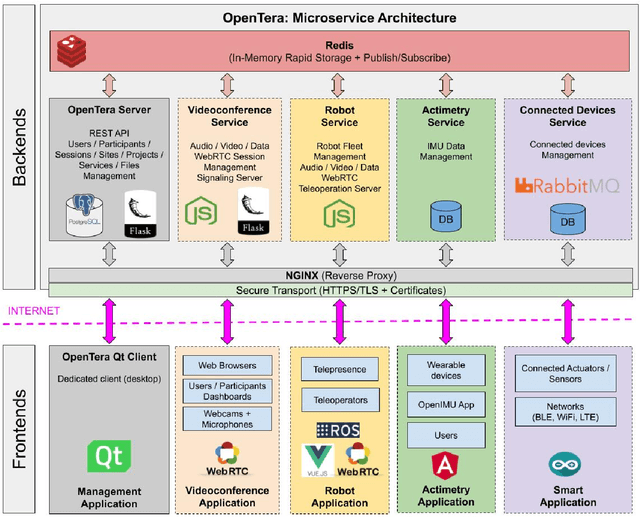
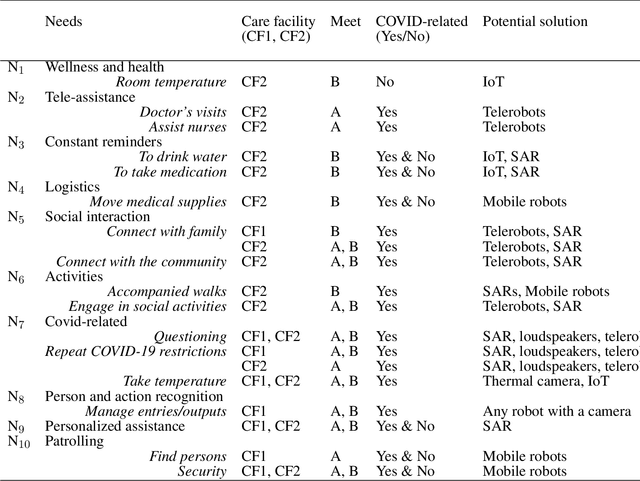
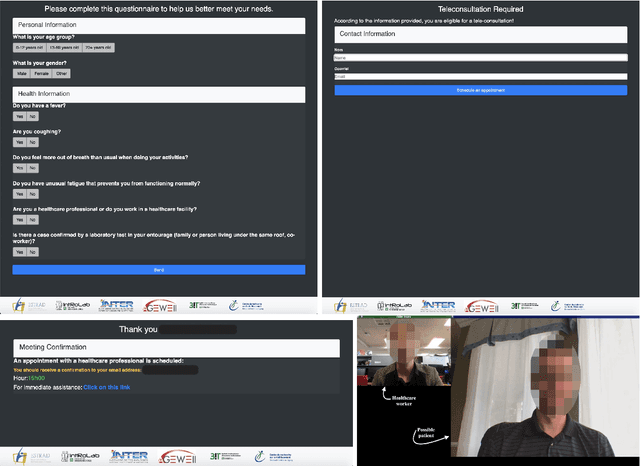
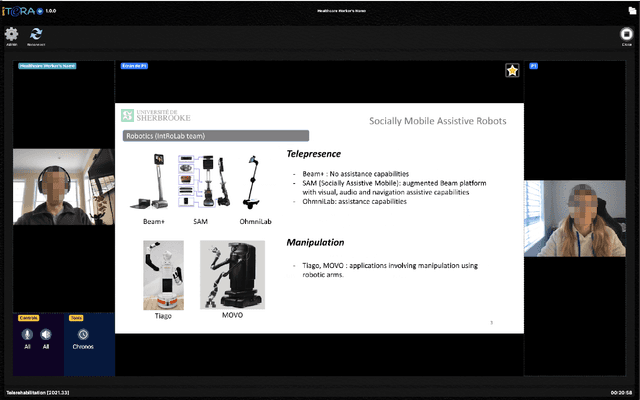
As telecommunications technology progresses, telehealth frameworks are becoming more widely adopted in the context of long-term care (LTC) for older adults, both in care facilities and in homes. Today, robots could assist healthcare workers when they provide care to elderly patients, who constitute a particularly vulnerable population during the COVID-19 pandemic. Previous work on user-centered design of assistive technologies in LTC facilities for seniors has identified positive impacts. The need to deal with the effects of the COVID-19 pandemic emphasizes the benefits of this approach, but also highlights some new challenges for which robots could be interesting solutions to be deployed in LTC facilities. This requires customization of telecommunication and audio/video/data processing to address specific clinical requirements and needs. This paper presents OpenTera, an open source telehealth framework, aiming to facilitate prototyping of such solutions by software and robotic designers. Designed as a microservice-oriented platform, OpenTera is an end-to-end solution that employs a series of independent modules for tasks such as data and session management, telehealth, daily assistive tasks/actions, together with smart devices and environments, all connected through the framework. After explaining the framework, we illustrate how OpenTera can be used to implement robotic solutions for different applications identified in LTC facilities and homes, and we describe how we plan to validate them through field trials.