 Add to Chrome
 Add to Firefox
 Add to Edge
Geometry-Driven Flow Analysis of Brain Sulcal Pattern
Jun 07, 2026
Cortical folding reflects coordinated neurodevelopmental processes and is increasingly recognized as a sensitive marker of neurological disease. However, most existing analyses rely on indirect scalar summaries that do not explicitly model folding geometry itself. In juvenile myoclonic epilepsy (JME), a common genetic epilepsy, cortical abnormalities are often subtle, spatially distributed, and difficult to detect using conventional morphometric measures. We introduce a Poisson-equation-based framework that models cortical folding as a geometry-driven flow derived from mean curvature on the cortical manifold. By treating folding patterns as a stationary source-sink structure, the proposed approach yields a smooth, globally balanced potential field whose surface gradient defines a physically interpretable flux. This framework enables spatially coherent analysis of sulcal-gyral folding organization and provides a principled representation of geometry-driven cortical structure in JME.

Why Interpretable Causal Inference is Important for High-Stakes Decision Making for Critically Ill Patients and How To Do It
Mar 09, 2022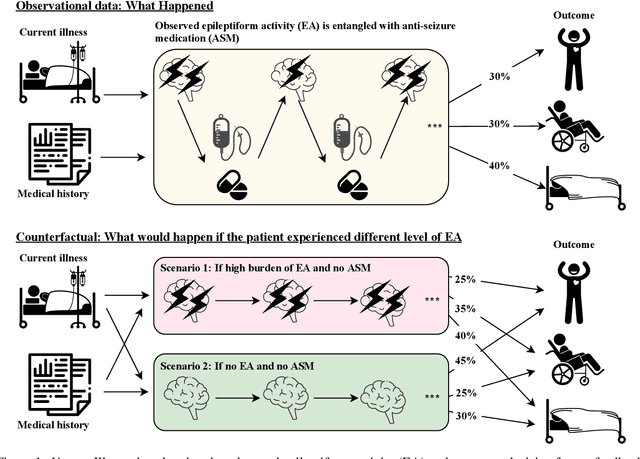
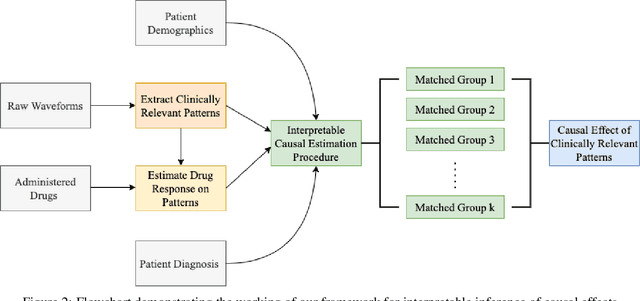
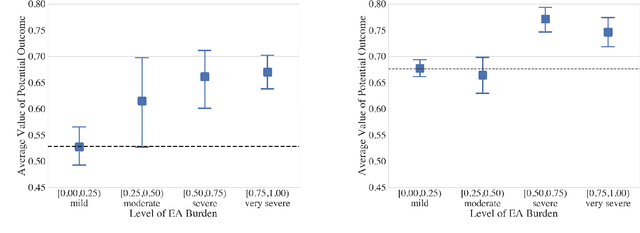
Many fundamental problems affecting the care of critically ill patients lead to similar analytical challenges: physicians cannot easily estimate the effects of at-risk medical conditions or treatments because the causal effects of medical conditions and drugs are entangled. They also cannot easily perform studies: there are not enough high-quality data for high-dimensional observational causal inference, and RCTs often cannot ethically be conducted. However, mechanistic knowledge is available, including how drugs are absorbed into the body, and the combination of this knowledge with the limited data could potentially suffice -- if we knew how to combine them. In this work, we present a framework for interpretable estimation of causal effects for critically ill patients under exactly these complex conditions: interactions between drugs and observations over time, patient data sets that are not large, and mechanistic knowledge that can substitute for lack of data. We apply this framework to an extremely important problem affecting critically ill patients, namely the effect of seizures and other potentially harmful electrical events in the brain (called epileptiform activity -- EA) on outcomes. Given the high stakes involved and the high noise in the data, interpretability is critical for troubleshooting such complex problems. Interpretability of our matched groups allowed neurologists to perform chart reviews to verify the quality of our causal analysis. For instance, our work indicates that a patient who experiences a high level of seizure-like activity (75% high EA burden) and is untreated for a six-hour window, has, on average, a 16.7% increased chance of adverse outcomes such as severe brain damage, lifetime disability, or death. We find that patients with mild but long-lasting EA (average EA burden >= 50%) have their risk of an adverse outcome increased by 11.2%.