 Add to Chrome
 Add to Firefox
 Add to Edge
A Signal-Language Foundation Model for Broad-Spectrum Cardiovascular Assessment from Routine Electrocardiography
May 25, 2026
Electrocardiography (ECG) is central to cardiovascular care, but conventional AI models are often restricted to common arrhythmias and may generalize poorly across populations or clinically subtle diseases. We developed ECG Contrastive Language-Image Pre-training (ECGCLIP), a signal-language contrastive learning framework that aligns ECG waveforms with expert diagnostic reports. ECGCLIP was pre-trained on 2,837,962 ECG studies from 1,324,856 patients and evaluated on a held-out internal test set plus nine independent external cohorts comprising about 1.5 million ECGs. Evaluation covered 89 downstream tasks, including 45 ECG diagnoses, 39 echocardiographic targets, and 5 rare cardiac diseases, using PRAUC as the primary metric. ECGCLIP consistently improved performance over random initialization and Merl-R18 baselines. On the internal test set, ECGCLIP-R34 achieved strong performance for atrial fibrillation (PRAUC 0.900) and ST-segment elevation myocardial infarction (PRAUC 0.383), with robust generalization across all external cohorts. It also improved low-prevalence and diagnostically elusive diseases, including Ebstein anomaly, constrictive pericarditis, dextrocardia, and cardiac amyloidosis, with internal PRAUC values of 0.253, 0.175, 0.121, and 0.201, respectively. ECGCLIP was data efficient, matching or exceeding full-dataset baseline performance with only 10% of training data. Feature visualization and saliency analysis suggested clinically meaningful representations aligned with established electrocardiographic criteria. These findings indicate that large-scale ECG-report contrastive pre-training can expand routine ECG interpretation beyond common arrhythmias toward broad cardiovascular assessment and opportunistic screening of echocardiographic and rare conditions.

Force-EvT: A Closer Look at Robotic Gripper Force Measurement with Event-based Vision Transformer
Apr 01, 2024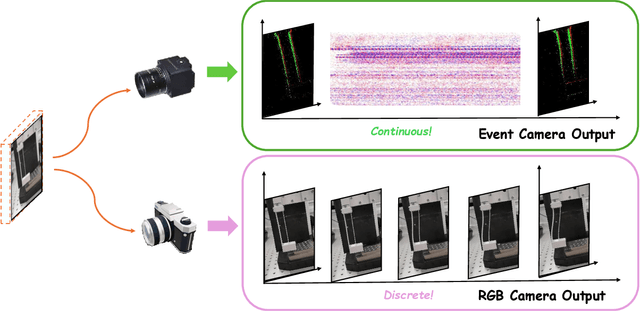
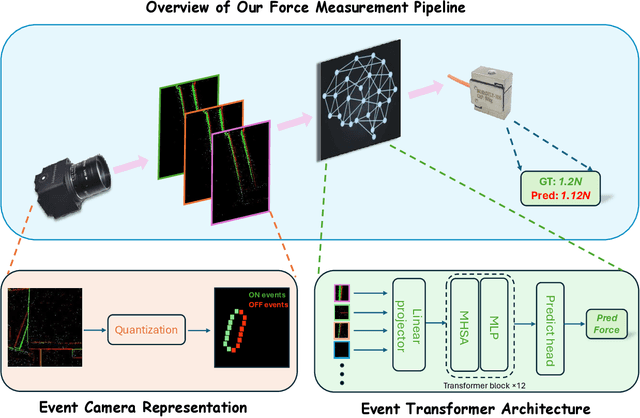
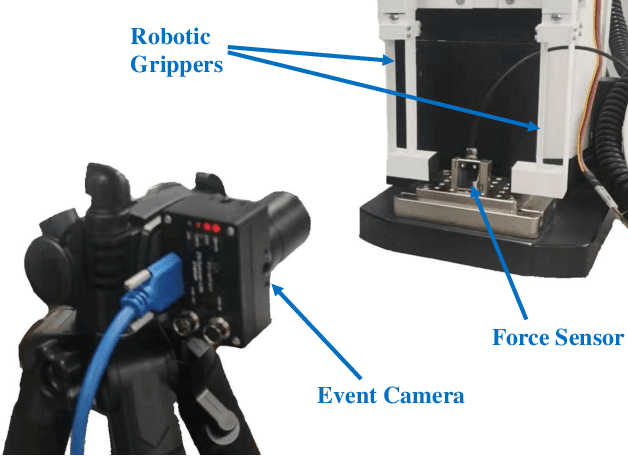
Robotic grippers are receiving increasing attention in various industries as essential components of robots for interacting and manipulating objects. While significant progress has been made in the past, conventional rigid grippers still have limitations in handling irregular objects and can damage fragile objects. We have shown that soft grippers offer deformability to adapt to a variety of object shapes and maximize object protection. At the same time, dynamic vision sensors (e.g., event-based cameras) are capable of capturing small changes in brightness and streaming them asynchronously as events, unlike RGB cameras, which do not perform well in low-light and fast-moving environments. In this paper, a dynamic-vision-based algorithm is proposed to measure the force applied to the gripper. In particular, we first set up a DVXplorer Lite series event camera to capture twenty-five sets of event data. Second, motivated by the impressive performance of the Vision Transformer (ViT) algorithm in dense image prediction tasks, we propose a new approach that demonstrates the potential for real-time force estimation and meets the requirements of real-world scenarios. We extensively evaluate the proposed algorithm on a wide range of scenarios and settings, and show that it consistently outperforms recent approaches.