 Add to Chrome
 Add to Firefox
 Add to Edge
PGN: Design and Implementation of a Vision-Language Navigation System Based on Pangu Multimodal Foundation Model
Jul 20, 2026
Vision-Language Navigation (VLN) requires an embodied agent to interpret a natural-language instruction and predict actions from temporally ordered visual observations. Adapting a multimodal large language model to VLN requires visual-language alignment, compact temporal inputs, action-space grounding, and stable training on the target hardware. This technical report presents PGN (Pangu Navigator), an offline VLN action-prediction system built on OpenPangu-7B. Training proceeds in two stages. First, PGMM aligns a frozen EVA-ViT-G/14 vision encoder with the frozen language backbone by training a Q-Former and a two-layer MLP projector. Second, PGN adapts the aligned model to expert navigation trajectories using five-observation windows, epoch-dependent temporal sampling, and a reasoning-then-action output format; this stage freezes the aligned visual pathway and updates three structural-token embeddings and LoRA adapters. The implementation combines mixed-precision computation, selective FP32 computation, and DeepSpeed ZeRO-2 on eight Ascend 910B NPUs. Under teacher-forced, open-loop evaluation on 500 held-out expert trajectories, V9 reports a 62.29% Normalized Action Match (NAM) and a 100.00% Non-empty Rate (NER). These metrics quantify offline expert-action alignment rather than closed-loop navigation success; evaluating error accumulation, path efficiency, and goal completion remains future work.

DeepAVO: Efficient Pose Refining with Feature Distilling for Deep Visual Odometry
May 20, 2021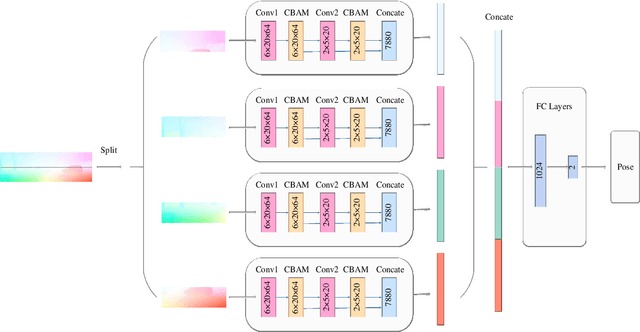
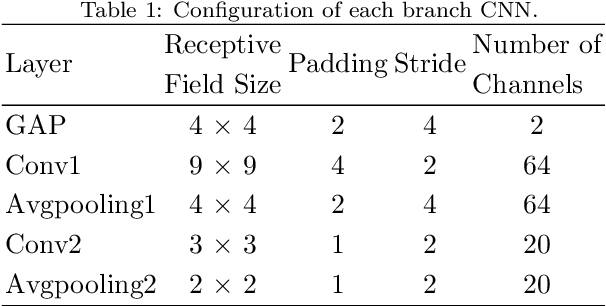
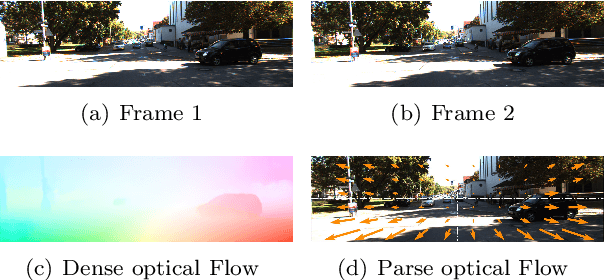
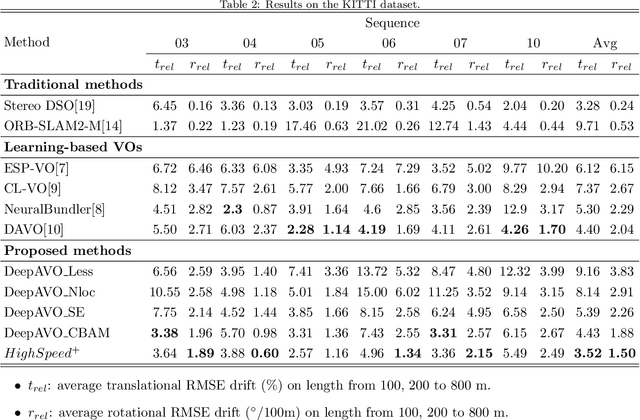
The technology for Visual Odometry (VO) that estimates the position and orientation of the moving object through analyzing the image sequences captured by on-board cameras, has been well investigated with the rising interest in autonomous driving. This paper studies monocular VO from the perspective of Deep Learning (DL). Unlike most current learning-based methods, our approach, called DeepAVO, is established on the intuition that features contribute discriminately to different motion patterns. Specifically, we present a novel four-branch network to learn the rotation and translation by leveraging Convolutional Neural Networks (CNNs) to focus on different quadrants of optical flow input. To enhance the ability of feature selection, we further introduce an effective channel-spatial attention mechanism to force each branch to explicitly distill related information for specific Frame to Frame (F2F) motion estimation. Experiments on various datasets involving outdoor driving and indoor walking scenarios show that the proposed DeepAVO outperforms the state-of-the-art monocular methods by a large margin, demonstrating competitive performance to the stereo VO algorithm and verifying promising potential for generalization.