 Add to Chrome
 Add to Firefox
 Add to Edge
Do Not Break the Vessels: Structure-Preserving Mean Flow for Vascular Image Translation
Jun 30, 2026
Reconstructing anatomically faithful vascular structures from clinically accessible imaging modalities is of substantial clinical significance. However, existing cross-modal translation methods mainly emphasize pixel-level fidelity or visual realism and treat structure preservation as a property of the final output rather than an invariant of the generative process. This limitation often leads to structural discontinuities and artifacts, compromising anatomical coherence and clinical reliability. In this work, we propose a Structure-Preserving Mean Flow (SPMF) framework that formulates vascular image translation as a topology-invariant transport process. Based on a structural invariance principle, we derive an orthogonality constraint on the flow velocity field that formally separates appearance transport from topological distortion. We implement this constraint as a time-weighted surrogate objective within a Brownian bridge diffusion model to preserve topology at every diffusion step. Moreover, we propose a Prototype-Guided Structural Refinement (PGSR) module to align degraded inference-time structures with reliable training-time structures. Experiments on paired NIRII-to-2PF and fundus datasets demonstrate consistent improvements over state-of-the-art methods, achieving peak PSNR values of 24.96 dB and 24.83 dB, respectively.

Multi-objective optimization based network control principles for identifying personalized drug targets with cancer
Jun 23, 2023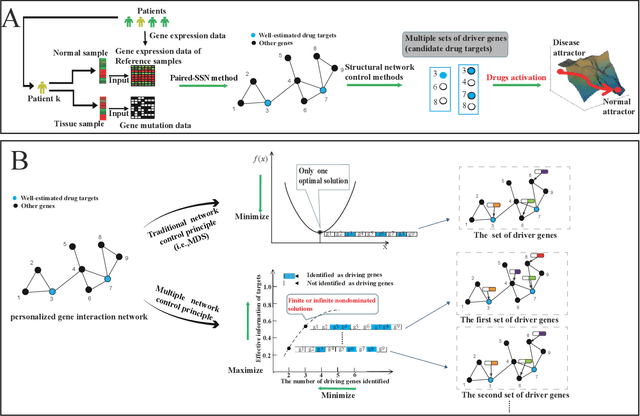
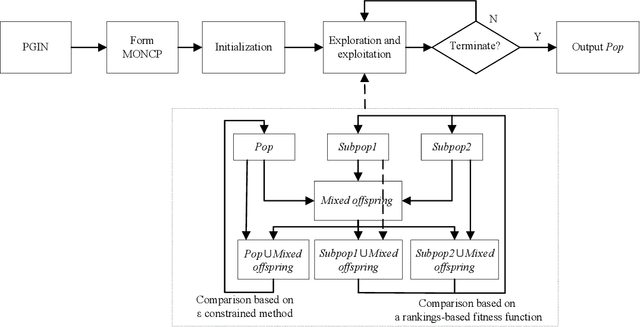
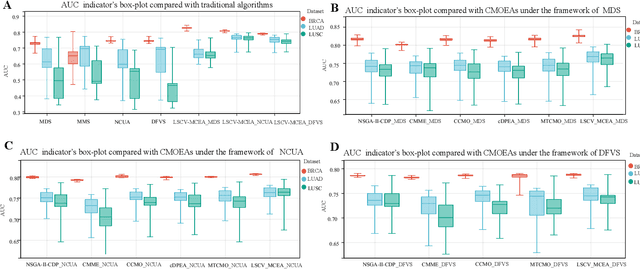
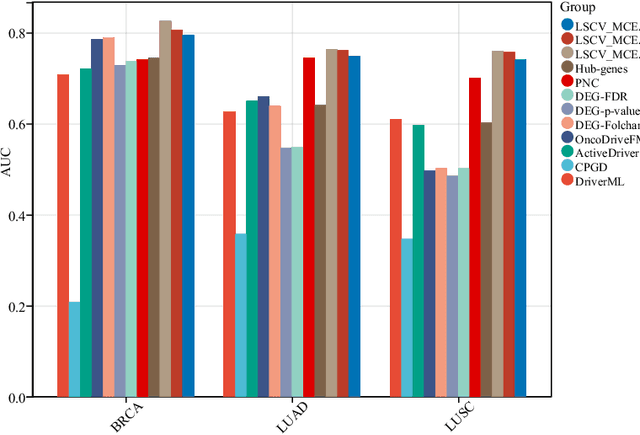
It is a big challenge to develop efficient models for identifying personalized drug targets (PDTs) from high-dimensional personalized genomic profile of individual patients. Recent structural network control principles have introduced a new approach to discover PDTs by selecting an optimal set of driver genes in personalized gene interaction network (PGIN). However, most of current methods only focus on controlling the system through a minimum driver-node set and ignore the existence of multiple candidate driver-node sets for therapeutic drug target identification in PGIN. Therefore, this paper proposed multi-objective optimization-based structural network control principles (MONCP) by considering minimum driver nodes and maximum prior-known drug-target information. To solve MONCP, a discrete multi-objective optimization problem is formulated with many constrained variables, and a novel evolutionary optimization model called LSCV-MCEA was developed by adapting a multi-tasking framework and a rankings-based fitness function method. With genomics data of patients with breast or lung cancer from The Cancer Genome Atlas database, the effectiveness of LSCV-MCEA was validated. The experimental results indicated that compared with other advanced methods, LSCV-MCEA can more effectively identify PDTs with the highest Area Under the Curve score for predicting clinically annotated combinatorial drugs. Meanwhile, LSCV-MCEA can more effectively solve MONCP than other evolutionary optimization methods in terms of algorithm convergence and diversity. Particularly, LSCV-MCEA can efficiently detect disease signals for individual patients with BRCA cancer. The study results show that multi-objective optimization can solve structural network control principles effectively and offer a new perspective for understanding tumor heterogeneity in cancer precision medicine.