 Add to Chrome
 Add to Firefox
 Add to Edge
BiMind: A Dual-Head Reasoning Model with Attention-Geometry Adapter for Incorrect Information Detection
Apr 07, 2026
Incorrect information poses significant challenges by disrupting content veracity and integrity, yet most detection approaches struggle to jointly balance textual content verification with external knowledge modification under collapsed attention geometries. To address this issue, we propose a dual-head reasoning framework, BiMind, which disentangles content-internal reasoning from knowledge-augmented reasoning. In BiMind, we introduce three core innovations: (i) an attention geometry adapter that reshapes attention logits via token-conditioned offsets and mitigates attention collapse; (ii) a self-retrieval knowledge mechanism, which constructs an in-domain semantic memory through kNN retrieval and injects retrieved neighbors via feature-wise linear modulation; (iii) the uncertainty-aware fusion strategies, including entropy-gated fusion and a trainable agreement head, stabilized by a symmetric Kullback-Leibler agreement regularizer. To quantify the knowledge contributions, we define a novel metric, Value-of-eXperience (VoX), to measure instance-wise logit gains from knowledge-augmented reasoning. Experiment results on public datasets demonstrate that our BiMind model outperforms advanced detection approaches and provides interpretable diagnostics on when and why knowledge matters.

PaperHelper: Knowledge-Based LLM QA Paper Reading Assistant
Feb 20, 2025In the paper, we introduce a paper reading assistant, PaperHelper, a potent tool designed to enhance the capabilities of researchers in efficiently browsing and understanding scientific literature. Utilizing the Retrieval-Augmented Generation (RAG) framework, PaperHelper effectively minimizes hallucinations commonly encountered in large language models (LLMs), optimizing the extraction of accurate, high-quality knowledge. The implementation of advanced technologies such as RAFT and RAG Fusion significantly boosts the performance, accuracy, and reliability of the LLMs-based literature review process. Additionally, PaperHelper features a user-friendly interface that facilitates the batch downloading of documents and uses the Mermaid format to illustrate structural relationships between documents. Experimental results demonstrate that PaperHelper, based on a fine-tuned GPT-4 API, achieves an F1 Score of 60.04, with a latency of only 5.8 seconds, outperforming the basic RAG model by 7\% in F1 Score.
Ascend HiFloat8 Format for Deep Learning
Sep 26, 2024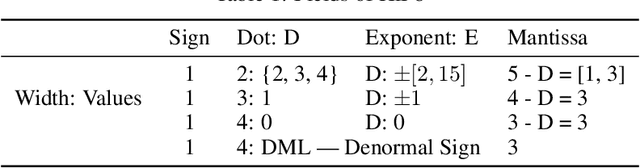

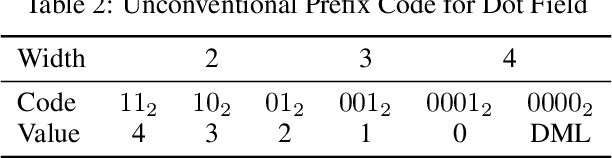

This preliminary white paper proposes a novel 8-bit floating-point data format HiFloat8 (abbreviated as HiF8) for deep learning. HiF8 features tapered precision. For normal value encoding, it provides 7 exponent values with 3-bit mantissa, 8 exponent values with 2-bit mantissa, and 16 exponent values with 1-bit mantissa. For denormal value encoding, it extends the dynamic range by 7 extra powers of 2, from 31 to 38 binades (notice that FP16 covers 40 binades). Meanwhile, HiF8 encodes all the special values except that positive zero and negative zero are represented by only one bit-pattern. Thanks to the better balance between precision and dynamic range, HiF8 can be simultaneously used in both forward and backward passes of AI training. In this paper, we will describe the definition and rounding methods of HiF8, as well as the tentative training and inference solutions. To demonstrate the efficacy of HiF8, massive simulation results on various neural networks, including traditional neural networks and large language models (LLMs), will also be presented.