 Add to Chrome
 Add to Firefox
 Add to Edge
CGSA: Class-Guided Slot-Aware Adaptation for Source-Free Object Detection
Feb 26, 2026
Source-Free Domain Adaptive Object Detection (SF-DAOD) aims to adapt a detector trained on a labeled source domain to an unlabeled target domain without retaining any source data. Despite recent progress, most popular approaches focus on tuning pseudo-label thresholds or refining the teacher-student framework, while overlooking object-level structural cues within cross-domain data. In this work, we present CGSA, the first framework that brings Object-Centric Learning (OCL) into SF-DAOD by integrating slot-aware adaptation into the DETR-based detector. Specifically, our approach integrates a Hierarchical Slot Awareness (HSA) module into the detector to progressively disentangle images into slot representations that act as visual priors. These slots are then guided toward class semantics via a Class-Guided Slot Contrast (CGSC) module, maintaining semantic consistency and prompting domain-invariant adaptation. Extensive experiments on multiple cross-domain datasets demonstrate that our approach outperforms previous SF-DAOD methods, with theoretical derivations and experimental analysis further demonstrating the effectiveness of the proposed components and the framework, thereby indicating the promise of object-centric design in privacy-sensitive adaptation scenarios. Code is released at https://github.com/Michael-McQueen/CGSA.

Cross-Attribute Matrix Factorization Model with Shared User Embedding
Aug 14, 2023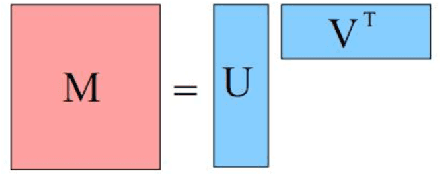
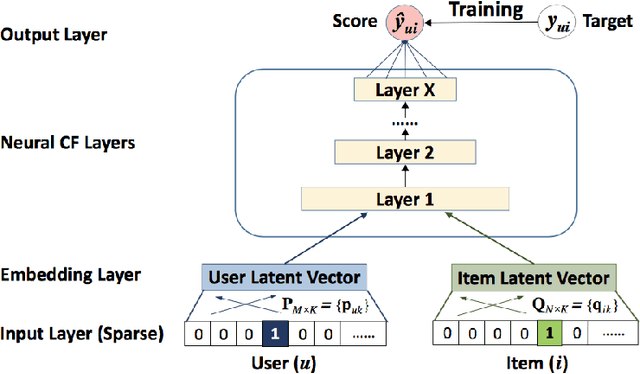


Over the past few years, deep learning has firmly established its prowess across various domains, including computer vision, speech recognition, and natural language processing. Motivated by its outstanding success, researchers have been directing their efforts towards applying deep learning techniques to recommender systems. Neural collaborative filtering (NCF) and Neural Matrix Factorization (NeuMF) refreshes the traditional inner product in matrix factorization with a neural architecture capable of learning complex and data-driven functions. While these models effectively capture user-item interactions, they overlook the specific attributes of both users and items. This can lead to robustness issues, especially for items and users that belong to the "long tail". Such challenges are commonly recognized in recommender systems as a part of the cold-start problem. A direct and intuitive approach to address this issue is by leveraging the features and attributes of the items and users themselves. In this paper, we introduce a refined NeuMF model that considers not only the interaction between users and items, but also acrossing associated attributes. Moreover, our proposed architecture features a shared user embedding, seamlessly integrating with user embeddings to imporve the robustness and effectively address the cold-start problem. Rigorous experiments on both the Movielens and Pinterest datasets demonstrate the superiority of our Cross-Attribute Matrix Factorization model, particularly in scenarios characterized by higher dataset sparsity.