 Add to Chrome
 Add to Firefox
 Add to Edge
ACPO: Adaptive Credit Policy Optimization via Fine-Grained Surrogate Entropy
Jul 03, 2026
Reinforcement Learning (RL) has substantially improved the reasoning ability of large language models (LLMs), but sparse outcome rewards still make token-level credit assignment difficult. Existing scalable RL methods typically assign trajectory-level rewards uniformly across tokens, while recent entropy-aware approaches either rely on coarse detached heuristics or directly optimize true entropy, which can introduce non-local gradient components misaligned with sampled-token policy updates. We propose Adaptive Credit Policy Optimization (ACPO), a token-level credit assignment framework based on a mode-local surrogate entropy. ACPO asymmetrically modulates policy updates by emphasizing uncertain decisions in successful rollouts and overconfident tokens in failed rollouts. We show that the surrogate admits deterministic entropy bounds and, under modal alignment and proximal updates, preserves the policy-gradient direction to leading order. Experiments on mathematical reasoning and coding benchmarks, including AIME 2025 and HumanEvalPro, show that ACPO consistently improves over strong RL baselines such as DAPO, GTPO, and SAPO.

ECHO: Prune to act, trace to learn with selective turn memory in agentic RL
Jun 30, 2026Long-horizon language agents must repeatedly interact with tools, accumulate evidence, and make decisions under bounded context windows. Existing context-management methods make such rollouts feasible by truncating distant history, folding past turns into summaries, or selecting compact memory states. However, these breakthroughs introduce two coupled limitations. First, as the number of turns grows, historical observations are progressively removed or collapsed into compressed states, making it harder for the policy to reuse fine-grained evidence. Second, once the original turns are no longer source-addressable, outcome-based RL loses an explicit path for aligning policy updates with the evidence that supported a successful final answer. To this end, we propose ECHO, a selective turn-memory framework that jointly addresses history collapse and traceable learning through source-indexed reconstruction. Specifically, ECHO compresses each completed environment turn into a compact memory record, reconstructs bounded policy contexts by selecting from these records, and reuses the selected source indices to route positive outcome credit to the evidence and selection actions that support successful answers. On BrowseComp-Plus, ECHO reaches 43.4% held-out accuracy, outperforming GRPO (28.9%) and the rolling-summary baseline SUPO (36.1%), while using fewer turns and lower trajectory volume than SUPO (Figure 1). Additionally, the trained policy improves zero-shot generalization across multi-objective QA, code generation, and deep information-seeking benchmarks on both dense and MoE backbones.
Adaptive Video Distillation: Mitigating Oversaturation and Temporal Collapse in Few-Step Generation
Mar 23, 2026Video generation has recently emerged as a central task in the field of generative AI. However, the substantial computational cost inherent in video synthesis makes model distillation a critical technique for efficient deployment. Despite its significance, there is a scarcity of methods specifically designed for video diffusion models. Prevailing approaches often directly adapt image distillation techniques, which frequently lead to artifacts such as oversaturation, temporal inconsistency, and mode collapse. To address these challenges, we propose a novel distillation framework tailored specifically for video diffusion models. Its core innovations include: (1) an adaptive regression loss that dynamically adjusts spatial supervision weights to prevent artifacts arising from excessive distribution shifts; (2) a temporal regularization loss to counteract temporal collapse, promoting smooth and physically plausible sampling trajectories; and (3) an inference-time frame interpolation strategy that reduces sampling overhead while preserving perceptual quality. Extensive experiments and ablation studies on the VBench and VBench2 benchmarks demonstrate that our method achieves stable few-step video synthesis, significantly enhancing perceptual fidelity and motion realism. It consistently outperforms existing distillation baselines across multiple metrics.
Spectral Roll-off Points: Estimating Useful Information Under the Basis of Low-frequency Data Representations
Jan 31, 2021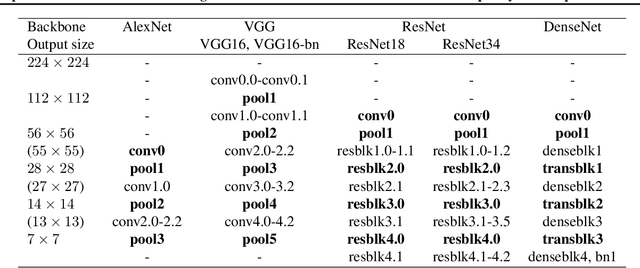
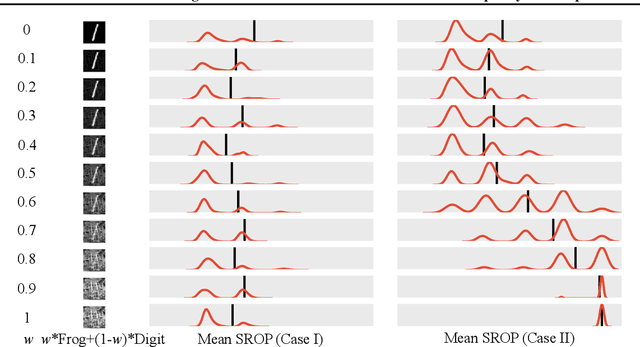
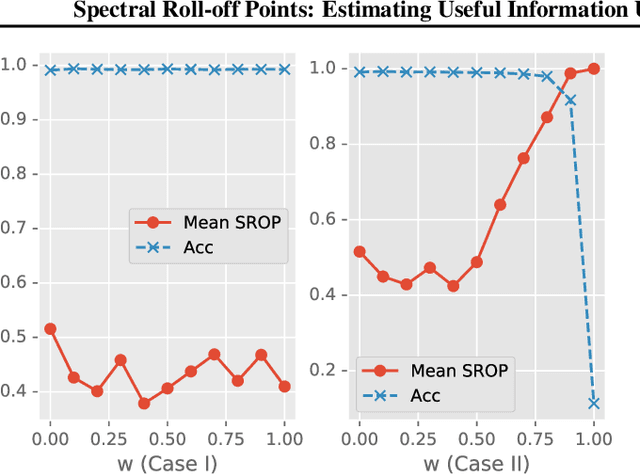
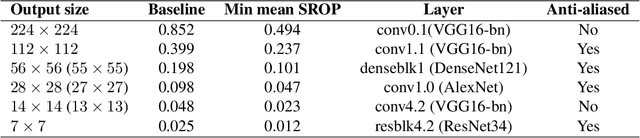
Useful information is the basis for model decisions. Estimating useful information in feature maps promotes the understanding of the mechanisms of neural networks. Low frequency is a prerequisite for useful information in data representations, because downscaling operations reduce the communication bandwidth. This study proposes the use of spectral roll-off points (SROPs) to integrate the low-frequency condition when estimating useful information. The computation of an SROP is extended from a 1-D signal to a 2-D image by the required rotation invariance in image classification tasks. SROP statistics across feature maps are implemented for layer-wise useful information estimation. Sanity checks demonstrate that the variation of layer-wise SROP distributions among model input can be used to recognize useful components that support model decisions. Moreover, the variations of SROPs and accuracy, the ground truth of useful information of models, are synchronous when adopting sufficient training in various model structures. Therefore, SROP is an accurate and convenient estimation of useful information. It promotes the explainability of artificial intelligence with respect to frequency-domain knowledge.